Medical Genetics - V. M. Zaporozhan 2005
Monogenic Disorders
Genetic Heterogeneity of Monogenic Diseases
The phenomenon of Selection/32.html">Genetic heterogeneity of hereditary disorders was first analyzed in the 1920s and 1930s by the prominent geneticist and neuropathologist S. M. Davidenkov. METABOLISM/2.html">THE CONCEPT OF genetic heterogeneity has a broad scope (Fig. 6.1).
1. Locus heterogeneity. In some cases, the exact same disease in different patients is caused by Mutations in different genes. This phenomenon is known as locus heterogeneity, meaning the condition results from mutations at different loci (different genes) on Chromosomes. For instance, phenylketonuria (PKU) can be caused by a mutation in the phenylalanine-4-hydroxylase Gene or in the genes encoding Enzymes responsible for the synthesis of tetrahydrobiopterin, a cofactor for this enzyme. Eight major forms of mucopolysaccharidosis have been described, each caused by mutations in different genes. Sensorineural Hearing loss and albinism are also characterized by locus heterogeneity.
2. Allelic heterogeneity, in which a specific hereditary disorder can be caused by different mutations within the same gene. For example, over 1,000 mutations have been described in the cystic fibrosis gene, of which about 300 have a pathological effect. Similarly, over 700 mutations have been identified in the low-density lipoprotein receptor gene (associated with familial hypercholesterolemia). Different mutations alter the Cell/13.html">Protein Structure in distinct ways. Some lead only to a partial reduction in functional activity, while others result in complete inactivation or the cessation of Protein Synthesis. Consequently, the severity of the disease, age of onset, and Clinical presentation can vary widely among patients.
A striking example of allelic heterogeneity is found in triplet repeat expansion disorders (such as fragile X syndrome and Huntington's disease). In these conditions, the clinical picture depends on the number of trinucleotide repeats within the gene. For example, all patients with Huntington's disease exhibit an expansion of CAG trinucleotide repeats in the gene responsible for the condition, with the repeat count ranging from 37 to 120 among individuals. A high number of triplet repeats leads to the early akinetic-rigid Westphal variant; 45–55 repeats result in the classic form of the disease, while 37–40 repeats may cause a late onset with minimal psychiatric impairment.
Allelic heterogeneity is one of the primary causes of clinical polymorphism in Monogenic Disorders.
An individual can carry two different mutations of the same gene (one on each homologous chromosome). Such individuals are referred to as compound heterozygotes (or compounds). They are homozygous for the mutant gene in the sense that both copies of the respective gene are damaged, yet they harbor two different mutations. The clinical manifestation in compound heterozygotes may differ from the severity observed in "true" homozygotes carrying identical mutations.
Locus and allelic heterogeneity must always be kept in mind during the molecular Diagnosis of Monogenic Disorders, as the Methods required to identify different mutations may vary.
3. Allelic series. An even more complex situation arises when different mutations in the exact same gene lead to clinically distinct disorders. For instance, two forms of muscular dystrophy—the severe Duchenne form and the milder Becker form—are caused by mutations in the same gene encoding the Skeletal Muscle protein dystrophin. Duchenne muscular dystrophy develops when dystrophin synthesis is completely blocked, whereas Becker muscular dystrophy occurs when the block is partial. Another example involves various mutations in the fibroblast growth factor receptor 3 gene (FGFR3), which lead to three distinct conditions: Achondroplasia, Hypochondroplasia, and Thanatophoric Dysplasia.
Class="center">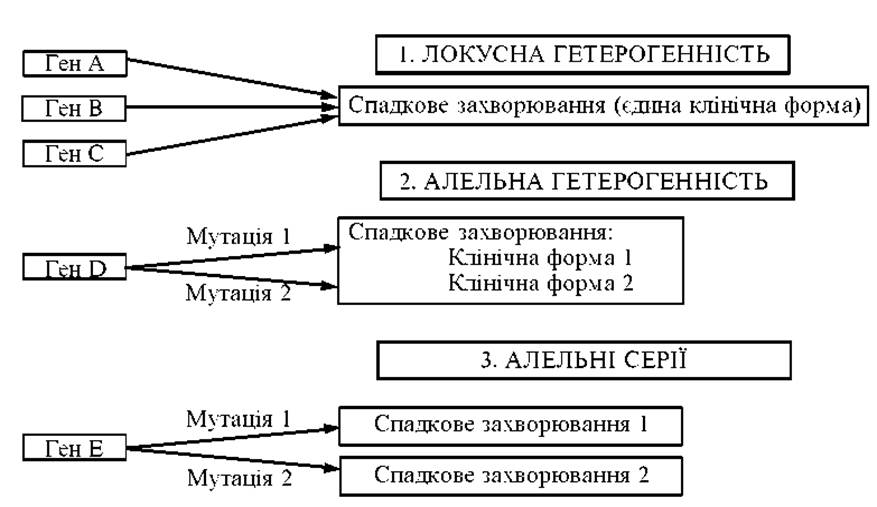
Fig. 6.1. Genetic heterogeneity of hereditary disorders
More than 10 mutations in the cystic fibrosis gene do not cause the classic clinical picture of cystic fibrosis, but instead contribute to The Development of disseminated Bronchiectasis and Liver cirrhosis.
Mutations of a single gene that result in the development of entirely different diseases are referred to as allelic series.
Last update: 11/08/2026
Editorial and Educational Adaptation: This material has been compiled based on the primary/original source text. The project team performed an editorial review, corrected technical inaccuracies, structured sections, and adapted the content for an educational format.
What was processed:
- elimination of formatting defects (OCR errors, structural breaks, corrupted characters);
- editorial organization of content;
- standardization of terminology in accordance with academic sources;
- verification of factual statements against the original source text.
All mentions of the author, publication year, and origin of the primary text have been preserved in accordance with the source.