Genetics - A. V. Sivolob 2008
Gene Expression
Gene Expression in Eukaryotes
Transcription elongation, processing, and termination of mRNA synthesis
After the Synthesis of the first 20-30 NUCLEOTIDES, Enzymes responsible for a specific chemical Modification of the 5'-terminal nucleotide of mRNA to form a cap are recruited to the C-terminal domain of RNA polymerase (which generally serves as a platform for assembling the entire Processing machinery). The Functional Significance of the cap is multifaceted: the unusual Structure OF THE 5'-end protects it against nuclease degradation, it participates in mRNA transport to the Cytoplasm and in Translation initiation, and it also stimulates other processing reactions.
Further during METABOLISM/31.html">Transcription elongation, immediately after the synthesis of a given intron, a multimolecular structure called the spliceosome is assembled on the C-terminal domain (Fig. 2.13). The Components of the spliceosome include the intron itself, Proteins, and five types of Small nuclear RNAs. The purpose of the spliceosome is to carry out splicing—excising introns and joining exons—whereby the mRNA becomes a copy of only the coding portion of the Gene or its fragments; splicing can often occur via several alternative pathways (Alternative Splicing, see Fig. 1.9).
Small nuclear RNAs play a key role in determining the Spatial Structure, formation, and functioning of the spliceosome, which assembles individually on each successive intron: they recognize the intron-exon boundaries and catalyze the splicing reactions (as in the ribosome, catalysis here is performed by RNA molecules). The Role of spliceosomal proteins is to stabilize the spliceosome structure, facilitate structural rearrangements during splicing operations, and regulate splicing by blocking or enhancing the efficiency of spliceosome assembly on a given intron through regulatory proteins. The presence of a specific set of such regulators largely determines the choice of a particular alternative splicing pathway.
Class="center">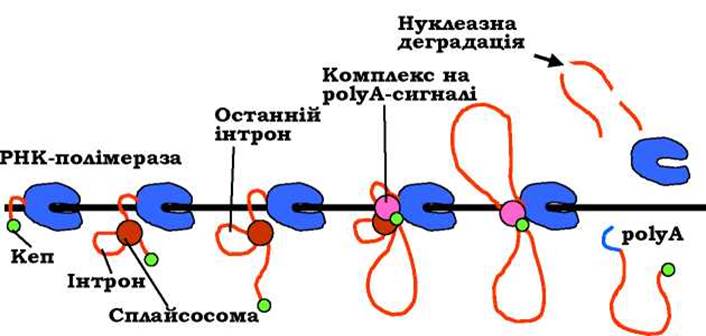
Fig. 2.13. Synchronization of transcription and mRNA Processing.
The rate of spliceosome assembly is determined by the transcription rate. On the other hand, transcription elongation factors interact with the spliceosome—the presence of a splice site (the boundary between an intron and an exon) helps accelerate the movement of the polymerase. This process of RNA Synthesis and splicing continues until a specific sequence, known as a termination signal, appears within the pre-mRNA.
The final processing event, closely coordinated with transcription termination, is the polyadenylation of the 3'-end of the mRNA—the attachment of a polyA sequence to the 3'-terminal nucleotide. The transcription termination and polyadenylation signal (polyA signal) consists of two sequence elements recognized by a specific set of protein factors. Following the recognition of the polyA signal, while RNA polymerase continues RNA synthesis past the signal (up to 1,000 nucleotides), polyA polymerase and mRNA Cleavage factors join the multienzyme complex assembled at the polyA signal. The assembly of this complex is stimulated by cap-binding proteins as well as the spliceosome on the final intron; splicing of the last intron and RNA cleavage/polyadenylation occur simultaneously and stimulate each other (Fig. 2.13).
Within the second sequence element of the polyA signal lies a conserved dinucleotide where cleavage takes place. PolyA polymerase adds 100-200 adenine nucleotides one by one to the newly generated 3'-end. RNA cleavage/polyadenylation serves as the trigger for transcription termination. Recognition of the polyA signal induces Conformational Changes in the polymerase complex, which lead to a decrease in the affinity of the polymerase for the DNA and the transcript (Fig. 2.13).
Last update: 11/08/2026
Editorial and Educational Adaptation: This material has been compiled based on the primary/original source text. The project team performed an editorial review, corrected technical inaccuracies, structured sections, and adapted the content for an educational format.
What was processed:
- elimination of formatting defects (OCR errors, structural breaks, corrupted characters);
- editorial organization of content;
- standardization of terminology in accordance with academic sources;
- verification of factual statements against the original source text.
All mentions of the author, publication year, and origin of the primary text have been preserved in accordance with the source.