Fundamentals of General and Pharmaceutical Hygiene - Dykyi I.L. 2003
Hygiene of the Air Environment
Hygienic assessment of microbial contamination of indoor air
Ambient air contains A wide variety of microorganisms of diverse origins. During manufacturing, medicinal products are in direct contact with the air of the working area; therefore, a key requirement for the Sanitary and hygienic conditions of drug production is to ensure and maintain a specified level of air cleanliness and to minimize the risk of microbial contamination of the drugs.
The consequences of microbial contamination of medications include:
— the risk of patient infection if pathogenic microflora is present in the finished product;
— biodegradation of the product due to contamination, primarily by saprophytic microorganisms, which is accompanied by A change in its physicochemical properties, loss of pharmacological activity, and occasionally the acquisition of toxic properties. In this case, microorganisms utilize the medicinal product as a source of nutrients for their GROWTH AND DEVELOPMENT.
Furthermore, airborne pathogenic and opportunistic microflora can cause nosocomial (facility-acquired) infections.
The primary causes of high levels of microbial air pollution in pharmacies and pharmaceutical manufacturing facilities include violations of Sanitary and anti-epidemic regulations—poor premises cleaning, substandard air disinfection, failure of personnel to observe personal hygiene rules, low efficiency of the ventilation system, and non-compliance with hygienic requirements for the layout of production areas, among others.
Two Methods are used to determine the level of microbial air contamination: the aspiration method and the sedimentation method. When taking an air sample to determine the level of microbial contamination, the following mandatory conditions must be met: air sampling should be carried out no earlier than 30 minutes after cleaning the room, with windows and doors tightly closed, and the sampling height must correspond to the height of the workbench.
Monitoring the microorganism content in the air of production facilities should be performed during the manufacturing process: in Grade C areas, at least twice a week; in Grade D areas, at least once every three months.
Objective: to develop skills in conducting research on indoor air microbial contamination, provide a Hygienic assessment of the obtained data, understand the rules for selecting and operating germicidal lamps, and design measures to reduce the level of microbial air contamination.
QUESTIONS FOR SELF-STUDY
1. Air microflora, sanitary indicator microorganisms of indoor air.
2. The airborne environment as a transmission factor for infectious diseases.
3. Consequences of microbial contamination of medications.
4. Sources of indoor air microbial contamination in pharmacies and pharmaceutical enterprises.
5. Methods for Investigating microbial air contamination.
6. Regulation of microbial air contamination in production areas of pharmacies and pharmaceutical enterprises.
7. Germicidal air irradiators: lamp types and Selection criteria.
8. Recirculating air cleaners: design principles and operating guidelines.
9. Measures to reduce the level of microbial contamination in the air of production facilities in pharmacies and pharmaceutical enterprises.
Task 1. Determination of indoor air microbial contamination by the sedimentation method
The Principle of the method is based on the sedimentation (settling) of airborne microflora onto The surface of a nutrient medium under METABOLISM/18.html">The Influence of gravity. This method is used for an approximate assessment of microbial contamination in production area air, primarily in locations with elevated air pollution (such as pharmacy customer service halls) and in cases where the aspiration method cannot be applied (e.g., when handling flammable or explosive substances in production). In manufacturing facilities, microorganism monitoring is predominantly conducted in working areas where the most probable sources of airborne microbial contamination are located (places with high personnel density, increased dust generation risk, etc.), as well as in zones where substances, excipients, and the finished product come into direct contact with the environment.
Inoculation is performed on open Petri dishes containing meat-peptone Agar (to determine the bacterial count) and separately on Sabouraud agar (to determine the fungal count). The dishes are placed in several locations throughout the rooms: in long and narrow rooms, at 4 horizontal points spaced no more than 5 m apart; in rooms with an area of up to 15 m2, at two opposite points; in areas exceeding 100 m2, at each of the 4 opposite points and in the center of the room. After a 10-minute exposure in an open state, the dishes are closed and placed in an incubator. Inoculations on meat-peptone agar are incubated at a Temperature of 32.5 ± 2.5 °C, and on Sabouraud agar at 22.5 ± 2.5 °C for 5 days.
Calculation of test results. To determine the total number of Bacteria (Fungi) per 1 m3 of air, the number of colonies grown on the dish is multiplied by one of the conversion factors provided in Table 4.
Class="center">Table 4. Calculation of the number of microorganisms in 1 m3 of air at a 10-minute exposure
|
Item No. |
Dish diameter, cm |
Dish area, cm2 |
Factor |
|
1 |
8 |
50 |
100 |
|
2 |
9 |
63 |
80 |
|
3 |
10 |
78 |
60 |
|
4 |
11 |
95 |
50 |
|
5 |
12 |
113 |
45 |
Example. On a Petri dish with a diameter of 10 cm, 50 bacterial colonies grew. Calculated per 1 m3 of air, the total number of bacteria is 50 x 60 = 3000.
This method does not provide a complete picture of the quantitative microbial content. This is because the sedimentation of microorganisms depends on air velocity, which can vary at different points in the room. Furthermore, this method poorly captures fine disperse fractions of the bacterial aerosol. When plating an aerosol particle containing several viable microorganisms, only a single colony grows, which underestimates the total microbial air contamination. Therefore, the sedimentation method provides only an approximate estimation of the actual degree of microbial contamination of indoor air. However, it can be used to determine microbial air contamination over time and to evaluate the effectiveness of anti-epidemic measures carried out in pharmacies.
Task 2. Determination of microbial air contamination by the aspiration method
Determination of microbial contamination of air in production premises of pharmacies and pharmaceutical enterprises is carried out using inertial-type air samplers, such as an impactor or a device for bacteriological air analysis (Krotov apparatus). The operation of these devices is based on THE PRINCIPLE OF an air jet impacting the surface of a nutrient medium contained in a Petri dish.
When using the Krotov apparatus, air is drawn in by a centrifugal fan through a wedge-shaped slit located radially above the Petri dish. The disk holding the dish rotates at a speed of one revolution per second, ensuring that the microorganisms are seeded uniformly across the entire surface of the nutrient medium.
The Location and number of air sampling points are determined According to the room dimensions (see sedimentation method). The Petri dish with the nutrient medium is placed on the device's disk, and the cover is securely closed using the clamps on its housing. The device is plugged in, and an air flow rate of 25 L/min is set using a rheometer.
After taking the air sample, the dishes are covered with lids and placed in a thermostat. The nutrient media, temperature conditions, and incubation times are the same as those for air testing by the sedimentation method (see above).
Accounting for results. Calculations are performed using the formula
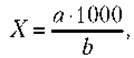
where X is the number of microorganisms in 1 m3 of air;
a is the number of colonies grown on the Petri dish after the incubation period;
b is the volume of the tested air sample reduced to normal conditions (see the formula for reducing air volume to normal conditions for the aspiration method, Topic 2).
The calculation of the minimum total volume of the air sample at each control point is carried out in accordance with the methodological recommendations for controlling the content of microorganisms and particles in the air of production premises (Order of the Ministry of Health of Ukraine No. 502 dated December 14, 2001).
Evaluation of test results. The obtained results are compared with the permissible limits of microbial contamination for the given room (see Appendix, Table 6).
Task 3. Determination of the required number of bactericidal irradiators for effective indoor air sanitization
For the sanitization (disinfection) of pharmacy air, bactericidal irradiators are used, consisting of various types of bactericidal lamps, the so-called bactericidal ultraviolet (uviol) lamps (BUV-25, BUV-30, BUV-60, etc.), both shielded and unshielded. Certain rules must be considered when selecting their number and power.
1. For unshielded bactericidal lamps, the average specific power should be at the level of 2-2.5 W per 1 m3 of air. They are turned on 1.5-2 hours before work begins in the absence of personnel.
2. For shielded bactericidal lamps, the average specific power should be 1 W per 1 m3 of air. They are operated in the presence of personnel.
Example. The volume of the aseptic room is 30 m3. The calculation of the required number of unshielded BUV-25 bactericidal lamps for effective air sanitization is performed as follows:

PROTOCOL OUTLINE
Topic of the practical class.
1. Determination of indoor microbial air contamination by the sedimentation method.
Room ... .
Number of air samples taken ... .
Nutrient ... media ... .
Petri dish diameter ... , dish area ... .
Indoor exposure time of the Petri dishes ... .
Culture incubation conditions (temperature ... , time ... ).
Number of microbial colonies: on MPA ... , on Sabouraud agar ... .
Calculation of the number of microorganisms per 1 m3 of air: ... .
2. Determination of microbial air contamination by the aspiration method.
Premises ... .
Air aspiration device ... .
Air aspiration rate ... .
Volume of the test air sample ... .
Number of air samples collected ... .
Nutrient media ... .
Culture incubation conditions (temperature ... , time ... ).
Number of bacterial colonies ... , fungal colonies ... .
Calculation of the number of microorganisms per 1 m3 of air using the formula: ... .
Conclusion. Based on sanitary and hygienic studies carried out in the room ... , it was established that the total bacterial count in the air is ... , Staphylococcus aureus ... , mold and Yeast fungi (total) ... , which (does not) correspond to the permissible level of microbial contamination for this class of premises.
Recommendations.
3. Determination of the required number of germicidal emitters for effective room air disinfection.
Room volume ... .
Power of the proposed germicidal lamps — BUV ... . Calculation of the required number of lamps:
a) unshielded ... ;
b) shielded ... .
Conclusion. For effective air disinfection in this room, it is necessary to install ... unshielded BUV lamp(s) and ... shielded BUV lamp(s).
Assignments FOR INDEPENDENT WORK
1. Test control of knowledge.
2. Solution of situational tasks.
TESTS
1. Sanitary indicator microorganisms of indoor air are:
A. Escherichia coli.
Б. Staphylococcus aureus.
B. Viridans streptococci.
Г. Pseudomonas aeruginosa.
2. Devices used for air sampling to determine the level of microbial contamination are:
A. Luxmeter.
Б. Psychrometer.
B. Anaerostat.
Г. Krotov apparatus.
Д. Impactor.
3. Main causes of high levels of microbial contamination in pharmacy indoor air:
A. Violation of personal hygiene rules by the staff.
Б. Non-compliance with hygienic requirements for room layout.
B. Low efficiency of the ventilation system.
Г. Poor premises cleaning.
Д. All of the above factors.
4. Main routes of nosocomial infection within pharmacies:
A. Contact.
Б. Vector-borne.
B. Airborne.
Г. Waterborne.
D. Vertical.
E. Fecal-oral.
5. Germicidal air irradiators should be installed in the following areas:
A. Public service hall.
B. Aseptic room.
C. Staff room.
D. Dispensary preparation room.
6. Shielded germicidal lamps should be installed:
A. In the dispensary preparation room.
B. In the aseptic room.
C. In the washing room.
D. In the supply rooms.
E. In all of the above areas.
7. Specify the METHOD FOR DETERMINING microbial air contamination based on counting the number of microorganisms settled onto a nutrient medium under the influence of gravity:
A. Sedimentation method.
B. Aspiration method.
C. Thermoprecipitation method.
D. Vacuum method.
8. The high bactericidal effect of uviol lamps (BUV) is due to the action of rays of a specific wavelength. Which ones?
A. 760—1500 nanometers.
B. 400—800 nanometers.
C. 254—257 nanometers.
D. 180—200 nanometers.
9. An aseptic room is equipped with a germicidal irradiator consisting of 2 unshielded BUV-30 lamps. The room volume is 40m3. How many additional unshielded germicidal lamps of the same power need to be installed?
A. One.
B. Two.
C. Three.
D. Four.
10. Safety regulations must be followed when operating germicidal lamps. Indicate which gas can accumulate in significant amounts during their prolonged operation?
A. Argon.
B. Neon.
C. Ozone.
D. Chlorine.
SITUATIONAL PROBLEMS
As part of routine state Sanitary and epidemiological surveillance, an Analysis of the air environment in a pharmacy production facility was conducted. An air sample was taken to determine the microorganism content.
1. Convert the volume of the taken air sample to standard conditions (for the aspiration method).
2. Assess the level of microbial air contamination by comparing the obtained data with regulatory documentation (Table 6 of the Appendix).
3. Calculate the required number of germicidal lamps for this room, taking into account their power rating (BUV-25, BUV-30, BUV-60), and specify their type (shielded, unshielded).
Problem 1.
The air sample was taken using a Krotov apparatus in the pharmacy assistant room. The volume of the taken air sample is 10 L, air temperature 20 °C, atmospheric pressure 754 mmHg, total bacterial colony count 40, Staphylococcus aureus 5, fungi 10. Room volume 60 m3.
Problem 2.
The air sample was collected using the sedimentation method in the customer service area. The diameter of Petri dishes with MPA and Sabouraud nutrient media is 10 cm, dish area 78 cm2. Total bacterial colony count 248, Staphylococcus aureus 59, fungi 105. Room volume 105 m3.
Problem 3.
The air sample was taken using a Krotov apparatus in the pharmacy packaging room. The volume of the taken air sample is 20 L, air temperature 20 °C, atmospheric pressure 756 mmHg, total bacterial colony count 115, Staphylococcus aureus 5, hemolytic streptococci 8, fungi 10. Room volume 25 m3.
Problem 4.
The air sample was taken using the sedimentation method in the customer service area. The diameter of Petri dishes with MPA and Sabouraud nutrient media is 9 cm, area 63 cm2, total bacterial colony count 55, Staphylococcus aureus and hemolytic streptococci (combined) 5, fungi 7. Room volume 60 m3.
Problem 5.
The air sample was taken using a Krotov apparatus in the pharmacy washing room. The volume of the taken air sample is 10 L, air temperature 26 °C, atmospheric pressure 749 mmHg, total bacterial colony count 10, Staphylococcus aureus and hemolytic streptococci (combined) 4, fungi 49. Room volume 30 m3.
Problem 6.
The air sample was taken using the sedimentation method in the pharmacy's herbal raw Materials storage room. The diameter of Petri dishes with MPA and Sabouraud nutrient media is 12 cm, dish area 113 cm2, total bacterial colony count 19, Staphylococcus aureus and hemolytic streptococci were not detected, fungi 49. Room volume 15 m3.
Problem 7.
An air sample was taken using a Krotov apparatus in the aseptic unit of a pharmacy. The volume of the sample taken is 20 L, air temperature is 20 °C, atmospheric pressure is 758 mm Hg, total count of bacterial colonies is 2, and fungal colonies is 1. The room volume is 30 m3. The aseptic room is equipped with a germicidal air irradiator consisting of 2 unshielded BUV-25 lamps.
Problem 8.
An air sample was taken in the dosage form sterilization room using a Krotov apparatus. The volume of the air sample taken is 25 L, air temperature is 26 °C, atmospheric pressure is 758 mm Hg, total count of bacterial colonies is 3. The room volume is 25 m3. The sterilization room is equipped with a germicidal air irradiator consisting of 2 BUV-25 germicidal lamps.
Problem 9.
An air sample was taken in the Water-for-injection production room using a Krotov apparatus. The volume of the air sample taken is 20 L, air temperature is 20 °C, atmospheric pressure is 755 mm Hg, total count of bacterial colonies is 2, and fungal colonies is 10. The room volume is 27 m3. The room is equipped with one unshielded BUV-25 air irradiator.
Problem 10.
1. Evaluate the degree of microbial air contamination in the production area of a pharmaceutical enterprise in accordance with GMP requirements (Tables 7, 8 of the Appendix).
Note. When calculating, the arithmetic mean of the total number of colonies should be multiplied by 5.
2. Propose hygienic recommendations for preventing microbial contamination of production facility air.
Option 1.
An air sample was taken in a Grade 2 cleanroom for sterile drug manufacturing using a Krotov apparatus. The volume of the air sample taken is 200 L, air temperature is 20 °C, atmospheric pressure is 744 mm Hg, arithmetic mean of the total number of colonies is 4. The room volume is 240 m3.
Option 2.
An air sample was taken in a Grade 1 cleanroom for sterile drug manufacturing using a Krotov apparatus. The volume of the air sample taken is 200 L, air temperature is 18 °C, atmospheric pressure is 755 mm Hg, arithmetic mean of the total number of colonies is 2. The room volume is 300 m3.
Option 3.
An air sample was taken in a non-sterile drug manufacturing facility (cleanroom class D) using a Krotov apparatus. The volume of the air sample taken is 200 L, air temperature is 20 °C, atmospheric pressure is 744 mm Hg, arithmetic mean of the total number of microorganism colonies is 100. The room volume is 250 m3.
Option 4.
An air sample was taken in a non-sterile drug manufacturing facility (cleanroom class D) using a Krotov apparatus. The volume of the air sample taken is 500 L, air temperature is 20 °C, atmospheric pressure is 750 mm Hg, arithmetic mean of the total number of microorganism colonies is 20. The room volume is 300 m3.
Option 5.
An air sample was taken in a Grade 2 cleanroom for sterile drug manufacturing using a Krotov apparatus. The volume of the air sample taken is 100 L, air temperature is 20 °C, atmospheric pressure is 744 mm Hg, arithmetic mean of the total number of colonies is 2. The room volume is 240 m3.
Option 6.
An air sample was taken in a Grade 1 cleanroom for sterile drug manufacturing using a Krotov apparatus. The volume of the air sample taken is 250 L, air temperature is 18 °C, atmospheric pressure is 755 mm Hg, arithmetic mean of the total number of colonies is 2. The room volume is 300 m3.
Option 7.
An air sample was taken in a non-sterile drug manufacturing facility (cleanroom class D) using a Krotov apparatus. The volume of the air sample taken is 200 L, air temperature is 25 °C, atmospheric pressure is 734 mm Hg, arithmetic mean of the total number of microorganism colonies is 150. The room volume is 250 m3.
Option 8.
The air sample was taken in a non-sterile drug manufacturing facility (cleanroom grade D) using a Krotov apparatus. The volume of the sampled air is 500 L, air temperature 180 °C, atmospheric pressure 755 mm Hg, arithmetic mean of the total colony count of microorganisms 22. Room volume 300 m3.
Option 9.
The air sample was taken in a sterile drug manufacturing facility of cleanroom grade 2 using a Krotov apparatus. The volume of the sampled air is 300 L, air temperature 250C, atmospheric pressure 746 mm Hg, arithmetic mean of the total colony count 10. Room volume 240 m3.
Option 10.
The air sample was taken in a non-sterile drug manufacturing facility (cleanroom grade D) using a Krotov apparatus. The volume of the sampled air is 400 L, air temperature 20 °C, atmospheric pressure 764 mm Hg, arithmetic mean of the total colony count of microorganisms 150. Room volume 250 m3.
Last update: 08/08/2026
Editorial and Educational Adaptation: This material has been compiled based on the primary/original source text. The project team performed an editorial review, corrected technical inaccuracies, structured sections, and adapted the content for an educational format.
What was processed:
- elimination of formatting defects (OCR errors, structural breaks, corrupted characters);
- editorial organization of content;
- standardization of terminology in accordance with academic sources;
- verification of factual statements against the original source text.
All mentions of the author, publication year, and origin of the primary text have been preserved in accordance with the source.