PLANT ADAPTATION TO ANTHROPOGENIC FACTORS - 2017
3. ENVIRONMENTAL POLLUTION BY INDUSTRIAL CHEMICAL WASTE
3.6. Methods for enhancing plant resistance to environmental pollution
In conditions of atmospheric pollution, green spaces serve not only their usual purposes but also act as a natural filter that purifies the air from harmful impurities and protects the surface air layer of industrial and recreational areas from the penetration of smoky air currents. The protective and filtering Functions are best performed by resistant, highly productive tree species with a greater volume of gas absorption and dust interception.
The establishment of biofilters for industrial toxicants must be coordinated with the adaptive capabilities of species to ecologically novel factors. Three Main stages in the operation of a biofilter can be distinguished. The first of these is associated with complete intracellular utilization of toxicants, their incorporation into metabolites followed by integration into Structure-forming processes. It is worth noting the growth-enhancement effect resulting from foliar feeding with gas-polluted air. For instance, thiophilic plant species in sulfur-poor soils react to sulfur dioxide as a fertilizer. The Second Stage corresponds to the level of cellular and tissue intoxication where the threat of necrosis arises, but it is prevented by biochemical detoxification mechanisms. At the Third Stage, with the appearance of necrosis, the challenge is to ensure Organism survival through regeneration.
It is advisable to use industrial biofilters for the ecologization of enterprises, where it is necessary to utilize information on the state of biocenoses and particularly sensitive species to adjust technological processes.
For plants to optimally perform their Sanitary and hygienic functions under conditions of environmental pollution, they must adapt to these conditions and possess increased resistance to pollutants. Methods for increasing plant Gas resistance can be broadly divided into agrotechnical (soil preparation, sowing, plant and soil care, fertilizer application), biological (seed Treatment, creation of mixed and complex resistant phytocenoses), PHYSIOLOGICAL AND BIOCHEMICAL (foliar treatment of plants using Mineral Nutrition elements, physiologically active compounds, inhibitors or activators of specific reactions or cycles, compounds that neutralize toxins within Cells, and Solvents that wash harmful substances off the leaf surface), and breeding methods (plant Selection and breeding).
The application of any single method provides only a partial effect in increasing Plant resistance to environmental pollution. In each specific case, it is necessary to determine which methods should be applied when landscaping industrial enterprises, growing plants in fields within polluted zones, as well as cultivating vegetable and ornamental plants in greenhouses and hotbeds.
The most crucial step is the selection of gas-resistant plant species. Individual species, varieties, cultivars, and specimens of the same plant species may react differently to specific air pollutants. The resistance of various plant species to atmospheric toxicants varies significantly. Some species can tolerate gas concentrations 5–10 times higher than others. Most species with relatively high resistance to atmospheric pollutants are characterized by a wide amplitude of adaptation to edaphic conditions. For example, black locust, thorny honeylocust, Russian olive, English oak, and others are capable of growing on nutrient-poor and fertile soils with varying degrees of soil moisture. There is abundant literature on the suitability of individual species for cultivation under atmospheric pollution conditions. It has been experimentally established that high gas resistance and gas-absorption capacity are characteristic of English oak, boxelder, black locust, eastern cottonwood, large-leaved linden, and tree of heaven. Based on the inventory of the species composition of urban plantings in industrial districts of southeastern Ukraine, a list of tree species suitable for cultivation in this region was compiled.
However, there are no species that are absolutely resistant to industrial and transport emissions. One can only speak of a relatively higher or lower plant resistance. Under conditions of gaseous air pollution, higher resistance is exhibited by plants that have phylogenetically adapted to soil salinity. Deciduous species are less sensitive to environmental pollution than conifers because they renew their leaves annually, thereby ridding themselves of harmful compounds accumulated during the growing season.
Another approach to establishing resilient plantings in industrially polluted areas is the optimization of living conditions for plant organisms. Therefore, finding ways to neutralize the detrimental effects of phytotoxicants or mitigate their impact on plant organisms remains a pressing issue.
The possibility of increasing plant resistance to environmental pollution has been proven by numerous researchers. It has been established that growing plants on rich, unpolluted soils enhances gas resistance. It is no coincidence that plants growing on alkaline chernozems and species adapted to soil salinity are characterized by high gas resistance. The potential ability of plants to withstand the excessive penetration of atmospheric pollutants is fully realized under optimal soil and climatic conditions for them. Growing plants outside their natural range or biocenosis, with altered lighting conditions and on poor, dry soils, leads to a decrease in their productivity and overall resistance to adverse factors, including atmospheric phytotoxicants.
The Effect of plant Water supply on their resistance to atmospheric toxicants is dual in nature. Optimal water supply enhances the life processes of plants and, consequently, their resistance. However, under these conditions, plants engage in more intensive gas exchange and Transpiration, and simultaneously, a greater amount of atmospheric phytotoxicants penetrates their assimilation Organs. Therefore, during periods of elevated air pollutant levels, it is undesirable to irrigate the soil. Nevertheless, the balance between increased accumulation of harmful substances in the plant and the degree of enhanced resistance of the plant organism under sufficient water supply usually tips in favor of the latter. Plants growing under conditions close to optimal water and mineral nutrient supply are able to withstand concentrations of atmospheric pollutants several times higher without damage.
An important role in the Formation of Plant gas resistance belongs to atmospheric precipitation. Each rain washes 15–30% of the accumulated toxic elements from the leaves, thereby delaying the time it takes for them to reach a lethal level.
The ability of precipitation to remove accumulated phytotoxicants from the surface and internal Tissues of leaves can be harnessed by applying artificial sprinkling to plants. This may be the only method for preserving plants during Critical Periods of toxic substance accumulation in rainless periods or in emergency situations when industrial plants emit large amounts of harmful gases or dust. Plant sprinkling can be the sole effective means of increasing plant resistance in cities and near enterprises in steppe regions, where summer precipitation occurs with long intervals, and leaves accumulate large amounts of gaseous and particulate toxicants. However, precipitation and artificial sprinkling may increase plant damage from high accidental pollutant emissions by industrial enterprises if applied in the middle of the day. In this case, wetted leaves accumulate a larger quantity of phytotoxicants.
Increasing the resistance of tree plantations that are growing or being newly established in the dispersion zone of industrial emissions can be achieved through a set of agrotechnical, Introduction, and breeding measures. For successful plant cultivation in the zone affected by industrial emissions, it is necessary to improve their growth conditions and increase soil fertility. Gaseous and particulate matter entering the soil accumulates there and alters physicochemical properties, thereby degrading plant growth conditions. In such cases, agrochemical measures play a major role. For example, anions of sulfuric, sulfurous, hydrochloric, and hydrofluoric acids, among others, can be neutralized by liming. The creation of optimal conditions for Plant GROWTH AND DEVELOPMENT is facilitated by the periodic replacement of the topsoil, The Use of high-quality sowing and planting material, heavy irrigation, the application of organic and mineral fertilizers, lime, and dolomite. All these measures lead to increased resistance by boosting regenerative capacity, reducing the concentration of toxic compounds in plants per unit volume, washing and leaching away toxic compounds, and raising the threshold of the lethal dose of ingredients for plants.
It has been established that mineral nutrition is one of the links connecting plants with their environment. The application of fertilizers is necessitated by the need to neutralize substances emitted by enterprises that accumulate in the soil, causing increased acidity, changes in microflora composition, and shifts in The ratio of mineral nutrition elements in the soil solution. Meeting the additional nutrient requirements of plants is achieved only by maintaining a certain reserve of them in the soil. Nutrient deficiency in plants is accompanied by weakened growth and reduced resistance. The application of organic and mineral fertilizers, on the one hand, alleviates nutrient shortages for plants, and on the other hand, serves as an effective means of neutralizing phytotoxicants accumulated in the soil and restoring soil fertility. Numerous authors have observed the positive effect of mineral fertilizers on the growth and vitality of woody plants on poor soils and under conditions of atmospheric pollution. The Role of individual mineral nutrition elements in plant life is diverse and sufficiently well-studied. Not only individual compounds are important for plants, but also their specific combinations at various stages of growth and development. Experiments show that mineral nutrition conditions play a significant role in reducing plant Damage caused by toxic gases (Fig. 11). At the same time, the quantity and form of applied fertilizers must be pre-determined through agrochemical soil analysis. In addition, the ecological adaptation of the cultivated species must be taken into account. It is known that blue spruce, Scots pine, European larch, European hornbeam, silver birch, rowan, and other species adapted to acidic soils successfully grow under conditions where the salt concentration in the soil solution does not exceed 0.1–0.2%. At the same time, calciphilic species—English oak, European white elm, ash, black locust—grow successfully at salt concentrations in the soil solution up to 0.5%, while salinity-resistant species—Russian olive, poplars, mulberry—tolerate up to 1%. Accordingly, the dose of fertilizers applied to the soil must be regulated. Under conditions of adequate macroelement supply, plant resistance and decorative value can be enhanced by applying microelements.
Class="center">
Fig. 11 - Effect of mineral fertilizers on plant gas resistance
At the same time, the introduction of microelements into the nutrient medium has a complex and varied effect on the growth processes of black locust. Feeding plants with boron, manganese, and the micronutrient mixture B + Mn + Zn + Cu improves the condition of plants under METABOLISM/18.html">The Influence of phytotoxicants, whereas adding copper and zinc to the nutrient medium does not alleviate the suppression of plant organisms caused by hydrogen fluoride and sulfur dioxide. Studies on the role of various microelements in enhancing plant gas resistance have shown that manganese, cobalt, and strontium noticeably activate plant growth processes. Under conditions of air pollution, they reduce the phytotoxicity of sulfur dioxide. Microelements have a positive effect on initial ROOT growth and dry matter accumulation, and increase catalase activity. According to the effectiveness of their positive impact on plants, the studied microelements are arranged in the following series: strontium → manganese → cobalt (Fig. 12).
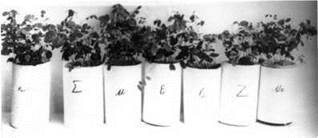
Fig. 12 - Effect of microelements on plant gas resistance
To increase the resistance of plant organisms to various pollutants, a considerable amount of research has been conducted using substances that stimulate their life processes. Compensating for insufficient amounts of Vitamins and Enzymes in plants can be achieved through root or foliar application. The addition of ascorbic and nicotinic acids, thiamine, and other vitamins to the nutrient medium, when deficient in the organism, accelerated plant growth, increased the accumulation of sugars and non-protein forms of nitrogen by enhancing enzymatic activity. Plant resistance to environmental pollutants can be increased by foliar application of various substances: hydroquinone, potassium ferricyanide, malic, citric, and ascorbic acids, as well as humic preparations derived from peat and brown coal.
Methods of Plant breeding for gas resistance are less studied and applied. Nevertheless, this method can be useful, as individual tolerance traits to air pollution have been established even among plants of non-resistant species.
Questions for independent study and self-assessment
1. Characterize the gas resistance of plants. What types of plant gas resistance do you know?
2. How can plant gas resistance be determined?
3. Outline the MAIN STAGES OF working with a fumigation chamber.
4. How to prepare a sulfur dioxide solution for plant fumigation with SO2?
5. How is plant susceptibility to harmful gases assessed?
6. What are the main causes of necrosis resulting from exposure to harmful gases?
7. What parameters, other than leaf damage, can indicate the condition of plants under air pollution conditions?
8. How does soil pollution affect plants?
9. Which elements belong to the group of heavy metals?
10. What are the Mechanisms of action of heavy metals on plants?
11. How can The impact of soil pollution on plants be investigated?
Last update: 07/08/2026
Editorial and Educational Adaptation: This material has been compiled based on the primary/original source text. The project team performed an editorial review, corrected technical inaccuracies, structured sections, and adapted the content for an educational format.
What was processed:
- elimination of formatting defects (OCR errors, structural breaks, corrupted characters);
- editorial organization of content;
- standardization of terminology in accordance with academic sources;
- verification of factual statements against the original source text.
All mentions of the author, publication year, and origin of the primary text have been preserved in accordance with the source.