BIOLOGY Volume 2 - A Guide to General Biology - 2004
11. QUANTITATIVE ECOLOGY
11.1. Methods for Measuring Environmental Factors
11.1.2. Hydrological Factors
Like soil, Water is a crucial habitat. This section explores several straightforward Methods used to monitor its Physical and Chemical properties, which are vital for living organisms.
Practical 11.6. Determining the pH of a water sample
Materials and Apparatus
Universal indicator paper or pH meter
Water sample
Option 1
Dip a strip of indicator paper into the water sample and compare the resulting color with the provided color chart. Record the corresponding pH value.
Option 2
Rinse the pH meter probe with distilled water, immerse it in the water sample, and read the pH value. This method yields more accurate results, but the instrument must be carefully calibrated prior to the experiment using standard Buffer solutions of known pH. Rinse the probe with distilled water before returning it to its storage buffer.
Practical 11.7. Determining chloride ion concentration in a water sample (approximate salinity estimation)
Materials and Apparatus
Water sample
10 ml pipette
Burette
Distilled water
3 conical flasks
White ceramic tile
Potassium chromate indicator solution
50 ml silver nitrate solution (2.73 g/100 ml)
Procedure
1. Pour a water sample (10 mL) into a conical flask and add 2 drops of potassium chromate solution.
2. Add the silver nitrate solution drop by drop from a burette, swirling the flask continuously.
3. Continue titration until the silver chloride precipitate turns reddish.
4. Repeat this titration with two more 10 mL samples. Calculate the average volume of the silver nitrate solution used.
5. This volume is roughly equivalent to the chloride ion concentration in the water (g/L).
Experiment 11.8. Determining the dissolved oxygen content in a water sample
The following describes the Winkler method, which yields precise results but requires numerous Reagents. A less precise yet simpler method is outlined in the Nuffield Advanced Science, Biological Science guide.
Portable field kits for the Winkler method are commercially available (e.g., from Hanna Instruments).
Materials and Equipment
10 mL of alkaline iodide solution: 3.3 g of NaOH and 2.0 g of KI in 10 mL of distilled water. (Handle with care!)
10 mL of manganese(II) chloride solution (4.0 g of MnCl2 in 10 mL of distilled water)
5 mL of concentrated Hydrochloric acid.
(Handle with care!)
Starch indicator solution
Distilled water
0.01 M sodium thiosulfate solution (see Procedure, step 8)
Three 5 mL graduated pipettes
Burette
White ceramic tile
3 conical flasks
250 mL water sample in a Glass-stoppered sampling bottle.
Procedure
1. Carefully submerge the sampling bottle into the water without splashing, and stopper it underwater to prevent any air bubbles from entering.
2. Using pipettes, add 2 mL of manganese chloride solution and 2 mL of alkaline iodide solution to the sample, ensuring the pipette tips Touch the bottom of the sample bottle. The denser salt solutions will displace equivalent volumes of water from the neck. Restopper the bottle carefully (it should remain completely full) and shake vigorously to thoroughly mix the reagents throughout the water sample. A complex manganese oxide-hydroxide precipitate will form, The amount of which is directly proportional to the dissolved oxygen content. This sample can be stored for an extended period (for instance, sent to a laboratory for further analysis).
3. Add 2 mL of concentrated hydrochloric acid and stopper the bottle to exclude any air bubbles. Shake the flask vigorously to dissolve the precipitate. This yields a solution of iodine in excess potassium iodide, where the amount of iodine is directly proportional to the initial oxygen content of the water sample. The oxygen is now bound, so subsequent exposure to air will not affect the results.
4. Transfer 50 ml of this solution into a conical flask. Titrate it from a burette with 0.01 M sodium thiosulfate solution as follows:
a) continuously swirl the flask while adding the sodium thiosulfate solution until the yellow color of the sample disappears;
b) add 3 drops of starch solution and continue titrating, swirling the flask, until the dark blue color of the starch disappears;
c) record the volume of the thiosulfate solution used.
5. Repeat step 4 with two other 50 ml samples and calculate the average volume of the reagent used for titration (x).
6. In the described procedure, 1 ml of 0.01 M thiosulfate solution corresponds to 0.056 ml of oxygen at standard Temperature and pressure (STP).
7. Calculate the oxygen concentration in 1 L of water using the following formula:
Class="center">Oxygen (ml/L) = 0.056 · x · 1000/50 (STP),
where x is the volume of thiosulfate solution required to titrate 50 ml of the sample.
8. In comparative studies of water pollution and BOD (biochemical oxygen demand), dissolved oxygen concentration is usually expressed in mg/L. The final calculation can be simplified by using a 0.0125 M sodium thiosulfate solution. In this case, 1 ml of this solution will be equivalent to 0.1 mg of oxygen.
a) Prepare a 0.1 M stock solution of sodium thiosulfate (Na2S2O3 · 5Н2O). To do this, dissolve 24.82 g of this substance in distilled water. Add a sodium hydroxide (NaOH) pellet and dilute the solution to a volume of 1 liter. This solution should be stored in a dark glass bottle for no more than 2–3 weeks.
b) If necessary, prepare a 0.0125 M working solution of sodium thiosulfate. To do this, take 125 ml of the stock solution and dilute it to a volume of 1 L (8x dilution).
c) Repeat all Procedures as described in steps 1–5, but use the 0.0125 M sodium thiosulfate solution in step 4:
O2 in sample (mg/L) = x · 0.1 · 1000/50 = 2x,
where x is the average volume of 0.0125 M sodium thiosulfate solution required to titrate 50 ml of the sample.
9. It is sometimes useful to compare the actual oxygen content with its potential maximum value — the saturation level. This is of particular interest when water at a given site is analyzed at different times of the year, i.e., at different temperatures, since the amount of oxygen retained in solution depends precisely on temperature. Consequently, to assess the saturation level of the solution with this gas, its temperature must be known. It can be easily measured with a standard mercury thermometer. Using Table 11.1, calculate the percentage of water saturation with oxygen using the formula:

Notes
1. Quite often, to save reagents, 25 ml water samples are analyzed. In this case, a different conversion factor should be used for the final calculation: O2 (mg/L) = 4x.
2. It is very important to completely dissolve the precipitate, as it concentrates all the oxygen previously present in the water. It may be necessary to add slightly more acid to achieve this.
3. To ensure all oxygen passes into the precipitate, sufficient amounts of manganese chloride and alkaline iodide solution must be added. In practice, a glass-stoppered flask of any size can be used, provided these two reagents are added in equal amounts, approximately 1 ml of each per 100 ml of the analyzed water.
4. When collecting samples in the field, rinse the flask at least three times with the water being tested before filling it. Point the neck against the current so that the water flows in smoothly without air bubbles. The flask must be thoroughly washed before sampling, and chemically cleaned with acid if possible.
5. When taking samples from a potentially contaminated water body, always wear waterproof gloves (e.g., rubber). In shallow streams, samples are taken from the middle of the channel. In deeper water bodies, move away from the shore using a pier or a boat. Safety precautions must be observed in all cases.
Table 11.1. Solubility of oxygen in water
Temperature, °C |
Saturation point for O2, mg/L |
Correction factor for seawater, mg/L |
0 |
14.63 |
0.0925 |
1 |
14.23 |
0.0890 |
2 |
13.84 |
0.0857 |
3 |
13.46 |
0.0827 |
4 |
13.11 |
0.0798 |
5 |
12.7? |
0.0771 |
6 |
12.45 |
0.0745 |
7 |
12.13 |
0.0720 |
8 |
11.84 |
0.0697 |
9 |
11.55 |
0.0675 |
10 |
11.28 |
0.0653 |
11 |
11.02 |
0.0633 |
12 |
10.77 |
0.0614 |
13 |
10.53 |
0.0595 |
14 |
10.29 |
0.0577 |
15 |
10.07 |
0.0559 |
16 |
9.86 |
0.0543 |
17 |
9.65 |
0.0527 |
18 |
9.46 |
0.0511 |
19 |
9.27 |
0.0496 |
20 |
9.08 |
0.0481 |
21 |
8.91 |
0.0467 |
22 |
8.74 |
0.0453 |
23 |
8.57 |
0.0440 |
24 |
8.42 |
0.0427 |
25 |
8.26 |
0.0415 |
26 |
8.12 |
0.0404 |
27 |
7.97 |
0.0393 |
28 |
7.84 |
0.0382 |
29 |
7.70 |
0.0372 |
30 |
7.57 |
0.0362 |
NOTES. The solubility of oxygen in water depends on temperature, atmospheric pressure, and the salt concentration in the solution. In saline water, the saturation point is lower, so appropriate corrections must be applied. These corrections should be multiplied by the salinity in parts per thousand (ppt) and this product subtracted from the value for freshwater (in the middle Column). Data are based on the work of Montgomery, Thom, and Cockburn at the Water Pollution Research Laboratory and taken from: Klein L., (1966) River Pollution, Vol. 3, Butterworth. |
||
Experiment 11.9. Determination of the biochemical oxygen demand (BOD) of a water sample
The previous experiment measured the actual oxygen content in a water body. While this is a useful baseline parameter, it can fluctuate widely even over the course of a day due to environmental factors such as light intensity and wind speed. A more reliable indicator is the rate at which oxygen is consumed by the organisms present in the water. If a large amount of organic waste enters a water body, decomposer microbes proliferate rapidly and quickly deplete dissolved oxygen reserves. This directly impacts their own continued survival as well as that of all other aerobic aquatic life.
Materials and Equipment
Water sample (0.5–1.0 L)
Option 1
Reagents and glassware required for the Winkler method (Experiment 11.8)
Option 2
Appropriately calibrated oxygen electrode
Procedure
Preparation
1. If necessary, adjust the pH of the sample so that it falls within the range of 6.5–8.5 (to optimize microbial activity).
2. If the sample is known to be severely oxygen-depleted (for instance, if its dissolved oxygen content has already been determined), aerate it for 5–10 minutes. This is crucial because the analysis measures the potential rate of oxygen consumption, and results may be unreliable if there is an initial deficit of oxygen.
3. If organic contamination is suspected to be high, prepare dilutions of the sample prior to incubation (see the note at the end of the procedure). Ensure that the BOD of the pure dilution water used for this purpose is negligibly low. To check this, incubate the dilution water alongside the samples. If the dissolved oxygen content in this water is very low, account for these losses in your calculations by applying a correction factor In addition to the dilution ratio.
Analysis
1. Distribute the sample (diluted, if necessary) into three 125 ml or 250 ml glass BOD bottles with ground-glass stoppers. Pour carefully to avoid trapping air bubbles. The bottles must be completely filled.
2. Immediately determine the dissolved oxygen content in one of the bottles (mg/L).
3. Incubate the other two bottles in the dark (to prevent Photosynthesis) at a standard temperature of 20 °C, or at the temperature of the original sample, for 1–5 days. Incubation is typically carried out at 20 °C for 5 days.
4. Determine the oxygen content in these incubated bottles (mg/L).
5. Subtract the mean value of the two incubated bottles from the initial oxygen concentration. This will give the BOD, provided the sample was not diluted prior to incubation. If dilution was required, use the following formula:
BOD = (x − y)(a + 1) mg/L,
where x is the initial dissolved oxygen content (mg/L); y is the mean final dissolved oxygen content (mg/L); and a is The ratio of the volume of added dilution water to the volume of the original sample.
Note
River water generally does not require dilution. In cases of severe pollution, however, a fivefold dilution may be necessary. Such water poses health risks, must be handled with extreme caution, and is best avoided for educational purposes. Tap water was traditionally used for dilutions, but its high chlorine content affects microbial activity. It is preferable to use "synthetic" water—distilled or deionized water supplemented with the required chemicals. Guidelines for preparing such water can be found in N. L. Golterman, R. S. Clymo, and M. A. M. Ohnstad (1978), Methods for physical and chemical analysis of fresh waters, IBP Handbook No. 8, Blackwell Scientific Publications, 2nd edition.
Samples with a BOD exceeding 6 mg/L or a final dissolved oxygen saturation level below 40% must be re-analyzed after appropriate dilution.
In some cases, a significant portion of the BOD is due to the Oxidation of ammonia. If desired, this nitrification process can be suppressed by adding 1 mL of a 0.5 g/L allylthiourea solution to each replicate. This topic is discussed in further detail in the aforementioned work by Golterman et al.
Water flow velocity
The simplest method for measuring water flow velocity is to measure the time required for a floating object to travel a known distance. To eliminate the EFFECT OF WIND, the object should project minimally above the water surface. Alternatively, one can use an L-shaped tube with a diameter of 2 cm and arm lengths of 50 cm and 10 cm. It is placed vertically in the water with the short arm facing against the current. The water flow velocity is determined by measuring the height to which the water rises in the long arm, using the formula:
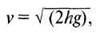
where v is the water flow velocity (cm/s); g is the acceleration due to gravity (981 cm/s2); h is the height of the water column (cm).
Last update: 06/08/2026
Editorial and Educational Adaptation: This material has been compiled based on the primary/original source text. The project team performed an editorial review, corrected technical inaccuracies, structured sections, and adapted the content for an educational format.
What was processed:
- elimination of formatting defects (OCR errors, structural breaks, corrupted characters);
- editorial organization of content;
- standardization of terminology in accordance with academic sources;
- verification of factual statements against the original source text.
All mentions of the author, publication year, and origin of the primary text have been preserved in accordance with the source.