BIOLOGY Volume 2 - A Guide to General Biology - 2004
15. HEALTH AND DISEASE
15.3. Infectious Diseases
15.3.3. Malaria
Throughout human history, malaria has been and remains one of the most devastating diseases. Despite all attempts to eradicate it, it still claims numerous lives every year, and its incidence has been on the rise since the 1970s. Approximately 200–300 million new cases and about 1.5 million deaths are recorded globally each year, with more than two-thirds of these occurring in Africa. Malaria is particularly prevalent in sub-Saharan Africa, but it is also reported in Asia and Latin America (Fig. 15.8). Previously, the disease was also common in Europe and North America: notable figures such as Oliver Cromwell and the explorer Sir Walter Raleigh died from it.
Malaria serves as a prime example of how the spread of infectious diseases is linked to social, economic, and biological factors.
Class="center">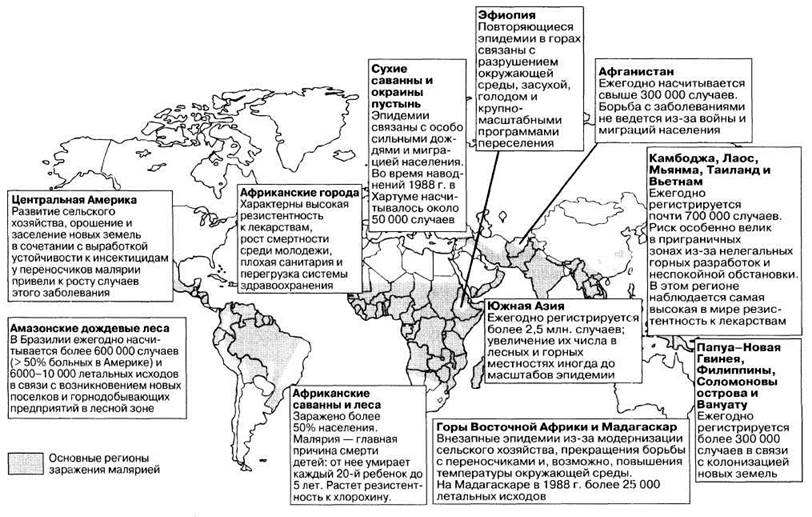
Fig. 15.8. Global distribution of malaria. (From ’The Work of WHO’ Biennial Report, 1992-93, fig 14.4, WHO, Geneva (1994).)
Transmission Pathways and Symptoms
The causative agents of malaria are parasitic Protozoa of the genus Plasmodium. Four species are pathogenic, but the majority of cases are associated with two of them. P. vivax occurs in subtropical regions and causes so-called benign tertian malaria; P. falciparum is more widely distributed, has a higher mortality rate, and causes malignant tertian (tropical) malaria. Among the numerous diseases prevalent on the African continent, this particular one claims the maximum number of human lives.
Malaria is transmitted by mosquitoes of the genus Anopheles, which are themselves parasites since their females feed on human Blood. When a mosquito bites, plasmodia from its Salivary Glands enter The Human Body. Mosquitoes are obligate vectors of malaria, meaning that in their absence, infection is virtually impossible except through blood transfusions or unsterile needles used by drug addicts.
The asexual stage of the plasmodium—the sporozoite—enters human blood. Sporozoites rapidly leave the Blood Vessels and invade various Cells and Tissues, predominantly Liver cells. There they reproduce, generating a massive number of merozoites, which in turn invade red Blood Cells. Feeding on them, the merozoites grow and multiply. This process destroys THE RED BLOOD cells, and a new generation of merozoites infects subsequent cells, and so on. Multiple Divisions of the plasmodia result in millions of parasites circulating in the blood. Some of these transform into male and female gametocytes (sexual forms).
When an infected person's blood is ingested by a mosquito, the gametocytes are not digested but instead develop into Gametes of opposite sexes. Their fusion produces a zygote, which penetrates the mosquito's gut wall and grows into an oocyst, forming a bulge on the exterior surface of the gut. Multiple division within the oocyst produces sporozoites, which migrate into the insect's hemolymph (blood) and from there invade its salivary glands.
People living in malaria-endemic regions who survive several bouts of malaria acquire a certain degree of Immunity to it. For those encountering the infection for the first time, the disease is extremely severe. After an incubation period of 10–35 days, body Temperature sharply rises to 40.6–41.7 °C. The fever is accompanied by headache, nausea, and generalized body aches. This is followed by profuse sweating and a drop in temperature. The liver is tender upon Palpation.
In P. vivax infections, these paroxysms occur every three days, coinciding with the massive release of the next generation of merozoites and their toxic metabolic products from red blood cells. The clinical picture is frequently complicated by multiple infections.
P. falciparum is capable of causing severe (cerebral) malaria, in which the fever is accompanied by dangerous complications. The most common of these are convulsions and coma, which develop As a result of parasite accumulation in the cerebral blood vessels. Other common complications include renal failure and Pneumonia. Malaria caused by P. falciparum can prove fatal within two to three days.
Prevention and Treatment
Individuals planning to travel to malaria-endemic areas are advised to undergo Chemoprophylaxis, i.e., preventing the disease through medication. Chloroquine or mefloquine are typically used for this purpose, taken once a week before and during exposure in the risk area, and continued for six weeks thereafter. Proguanil hydrochloride and pyrimethamine also yield good results as alternative medications. The efficacy of all these drugs has declined due to The Development of parasite resistance. For instance, P. falciparum is currently resistant in most endemic foci, including Latin America, East Africa, and Southeast Asia. Although new antimalarial drugs are being developed, pharmaceutical companies do not expand their production because the primary consumers are developing countries, which offer little prospect of high profits.
The medications Fansidar and Lariam (based on mefloquine) are effective against chloroquine-resistant plasmodia. However, mefloquine can cause unpleasant side effects such as nausea, vomiting, dizziness, headache, abdominal pain, diarrhea, and even psychiatric disorders. Furthermore, half of all malaria cases in Thailand are already unresponsive to mefloquine, despite the drug having been developed in 1985. Interest in the traditional remedy quinine is reviving, but plasmodia are showing decreasing sensitivity to it as well.
In addition to medication, a certain degree of protection against malaria is provided by avoiding vector contact through protective clothing, window screens, bed nets (Fig. 15.9)—which are now commonly impregnated with insecticides—and similar measures.
Drugs can be administered not only orally (by swallowing tablets) but also via injection. In this case, the concentration of the drug in the blood is higher, and consequently, its impact on the parasites is stronger.
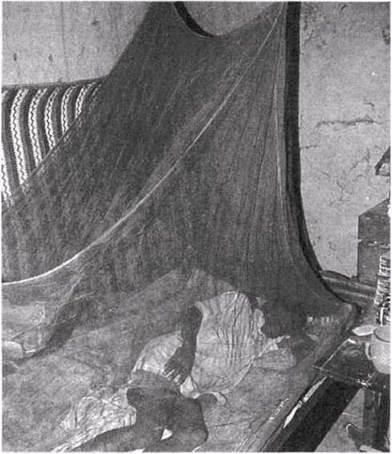
Fig. 15.9. A boy sleeping under an insecticide-treated bed net. This is one of the measures used to protect against malaria mosquito bites.
Eradication of Malaria
In 1955, the WHO launched a global malaria eradication campaign. Substantial funds were allocated for this initiative, which focused on the following key areas.
1. Drainage of standing Water bodies. Malaria mosquito larvae develop in stagnant water, so draining standing water eliminates the breeding sites of the vectors. However, this measure is overly expensive and insufficiently effective, as rural areas inevitably feature ponds, irrigation canals, and other open water reservoirs that cannot be destroyed.
2. Control of mosquito larvae and pupae. Vector larvae and pupae live in water and obtain oxygen through breathing tubes that project above the water surface. If the air supply is cut off, the insects will perish. The simplest way to achieve this is to cover the water body with a thin layer of an oily liquid (such as petroleum). This method proved highly successful in Brazil as early as the 1930s and by 1940 made it possible to eradicate Anopheles gamhiae.
3. Control of adult mosquitoes. To combat adult insects in residential areas, insecticides are periodically sprayed. Conducting regular and thorough treatments for three years can break the human-mosquito-human transmission cycle across an entire region, as the transmission of P. vivax and P. falciparum from infected individuals to healthy ones becomes impossible.
Malaria control requires substantial financial investment. Nevertheless, the Structure/175.html">Implementation of this program has already enabled the near-total eradication of malaria in Chile, several European countries (Cyprus, France, Italy, the Netherlands, etc.), Asian nations (such as Singapore), and the USA. Extensive efforts in this direction are also underway in Africa; however, the complete elimination of the disease worldwide remains a distant prospect.
Malaria eradication is hindered by numerous factors. Foremost among these is the unhindered migration of vector mosquitoes from one region to another. Population Migrations in search of work, deforestation, or the DEVELOPMENT OF NEW lands also contribute to the spread of the disease and even trigger epidemics (Fig. 15.8). This phenomenon has been observed, for instance, in Madagascar, Ethiopia, and Sri Lanka.
Another factor impeding the global eradication of malaria is the development of insecticide resistance in mosquitoes. In 1952, the first DDT-resistant specimens were discovered in Greece, Panama, and the USA. In many countries, insecticide treatments no longer yield the desired results. Furthermore, there is growing concern over the bioaccumulation of persistent toxic chemicals such as DDT and dieldrin along food chains, leading to their accumulation in the tissues of mammals and birds (Ch. 10). The negative consequences of this phenomenon are evident. DDT degrades extremely slowly in soil and bog peat, where it can still be detected even 30 years after application. In many countries, The Use of DDT and dieldrin has long been banned.
Malaria control is also complicated by the existence of a vast pathogen reservoir in monkeys, birds, rodents, and reptiles, which can serve as a source of human infection.
Taking all these challenges into account, in 1969 the WHO abandoned the objective of global malaria eradication and shifted to a policy of disease «containment».
VACCINATION. In the 1980s–1990s, developing a malaria vaccine became a priority in the fight against the disease. However, despite concerted efforts, a vaccine of the required quality has yet to be produced. The task is further complicated by the fact that the preparation must be both effective and inexpensive; otherwise, its widespread deployment in developing countries most heavily burdened by malaria will be impossible.
Plasmodia are subjected to immune attack upon emerging from liver cells and erythrocytes. Attempts to develop Vaccines using killed or attenuated parasites have been unsuccessful. One of the reasons for this may be the high Variability of plasmodia surface Antigens. This variability is driven, firstly, by the presence of numerous strains within each species and, secondly, by the continuous alteration of the parasite's surface antigens. As a result, the Antibodies produced become outdated too quickly and fail to recognize existing antigens. Currently, the Malaria Genome Project is underway, involving the mapping of parasite genes. Research is also being conducted to identify human genes responsible for Various Forms of resistance to the disease.
Last update: 06/08/2026
Editorial and Educational Adaptation: This material has been compiled based on the primary/original source text. The project team performed an editorial review, corrected technical inaccuracies, structured sections, and adapted the content for an educational format.
What was processed:
- elimination of formatting defects (OCR errors, structural breaks, corrupted characters);
- editorial organization of content;
- standardization of terminology in accordance with academic sources;
- verification of factual statements against the original source text.
All mentions of the author, publication year, and origin of the primary text have been preserved in accordance with the source.