BIOCHEMISTRY - Textbook - Ostapchenko L. I. - 2012
Chapter 10. NUCLEIC ACID METABOLISM
10.5. Nucleotide Biosynthesis
10.5.3. Formation of Deoxyribonucleotides
The precursors for deoxyribonucleotide synthesis are ribonucleotides, in which the D-ribose at position 2 is reduced by two hydrogen atoms to the corresponding deoxyribose derivative within the nucleotide. In mammalian Cells, the substrates for this reaction are ribonucleoside diphosphates.
First, the reduction of the thioredoxin protein itself occurs, which exists in two states: a reduced form with SH groups and an oxidized form with disulfide groups (Fig. 10.14). The reduction of thioredoxin is carried out by NADPH-dependent flavoprotein thioredoxin reductase. Reduced thioredoxin then reduces the ribonucleotide to the corresponding deoxyribonucleotide with the participation of the enzyme Ribonucleotide reductase.
Class="center">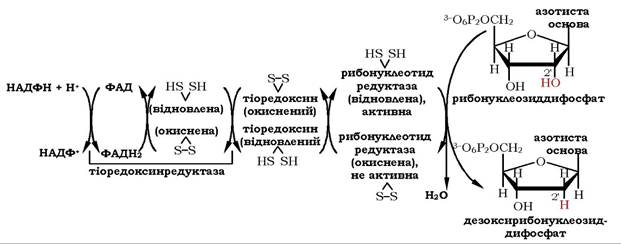
Fig. 10.14. Scheme of ribonucleoside diphosphate reduction
Ribonucleotide reductase is an oligomeric protein consisting of two subunits and containing non-heme iron as a cofactor. Ribonucleotide reductase catalyzes The formation of dADP, dGDP, dUDP, and dCDP, which are subsequently converted by nucleoside diphosphate Kinases into deoxynucleoside triphosphates; three of these (excluding dUDP) are used directly in DNA Synthesis.
Ribonucleotide reductase is allosterically activated by ATP and inhibited by dATP, which makes it possible to regulate The ratio of oxidized and reduced forms of nucleoside diphosphates.
Deoxythymidylate (dTMP), which is also essential for DNA synthesis, is formed from uridine monophosphate (UMP) in four steps. First, UMP is phosphorylated to UDP, which is reduced to dUDP, and the latter is dephosphorylated to dUMP, which is then methylated:

The conversion of dUDP to dUMP can proceed via two pathways: the first involves the nucleoside monophosphate kinase-catalyzed interaction of dUDP with ADP:

alternatively, nucleoside diphosphate kinase initially catalyzes the reaction forming dUTP from dUDP:

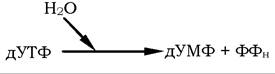
and then deoxyuridine triphosphate diphosphohydrolase (dUTPase) converts dUTP into dUMP:
Formation of dUMP is also possible via the hydrolytic deamination of dCMP:

Next, dUMP is methylated to yield deoxythymidylate (Fig. 10.15). The reaction is catalyzed by thymidylate synthase and requires 5,10-methylenetetrahydrofolate, which serves as a carbon and hydrogen donor in this reaction. Another product of this reaction is 7,8-dihydrofolate, which can be reduced in an NADPH-dependent reaction catalyzed by Dihydrofolate Reductase to form tetrahydrofolate. Methylenetetrahydrofolate is regenerated in a Serine-dependent reaction catalyzed by serine hydroxymethyltransferase.
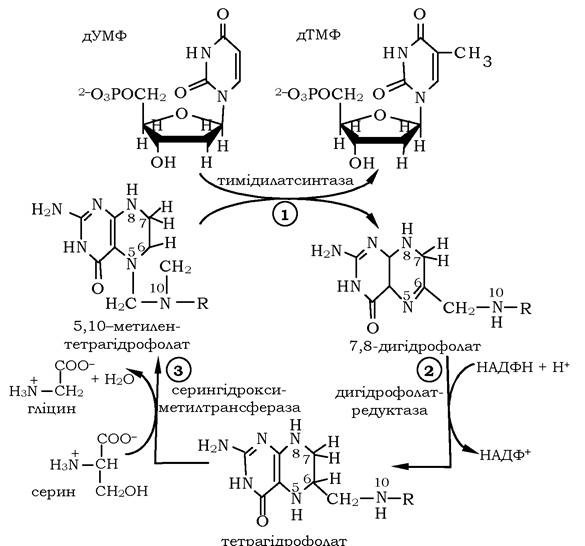
Fig. 10.15. Scheme of reactions for dTMP synthesis from dUMP
The levels of ribonucleotide reductase and thymidylate synthase Enzymes are regulated at the genetic level through Induction and Repression, depending on The rate of DNA synthesis. High activity of these enzymes is observed when The Cell is actively synthesizing DNA and preparing for division.
A certain amount of deoxyribonucleotides is produced in rapidly dividing cells via Salvage Pathways, thereby ensuring the reuse of thymine, thymidine, and deoxycytidine in Reactions Catalyzed by thymidine phosphorylase, thymidine kinase, and deoxycytidine kinase:
thymine + deoxyribose-1-phosphate → thymidine + H3PO4; thymidine + ATP → dTMP + ADP; deoxycytidine + ATP → dCMP + ADP.
In addition to the Overview diagrams (see Figs. 10.8, 10.9, 10.12, and subsequent ones) accompanied by explanatory text, and for a better comprehension of the material, a generalized Scheme for the Synthesis of purine and pyrimidine NUCLEOTIDES is provided (Fig. 10.16).
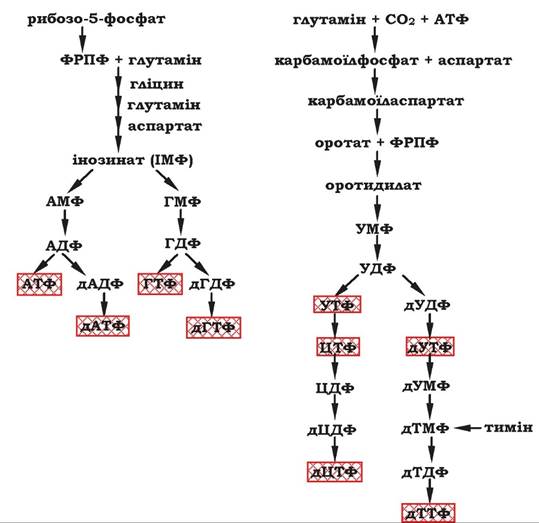
Fig. 10.16. General scheme of purine and pyrimidine nucleotide synthesis
Last update: 06/08/2026
Editorial and Educational Adaptation: This material has been compiled based on the primary/original source text. The project team performed an editorial review, corrected technical inaccuracies, structured sections, and adapted the content for an educational format.
What was processed:
- elimination of formatting defects (OCR errors, structural breaks, corrupted characters);
- editorial organization of content;
- standardization of terminology in accordance with academic sources;
- verification of factual statements against the original source text.
All mentions of the author, publication year, and origin of the primary text have been preserved in accordance with the source.