BIOCHEMISTRY - L. Stryer - 1984
VOLUME 2
PART II GENERATION AND STORAGE OF METABOLIC ENERGY
CHAPTER 13. THE CITRIC ACID CYCLE
13.17. Regulation of the Pyruvate Dehydrogenase Complex
The Formation of Acetyl-CoA from Pyruvate is a key irreversible step in METABOLISM, as animals are incapable of converting acetyl-CoA into glucose. The oxidative decarboxylation of pyruvate to acetyl-CoA opens up two potential pathways for the further utilization of glucose carbon atoms: 1) oxidation to CO2 via The Citric Acid Cycle with the concomitant generation of energy, or 2) incorporation into Lipids (Section 17.21). Consequently, there is every reason to expect that The activity of the pyruvate dehydrogenase complex must be tightly regulated. Indeed, this enzyme complex is regulated by three distinct mechanisms.
1. Product inhibition. Acetyl-CoA and NADH, the products of pyruvate oxidation, inhibit the enzyme complex. Acetyl-CoA inhibits the transacetylase component, whereas NADH inhibits the dihydrolipoyl dehydrogenase component. These inhibitory effects are reversed by CoA and NAD+, respectively.
2. Feedback regulation by NUCLEOTIDES. The activity of the enzyme complex is regulated by The energy charge (Section 11.13). The pyruvate dehydrogenase component is specifically inhibited by GTP and activated by AMP. Consequently, the activity of the complex decreases when The Cell is rich in readily available energy.
3. Regulation by covalent modification. The complex loses its enzymatic activity when a specific Serine residue of the pyruvate dehydrogenase component is phosphorylated by ATP. Phosphorylation is enhanced at high ATP/ADP, acetyl-CoA/CoA, and NADH/NAD+ ratios, and is inhibited by pyruvate. The enzyme complex is reactivated when the phosphoryl group is hydrolyzed by a specific phosphatase. Dephosphorylation is promoted by high levels of pyruvate. Covalent modification represents a major mechanism for regulating enzymatic activity. We will encounter the regulatory role of phosphorylation and dephosphorylation again when we examine Glycogen Synthesis and degradation.
13.18. Regulation of the Citric Acid Cycle
The rate of The Citric Acid cycle is finely tuned to the cellular demand for ATP. A major regulatory step in the cycle is the synthesis of citrate from oxaloacetate and acetyl-CoA. ATP is an allosteric inhibitor of citrate synthase; its action consists in increasing the Km for acetyl-CoA. Thus, as the ATP level rises, the saturation of the enzyme with acetyl-CoA decreases, leading to a reduction in citrate formation.
The second regulatory step is the reaction catalyzed by isocitrate dehydrogenase. The enzyme is allosterically stimulated by ADP, which increases its affinity for substrates. There is mutual cooperativity among the binding of isocitrate, NAD+, Mg2+, and ADP. In contrast, NADH inhibits isocitrate dehydrogenase by directly competing with NAD+.
The third regulatory step of the citric acid cycle is catalyzed by α-oxoglutarate dehydrogenase. Regulation at this point is in some respects similar to that at the level of the pyruvate dehydrogenase complex, as might be expected from their structural Homology. α-Oxoglutarate dehydrogenase is inhibited by succinyl-CoA and NADH, the products of the reaction it catalyzes. It is also inhibited by a high energy charge. In short, The entry of two-carbon fragments into the citric acid cycle and the cycle's rate are diminished when the cellular ATP content is high. This regulation is achieved through the participation of several complementary mechanisms operating at various Stages of the cycle (Fig. 13.16).
Class="center">Fig. 13.16. Regulation of the citric acid cycle and the Oxidative Decarboxylation of pyruvate: the asterisk in a square indicates steps that require an electron acceptor (NAD+ or FAD) regenerated in the Respiratory Chain

13.19. The Discovery of the Cycle by Krebs
«I have often been asked how the investigation of the citric acid cycle originated and developed. Was this concept the result of a sudden flash of inspiration and foresight?» «Nothing of the kind,» replies Hans Krebs, «it was a very slow evolutionary process extending over five years starting from 1932 (when I entered the field)...» Krebs initially studied the rate of oxidation of various compounds using Kidney and Liver slices. He selected substances that were likely intermediates in The oxidation of foodstuffs. Krebs assumed that such substances would be rapidly oxidized and, consequently, easily identified. Important data were obtained: citrate, succinate, fumarate, and acetate were oxidized very rapidly in various Tissues.
A crucial contribution to this problem was made by Albert Szent-Györgyi in 1935. He investigated the oxidation of various substances using Suspensions of minced pigeon breast Muscle. This highly active flight muscle possesses an exceptionally high rate of oxidative processes, which accelerated the course of the experiment. Szent-Györgyi discovered that The addition of certain C4-dicarboxylate acids increased O2 consumption to a much greater extent than required for their direct oxidation. In other words, they catalytically (rather than stoichiometrically) stimulated O2 consumption. This catalytic stimulation of Respiration was observed in the presence of succinate, fumarate, and malate.
The next breakthrough was the elucidation of the biological pathway of citrate oxidation by Carl Martius and Franz Knoop in 1937. They demonstrated that citrate is isomerized to isocitrate via cis-aconitate and that isocitrate undergoes oxidative decarboxylation to α-oxoglutarate. The possibility of the oxidation of α-oxoglutarate to succinate was already known, and thus this discovery established the pathway from citrate to succinate. It came at a most opportune time, as Krebs was now able to explain his recent observation that citrate catalytically enhances the respiration of minced pigeon breast muscle.
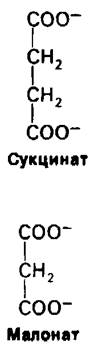
Additional vital information was obtained through The Use of malonate, a specific inhibitor of succinate dehydrogenase. Malonate is a competitive inhibitor of this enzyme because of its close structural resemblance to succinate. By that time, it was known that malonate acts as a respiratory poison. Krebs concluded that succinate dehydrogenase might therefore play a key role in respiration. This hypothesis was supported by the finding that the addition of citrate to malonate-poisoned muscle leads to the accumulation of succinate. Furthermore, succinate accumulated in such muscle upon the addition of fumarate as well. The first of these experiments points to the physiological Significance of the pathway from citrate to succinate; the second reveals the existence of a pathway from fumarate to succinate distinct from the reaction catalyzed by succinate dehydrogenase.
Krebs further established that citrate is rapidly formed in muscle suspension upon the addition of oxaloacetate. The discovery of citrate synthesis from oxaloacetate enabled Krebs to piece together the complete scheme of the process. The citric acid cycle postulated by him immediately provided a clear picture of carbohydrate oxidation. In this framework, many experimental facts
found their precise place—such as, for example, the catalytic stimulation of respiration by succinate and other intermediates. It is noteworthy that the citric acid cycle was neither the only nor the first metabolic cycle discovered by Krebs. Six years earlier, he had demonstrated that urea is synthesized via a cyclic metabolic pathway known as the Ornithine cycle (Chap. 18). Thus, THE CONCEPT OF a cyclic metabolic pathway was already fully grasped by Krebs when he analyzed the data and guided the experiments that led to his proposed citric acid cycle.
Last update: 06/08/2026
Editorial and Educational Adaptation: This material has been compiled based on the primary/original source text. The project team performed an editorial review, corrected technical inaccuracies, structured sections, and adapted the content for an educational format.
What was processed:
- elimination of formatting defects (OCR errors, structural breaks, corrupted characters);
- editorial organization of content;
- standardization of terminology in accordance with academic sources;
- verification of factual statements against the original source text.
All mentions of the author, publication year, and origin of the primary text have been preserved in accordance with the source.