BIOCHEMISTRY - L. Stryer - 1984
VOLUME 2
PART II GENERATION AND STORAGE OF METABOLIC ENERGY
CHAPTER 13. THE CITRIC ACID CYCLE
In the preceding chapter, we examined The Glycolytic Pathway, in which glucose is converted into Pyruvate. Under aerobic conditions, the next stage in energy generation from glucose is The oxidative decarboxylation of pyruvate to form acetyl-CoA. This activated acetyl group is then completely oxidized to CO2 by The Citric Acid Cycle, a sequence of reactions also known as The Tricarboxylic Acid Cycle or the Krebs cycle. The Citric Acid cycle serves as the final common pathway for The oxidation of fuel molecules: Amino Acids, Fatty acids, and CARBOHYDRATES. Most fuel molecules enter this pathway after being converted into acetyl-CoA. The citric acid cycle has a dual role, also providing intermediates for biosynthetic processes. Unlike Glycolysis, which takes place in the Cytosol, the Reactions of the citric acid cycle occur within the Cell/35.html">Mitochondria.
13.1. Formation of Acetyl-Coenzyme A from Pyruvate
The Oxidative Decarboxylation of pyruvate to form acetyl-CoA, which takes place in the mitochondrial matrix, serves as the metabolic bridge between glycolysis and the citric acid cycle:
Pyruvate + CoA + NAD+ → Acetyl-CoA + CO2 + NADH.
This irreversible entry of the glycolytic product into the citric acid cycle is catalyzed by the pyruvate dehydrogenase complex, an extremely
large multienzyme complex—a highly integrated system composed of Three types of Enzymes, which is discussed in detail in Section 13.11.
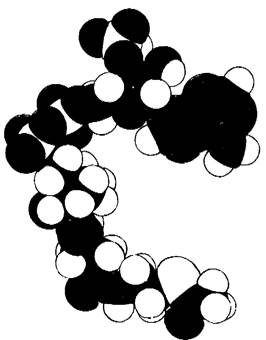
Class="center">Fig. 13.1. Model of acetyl-CoA
13.2. Overview of the Citric Acid Cycle
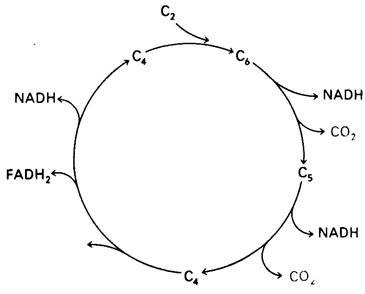
The General scheme of the citric acid cycle (TCA cycle) is shown in Fig. 13.3. A four-carbon compound (oxaloacetate) condenses with a two-carbon acetyl unit to yield a six-carbon tricarboxylic acid (citrate). This citrate isomer undergoes oxidative decarboxylation, yielding a five-carbon compound (α-ketoglutarate), which in turn undergoes further oxidative decarboxylation to form a four-carbon compound (succinate). Subsequent reactions of succinate lead to the regeneration of oxaloacetate. Two carbon atoms enter the cycle as an acetyl unit, and two carbon atoms leave the cycle as two molecules of CO2. Because the acetyl group is more reduced than CO2, oxidation-reduction reactions must take place within the cycle. Indeed, there are four such reactions. Three hydride ions (i.e., six electrons) are transferred to three molecules of NAD+, and one pair of hydrogen atoms (two electrons) is transferred to flavin adenine dinucleotide (FAD). The oxidation of these electron carriers by O2 via the electron-transport chain generates eleven molecules of adenosine triphosphate (ATP). In addition, one high-energy phosphate bond is generated directly per turn of the citric acid cycle.

Fig. 13.2. Schematic representation of a mitochondrion. The oxidative decarboxylation of pyruvate and The sequence of reactions of the citric acid cycle take place within the mitochondrial matrix
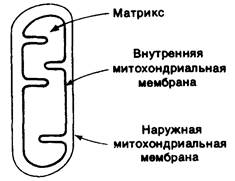
Fig. 13.3. General scheme of the citric acid cycle
Last update: 06/08/2026
Editorial and Educational Adaptation: This material has been compiled based on the primary/original source text. The project team performed an editorial review, corrected technical inaccuracies, structured sections, and adapted the content for an educational format.
What was processed:
- elimination of formatting defects (OCR errors, structural breaks, corrupted characters);
- editorial organization of content;
- standardization of terminology in accordance with academic sources;
- verification of factual statements against the original source text.
All mentions of the author, publication year, and origin of the primary text have been preserved in accordance with the source.