Harper's Illustrated Biochemistry, Volume 1 - Murray R. 1993
Bioenergetics, Carbohydrate and Lipid Metabolism
Physiologically Important Lipids
Steroids
Steroids are frequently found in association with fats. They can be separated from fat through saponification1 (partitioning into the "unsaponifiable" fraction). All steroids share a common cyclic core similar to the phenanthrene molecule (rings A, B, and C), fused to a cyclopentane ring (D). The carbon atom numbering in the steroid Nucleus is shown in Fig. 15.21.
It is important to keep in mind that the simple hexagonal ring in steroid structural formulas is not a benzene ring, but a fully saturated six-carbon ring in which all valences are saturated with hydrogen atoms (or potentially other groups). Methyl side chains are represented by dashes, with the distal (methyl) end remaining open. Typically, methyl groups are located at positions 10 and 13 (the carbon atoms within these groups are numbered 19 and 18), and the side chain is attached at position 17 (as in the Cholesterol molecule). If a compound contains one or more hydroxyl groups and lacks carbonyl or carboxyl groups, it is classified as a sterol, and its full name ends with -ol.
1 Saponification refers to the alkaline Hydrolysis of fat. The products of saponification are glycerol and alkali salts of Fatty acids, commonly known as soaps.
Class="center">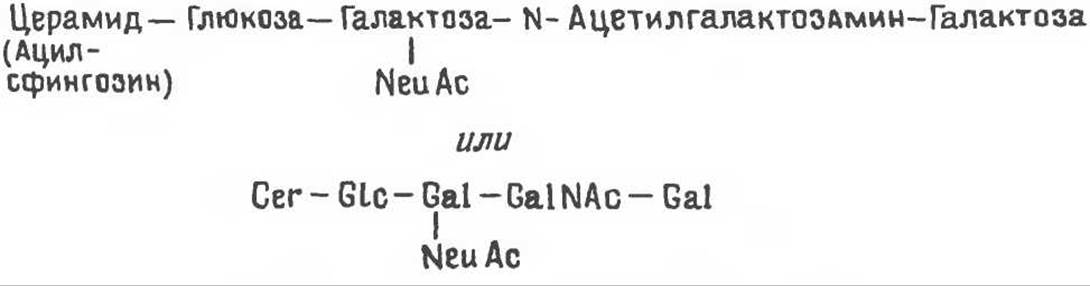
Fig. 15.20. GM2-Ganglioside (monosialoganglioside).

Fig. 15.21. Steroid nucleus.
Stereochemical Aspects
Due to their complex Structure and molecular Asymmetry, steroids exhibit numerous potential stereoisomers. Each of the six-carbon rings of the steroid nucleus can adopt one of two distinct spatial Conformations: the chair conformation or the boat conformation (Fig. 15.22).
In natural steroids, almost all rings adopt the chair conformation due to its greater thermodynamic stability. The rings may be in either a cis or trans relationship to one another (Fig. 15.23).
The spatial arrangement of rings A and B in natural steroids can be of either the cis or trans type. Rings B and C are in a trans configuration, as are rings C and D (with cardiac Glycosides and toad poison steroids being exceptions). Bonds to substituent groups projecting above the plane of the ring are represented by solid, bold lines (β), whereas bonds to groups lying below the plane of the ring are designated by dashed lines (α). In 5α-steroids, ring A is always trans-fused to ring B, whereas in 5β-steroids, it is cis-fused. The methyl groups attached to C10 and C13 are always in the β-configuration.

Fig. 15.22. Conformations of stereoisomers.
Cholesterol
Cholesterol is found in all body Cells and is particularly abundant in Nervous Tissue. It is a major component of Plasma Membranes and plasma Lipoproteins; it frequently occurs in the form of fatty acid esters and serves as the precursor for the synthesis of all physiologically active steroids in the body. Cholesterol is present in animal fats but absent from plant fats. Its chemical name is 3-hydroxy-5,6-cholestene (Fig. 15.24).

Fig. 15.23. Generalized steroid nucleus; A — all-trans configuration of adjacent rings; B — cis configuration of rings A and B.

Fig. 15.24. Cholesterol.
Ergosterol
Ergosterol is found in plants and Yeast and is significant as a precursor of vitamin D (Fig. 15.25). Upon ultraviolet irradiation, it acquires antirachitic activity (via the opening of ring B).
Coprosterol
Coprosterol (coprostanol) is present in feces and is formed by intestinal microflora Bacteria reducing the double bond between atoms C5 and C6 in cholesterol.
Other Important Sterols and Steroids
These include Bile acids, Adrenocortical Hormones, Sex Hormones, Vitamin D Group, cardiac glycosides, plant sitosterols, and certain Alkaloids.
Polyprenoid compounds
Although they are not sterols, they are structurally related to them to a certain extent because, like cholesterol (see Fig. 27.3), they are built from 5-carbon isoprenoid units (Fig. 15.26). These include ubiquinone (see p. 126), a component of the mitochondrial Respiratory Chain, and the long-chain alcohol dolichol (Fig. 15.27), which takes part in glycoprotein synthesis—specifically, in The transfer of carbohydrate residues to asparagine residues in a polypeptide chain (see Chapter 54). Plant-derived Isoprenoids include rubber, camphor, Fat-soluble Vitamins A, D, E, and K, and ß-carotene (provitamin A).
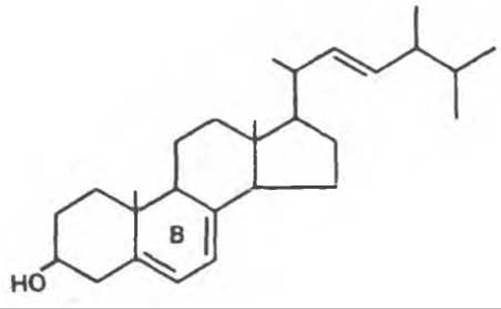
Fig. 15.25. Ergosterol.

Fig. 15.26. Isoprenoid unit.
Last update: 06/08/2026
Editorial and Educational Adaptation: This material has been compiled based on the primary/original source text. The project team performed an editorial review, corrected technical inaccuracies, structured sections, and adapted the content for an educational format.
What was processed:
- elimination of formatting defects (OCR errors, structural breaks, corrupted characters);
- editorial organization of content;
- standardization of terminology in accordance with academic sources;
- verification of factual statements against the original source text.
All mentions of the author, publication year, and origin of the primary text have been preserved in accordance with the source.