Practical Protein Chemistry - A. Darbre 1989
Separation of protein and peptide mixtures by high-performance liquid chromatography
Gel filtration
Separation parameters
When using soft gels (Sephadex, biogels), molecular size-based Separation is quite time-consuming. The advent of rigid matrices for Gel Chromatography made it possible to significantly reduce the time required for the Separation of Proteins and Peptides using this method. The Use of compression-resistant sorbents (Ultrogel, Sepharose) helped achieve higher separation efficiency in conventional (gravity-packed) columns.
To obtain matrices with the parameters required for high-performance gel chromatography, manufacturers are exploring ways to produce sorbents in the form of uniform, small-diameter particles (5–10 µm) with a narrow pore size distribution (within just a few percent).
The behavior of a protein (peptide) during gel chromatography depends on the physical and Chemical properties of the sample, the eluent, and, of course, the type of matrix used.
An Overview of the physical parameters of separation can be found in [19, 33]. Let us examine the Basic Concepts of gel chromatography. The total volume of the Mobile phase Vt consists of the volume within the particles Vi and the interstitial volume between the sorbent particles V0 packed in the Column. The movement of the solvent into and out of the pores occurs via diffusion. The distribution of the solute between the internal and external solvent volumes is determined by the partition coefficient KD:
KD = Ve- V0/ Vi = (Ve - V0)/(Vt - V0) where Ve is the elution volume of a given substance, V0 is the void volume (occupied by the liquid between the matrix particles), and Vt is the total volume of the mobile phase.
Molecules whose size prevents them from penetrating the sorbent pores and equilibrating with the liquid inside the pores (KD = 0) elute at a volume of Ve = V0. Small molecules that penetrate the pores (Kd = 1) emerge from the column as a single peak at an elution volume Ve equal to the total volume Vt.
K0 can vary within 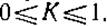
Large molecules pass through the column faster than smaller ones; ideally, the minimum elution volume is V0, and the maximum is V0 + Vi. The void volume V0 can be determined experimentally by passing through the column substances whose molecular size prevents pore penetration, such as ferritin (M 467∙103) or blue dextran (M 2 ∙106). The total volume Vt can be determined by chromatographing inert low-molecular-weight substances ([14C]glucose or 3H2O) that do not interact with the support matrix. It should be kept in mind that using small peptides or modified Amino Acids (e.g., DNP-Lys) to measure Vt may yield inaccurate results due to interactions between these substances and the sorbent. The resolution R of two substances is described by the following equation (w is the peak width):
Class="center">
Column efficiency is evaluated using METABOLISM/2.html">THE CONCEPT OF height equivalent to a theoretical plate (HETP). This term is borrowed from The Theory of separation processes that can be carried out in discrete stages.
Since the phases are in constant motion during chromatographic processes, the height equivalent to a theoretical plate cannot be measured directly and is determined solely by calculation. HETP or the total number of theoretical plates is calculated from the chromatography results of standard reference compounds. Column manufacturers often use standards different from those employed in routine laboratory practice. The number of theoretical plates depends on The Nature of the reference substance, column characteristics, and operating conditions; therefore, when comparing columns from different manufacturers, one must exercise caution when evaluating published separation results. With The Development of increasingly efficient commercial sorbents and packing techniques, HETP decreases, thereby increasing the total plate count in the column.
Several physical factors contribute to band broadening (regarding Chemical factors, see section 6.2.2); these include the linear velocity of the mobile phase, eddy diffusion caused by flow disturbances as the phase passes through the particle bed, and longitudinal diffusion. The use of small particles (5–10 µm) with a narrow particle diameter and pore size distribution, combined with proper Column packing, helps minimize zone broadening. The latter phenomenon is also exacerbated by wall effects; consequently, increasing the column diameter to 7.5–8.0 mm reduces The impact of these effects. When choosing a column, one must strike a balance between the cost of the packed matrix and the column dimensions (length, diameter).
Since the diffusion coefficient for large proteins is significantly lower than that for peptides, increasing the linear velocity of the mobile phase has a much greater effect on zone width and column efficiency for proteins than for peptides. Increasing column length positively affects its efficiency only at an optimal flow rate (relative to the apparent molecular size of the analytes). Gel filtration columns produced by different manufacturers have distinct (manufacturer-recommended) optimal flow rates for separating mixtures of the same proteins. For example, in the Toyo Soda manual for the Blue column distributed by LKB, the recommended flow rate is ~0.05 mL/min. Such a low solvent delivery rate cannot be provided by most pumps from many manufacturers, and operating at such volumetric flow rates leads to extended analysis times. The optimal flow rate for the I-125 column (Waters) is 0.25 mL/min (based on our laboratory experience). Resolution is also influenced by The ratio of the total pore volume Vi to the column void volume V0: the larger the Vi/V0 ratio, the better the separation. The simplest way to increase the Vi/V0 ratio is to lengthen the column; for most separations, a column length of 600 mm is sufficient. When purchasing gel filtration columns, it is recommended to compare products from different manufacturers using this specific ratio.
Last update: 06/08/2026
Editorial and Educational Adaptation: This material has been compiled based on the primary/original source text. The project team performed an editorial review, corrected technical inaccuracies, structured sections, and adapted the content for an educational format.
What was processed:
- elimination of formatting defects (OCR errors, structural breaks, corrupted characters);
- editorial organization of content;
- standardization of terminology in accordance with academic sources;
- verification of factual statements against the original source text.
All mentions of the author, publication year, and origin of the primary text have been preserved in accordance with the source.