Biochemistry and Molecular Biology - Belyasova, N. A. 2002
Metabolism. Processes requiring an energy input
Metabolism of Nitrogen-Containing Compounds
Nitrogen Fixation and Its Incorporation into Organic Molecules
Molecular nitrogen is an extremely inert compound, and splitting the N2 molecule requires a large amount of energy. Of all organisms inhabiting the Earth, enzymatic Nitrogen Fixation is carried out by only a few prokaryotes. In their Cells, this process is catalyzed by the Nitrogenase system and proceeds via a pathway that can be described by the overall equation:
Class="center">N2 + 6H+ + 63 + 12 ATP → 2NH3 + 12ADP + 12Pi (16.1)
The bacterial nitrogenase system is localized in the invaginations of Cell/30.html">The Plasma Membrane and consists of two components: an iron-sulfur protein (4Fe 4S2-) and molybdoferedoxin (a molybdenum- and iron-containing protein). There are 2 molecules of the iron-sulfur protein per molecule of molybdoferedoxin (MoFe) in an active nitrogenase system. Flavine Cofactors and ferredoxin serve as auxiliary components involved in electron transfer to the nitrogenase system. The Role of the primary electron donor in this process is typically performed by NADPH.
The process of electron transfer to molecular nitrogen (Fig. 16.2) is carried out as follows: the electron donor reduces ferredoxin, which transfers electrons to the iron-sulfur centers of the nitrogenase system either directly or via flavin. ATP then binds to the iron-sulfur Proteins and shifts their redox potential from -0.29 V to -0.4 V by altering protein conformation. This increase in the reducing capacity of the iron-sulfur proteins enables them to transfer electrons to molybdoferedoxin. At the next stage, ATP is hydrolyzed, MoFe is reduced, and the nitrogenase system dissociates into its components. It is believed that The transfer of an electron pair from the reduced form of iron-sulfur proteins to molybdoferedoxin is coupled with the Hydrolysis of four ATP molecules.
The reduction of molybdoferedoxin is associated with the transition of the molybdenum atom from the oxidized Mo(VI) state to the reduced Mo(IV) state, from which electrons are transferred directly to N2. Complete reduction of a nitrogen molecule to two molecules of NH3 requires three sequential 2-electron transfers, which are coupled with the hydrolysis of 12 (4 × 3) ATP molecules.
Symbiotic nitrogen fixation, which involves not only the bacterial nitrogenase system but also certain plant structures, consumes energy stored by both organisms. Evidence suggests that up to a fifth of all energy stored by the plant is consumed in this process.
The nitrogenase system reduces not only molecular nitrogen, but also acetylene, azide, nitrous oxide, cyanide, nitrites, and protons. The transfer of a portion of the reducing equivalents to H+ is carried out by the nitrogenase system in a side reaction; therefore, molecular hydrogen is always produced alongside ammonia during nitrogen fixation.
Molecular oxygen is a potent inhibitor of the nitrogenase system: in its presence, the Main Components of the system are rapidly inactivated. Consequently, nitrogen fixation takes place in anaerobic Regions of the cells. For example, in rhizobia, a specialized form of Hemoglobin (leghemoglobin) protects the nitrogenase system from molecular oxygen, whereas in cyanobacteria, this role is performed by heterocyst walls.
The next stage of nitrogen incorporation into organic molecules is the amination of keto acids, resulting in The formation of Amino Acids. Reductive amination of keto acids is the most widespread. In this process, glutamate is the primary product formed. Glutamate serves as a substrate for the incorporation of another ammonia molecule, leading to the Synthesis of Glutamine (Fig. 16.3).
The reactions listed above are of particular importance in Amino acid Biosynthesis because the Enzymes catalyzing them are the most active, making these processes the primary pathways for incorporating ammonia nitrogen into amino acids. During subsequent transformations, the amino groups of glutamate and glutamine are incorporated into most Other Amino Acids. Such reactions are known as Transamination reactions.

Fig. 16.2. Operation of the prokaryotic nitrogenase system during MOLECULAR NITROGEN FIXATION (details in text)
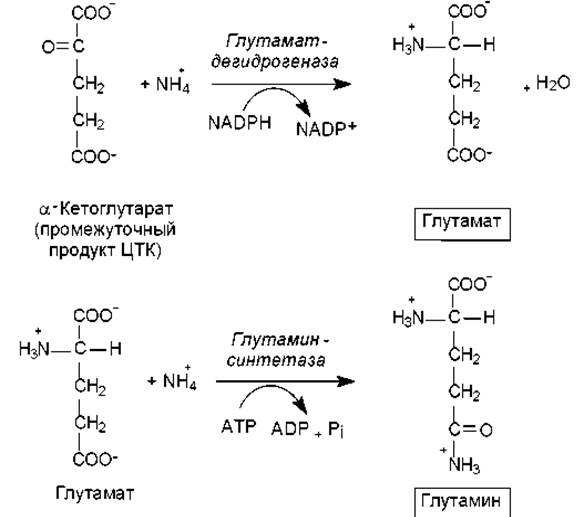
Fig. 16.3. Incorporation of ammonia into amino acids
Last update: 06/08/2026
Editorial and Educational Adaptation: This material has been compiled based on the primary/original source text. The project team performed an editorial review, corrected technical inaccuracies, structured sections, and adapted the content for an educational format.
What was processed:
- elimination of formatting defects (OCR errors, structural breaks, corrupted characters);
- editorial organization of content;
- standardization of terminology in accordance with academic sources;
- verification of factual statements against the original source text.
All mentions of the author, publication year, and origin of the primary text have been preserved in accordance with the source.