Fundamentals of Molecular Biology - V.I. Rezyapkin 2009
Regulation of Gene Expression
Regulation of Gene Expression at the Level of DNA Organization
The number of genes in The Genome of living organisms ranges from several to several hundred in Viruses, from several hundred to several thousand in prokaryotes, and up to several tens of thousands in eukaryotes. Gene products are required by various Cells at different times and in varying amounts. Some genes are expressed at a high rate at specific stages of Organism development, while others may remain in a repressed state. Obviously, Gene Expression within a Cell must be tightly coordinated. Consequently, cells possess sophisticated regulatory mechanisms. Gene expression can be regulated at various levels:
✵ at the level of DNA Organization;
✵ at the transcriptional level;
✵ at the level of RNA Processing;
✵ at the level of RNA degradation;
✵ at the translational level;
✵ at the level of post-translational modifications;
Next, we will examine gene expression regulation at each of these levels in greater detail.
Depending on the degree of DNA compaction, a gene may exist in an active or inactive state. In The eukaryotic Nucleus, DNA is complexed with Proteins to form Chromatin. There are two MAIN TYPES OF chromatin:
✵ heterochromatin - compact chromatin - transcriptionally inactive;
✵ euchromatin - decondensed chromatin - transcriptionally active.
Chromatin activity is inversely proportional to its compactness. Chromatin activation is accompanied by its decondensation.
Introduction/30.html">Regulation of Gene activity mediated by DNA Methylation
DNA methylation occurs via the reversible methylation of cytosine catalyzed by DNA methyltransferase:
Class="center">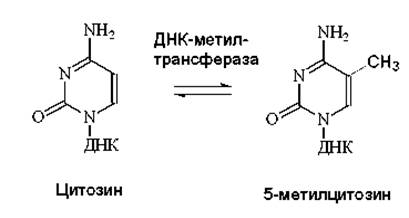
Figure 8.1 illustrates the MECHANISM OF ACTION of DNA methyltransferase. Following enzyme binding, the Hydrogen Bonds between cytosine and its complementary base, guanine, are disrupted. The methyltransferase then transfers a methyl group to the cytosine residue, after which the hydrogen bonds between 5-methylcytosine and guanine are restored.
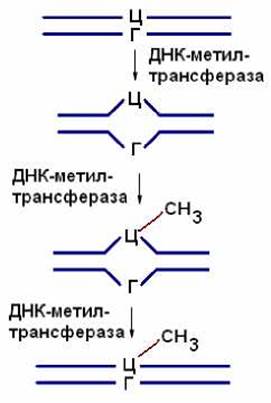
Fig. 8.1. Mechanism of action of DNA methyltransferase
Not all cytosine residues in DNA are methylated. Methylation specifically targets cytosine residues that are located adjacent to guanine in CpG dinucleotides.
DNA methylation takes place post-Replication; therefore, immediately after duplication, the DNA molecule is hemimethylated, meaning one strand is methylated while the other is unmethylated. Within a certain time, DNA methyltransferase restores the original methylation pattern (Fig. 8.2).

Fig. 8.2. Following replication, DNA methyltransferase restores the original methylation pattern
Methylation is essential for the normal development of an organism. If the methyltransferase gene is inactivated in mice, embryonic development halts at an early stage. Nevertheless, the presence of methylcytosine in DNA poses a risk to the organism, as its deamination yields thymine:
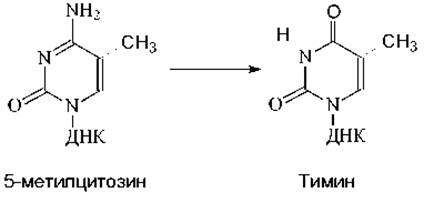
The resulting thymine is not complementary to the guanine base located on the opposite DNA strand. As a result, mismatched bases are formed in the DNA, and during replication, the C–G pair in one of the two daughter DNA molecules is replaced by a T–A pair, thereby causing a mutation (Fig. 8.3).

Fig. 8.3. Deamination of methylcytosine can lead to mutation
In the mammalian genome, CpG sites form islands that are frequently located in promoter regions. Promoter methylation prevents the assembly of the METABOLISM/31.html">Transcription complex. Furthermore, the degree of gene repression is proportional to the extent of cytosine methylation. In some cases, methylation may hinder the binding of a repressor protein to a silencer. Consequently, this leads to an upregulation of gene expression.
Last update: 12/08/2026
Editorial and Educational Adaptation: This material has been compiled based on the primary/original source text. The project team performed an editorial review, corrected technical inaccuracies, structured sections, and adapted the content for an educational format.
What was processed:
- elimination of formatting defects (OCR errors, structural breaks, corrupted characters);
- editorial organization of content;
- standardization of terminology in accordance with academic sources;
- verification of factual statements against the original source text.
All mentions of the author, publication year, and origin of the primary text have been preserved in accordance with the source.