BIOTECHNOLOGY - V. H. Gerasymenko - 2006
Part II. Special Biotechnologies
CHAPTER 10. APPLICATIONS OF IMMOBILIZED ENZYMES IN BIOTECHNOLOGY
10.1. BIOTECHNOLOGY OF STARCH-TO-GLUCOSE CONVERSION
Glucose serves as a basic feedstock for The production of glucose-fructose syrups, organic synthesis of Amino Acids and Vitamins, and various medical Applications. Starch is utilized as a cheap and readily available raw material for glucose production.
The conversion of starch into glucose is a two-stage process. In The First stage, under the action of α-amylase, starch is broken down into low-molecular-weight dextrins (oligosaccharide fragments) and a certain amount of maltose. In the second stage, glucoamylase cleaves the terminal glucose residues from these oligosaccharide fragments.
For industrial production, α-amylase is obtained via microbial synthesis using producer strains such as Bacillus subtilis, and the Fungi Aspergillus niger and A. oryzae. By combining mutagenesis and Selection with Introduction/32.html">Genetic Engineering Methods, a B. subtilis strain capable of overproducing α-amylase was developed, yielding 200 times more enzyme than the parent strains. It has been demonstrated that the yield of sugars increases at higher process temperatures during starch Hydrolysis. Japanese researchers obtained a thermostable α-amylase by introducing the Gene responsible for synthesizing this enzyme into hay bacillus.
Promising glucoamylase producers include fungi of the families Rhizopus, Endomyces, and Endomycopsis, as well as Bacteria from the genera Aerobacter and Clostridium.
The technological flowchart for glucose production involves the following steps:
1. Starch gelatinization via heating (62-72 оС).
2. Starch dextrinization using bacterial α-amylase (80-110°, pH 6.5-6.7).
3. Saccharification of dextrinized starch using fungal glucoamylase (50-60°, pH 4-5) to produce starch hydrolysates with varying carbohydrate profiles.
4. Purification and production of glucose syrups, followed by glucose crystallization.
The rate-limiting step in this biotechnological process is the Third Stage, which centers on developing an immobilized glucoamylase preparation capable of maintaining stability under operational process parameters.
The immobilization of α-amylase is not currently a priority, as its low cost eliminates The Need for enzyme regeneration.
In the 1970s and 1980s, Corning Glass Works demonstrated the first pilot plant utilizing glucoamylase immobilized via covalent attachment to The surface of macroporous silica. A 30% solution of partially hydrolyzed starch (dextrins) was fed into a reaction Column approximately 2 m high and 15 cm in diameter, where a 9-minute contact time with the immobilized glucoamylase converted it into glucose syrup. For comparison, soluble glucoamylase requires a contact time of 724 minutes with dextrins to yield glucose. During 80 days of operation at 40 оС, the immobilized glucoamylase exhibited virtually no inactivation. However, an industrial-scale glucose production process utilizing this heterogeneous biocatalyst has not yet been commercialized.
The main obstacles to the industrial adoption of large-scale glucose syrup production using immobilized glucoamylase have been twofold. First, the Stability of the obtained immobilized glucoamylase preparations at pasteurization temperatures (60-65 оС) remains insufficient; second, There is a 7-10% decrease in glucose yield (yielding 90-93%) when using the immobilized enzyme compared to the native form, which achieves a 98% starch-to-glucose conversion rate. This technology can become commercially viable once stable preparations with a half-life of inactivation of 3-4 weeks are developed. Currently, no industrial plant converts starch to glucose using immobilized glucoamylase.
Recent research over the past decade on immobilizing glucoamylase onto inorganic Materials has led to The Development of biocatalysts with significantly higher stability (Table 10.1). Glucoamylase immobilized on pretreated porcine bone particles retained nearly all of its initial activity during 700 hours of operation at 37оС. The highest stability was observed when carriers coated with catalytic filamentous carbon (CFC) were used. The activity of the immobilized enzyme increased by an order of magnitude compared to its activity in solution. Furthermore, the immobilized glucoamylase retained its catalytic activity after 1-1.5 years of storage at room Temperature. The Use of macrostructured CFC-containing Supports enabled the fabrication of efficient heterogeneous biocatalysts with complex geometries (honeycomb monoliths, porous foams) that exhibited exceptional stability and activity during starch saccharification. When operated intermittently at 50 оС for 8-8.5 months, these biocatalysts retained virtually all of their enzymatic activity.
Traditionally, the biotechnological process of glucose production from starch employs continuous bioreactors featuring a packed bed of heterogeneous biocatalyst. Recently, a fundamentally new type of bioreactor—the rotary-inertial bioreactor (RIB)—was developed at the laboratory scale (Kovalenko et al., 2004). Its main functional element is a container holding the immobilized heterogeneous biocatalyst that rotates around its own axis (Fig. 10.1). The rotational speed of the container ranges from 3 to 170 rpm; the total container volume is 1.2 L, and the biocatalyst volume was 360 m3. The bioreactor temperature was maintained at 50-55 оС. The biocatalyst was prepared by adsorptive immobilization of glucoamylase onto carbon-containing ceramic foam.
Tests demonstrated that under optimal operating conditions (container rotation speed of at least 80 rpm, substrate feed rate not exceeding 0.2 L/h), this new type of bioreactor (RIB) is 1.5 to 2 times more productive than traditional packed-bed reactors. Moreover, the biocatalyst activity was 3 to 3.5 times higher than in conventional reactors.
Class="center">Table 10.1
Glucoamylase immobilized on various supports
(G. A. Kovalenko et al., 2002)
Support/Immobilization Method |
Stability |
Reactor Type |
Substrate Conversion, % Substrate |
Studies from the 1970s–1980s |
|||
Porous glass / Covalent binding |
Deactivation after 300 h of continuous operation at 37-60 °C |
Continuous packed-bed reactor with biocatalyst granules |
up to 30 (starch) |
Alumina, aluminum oxide / covalent binding, GA cross-linking |
269-417 days at 50 °C and 300 h at 60 °C |
Continuous packed-bed reactor with biocatalyst granules |
92-93 (starch) |
Activated carbon / adsorption, GA cross-linking |
36 h without loss of activity; 80% activity retained after 1 month at 30 °C |
Batch stirred-tank reactor |
- (maltose) |
Studies from the last decade |
|||
Polyethylenimine-coated magnetic particles / covalent binding |
2 weeks at 50 °C, 96% activity retained |
Continuous packed-bed reactor |
71 |
Starch-treated Bone tissue / GA cross-linking |
700 h of continuous hydrolysis at 37 °C without loss of activity |
Batch stirred-tank reactor |
95 (starch) |
Polystyrene magnetic particles / adsorption |
11 h of operation without loss of activity |
Continuous packed-bed reactor |
- maltose |
Activated carbon / adsorption |
2 weeks without loss of activity |
Continuous column reactor with packed bed of biocatalyst granules |
10 (dextrins) |
Bone powder / adsorption |
Substrate conversion decreased by 3% after 20 operating cycles |
- |
98 after 11 cycles (starch) |
CFC-containing ceramic supports |
40 h of operation without loss of activity |
Continuous honeycomb monolith reactor |
70 (starch) |
GA - glutaraldehyde
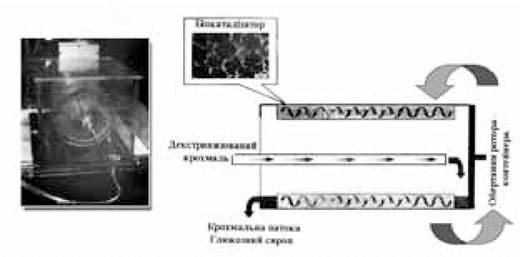
Fig. 10.1. Rotary-inertial bioreactor for heterogeneous biocatalytic processes
(Kovalenko G.A. et al., 2004)
Last update: 11/08/2026
Editorial and Educational Adaptation: This material has been compiled based on the primary/original source text. The project team performed an editorial review, corrected technical inaccuracies, structured sections, and adapted the content for an educational format.
What was processed:
- elimination of formatting defects (OCR errors, structural breaks, corrupted characters);
- editorial organization of content;
- standardization of terminology in accordance with academic sources;
- verification of factual statements against the original source text.
All mentions of the author, publication year, and origin of the primary text have been preserved in accordance with the source.