Military Hygiene and Hygiene in Emergency Situations - K.O. Pashka 2005
Occupational hygiene of military personnel during the mitigation of emergency consequences and in wartime
Hygienic features of the use of individual protection equipment by personnel
When servicing military equipment and weapons, during firefighting, emergency rescue operations, floods, and other emergencies, as well as in industry during conversion and disarmament operations, personnel (workers) in peacetime, and military personnel in combat conditions, widely use personal protective equipment (PPE). They are designed to maintain the combat readiness of personnel (the working capacity of workers) and ensure the accomplishment of assigned missions in environments where the enemy employs weapons of mass destruction (WMD), as well as under hazardous factors arising from the operation and damage of weapons and equipment.
When used timely and correctly, PPE provides reliable protection against toxic agents, light radiation from nuclear explosions (LRNE), radioactive substances and radioactive fallout (RF), bacterial (biological) aerosols (BA), and carbon monoxide. It also enables personnel to perform certain types of work underwater and in oxygen-free environments, and provides short-term protection against burning fire mixtures and open flames.
Personal protective equipment is classified into:
- personal respiratory protective equipment (PRPE) – gas masks, respirators, insulating breathing apparatus (IBA), hopcalite canisters, and auxiliary canister sets (ACS);
- personal eye protective equipment (PEPE) – protective goggles against LRNE;
- personal Skin protective equipment (PSPE) – filtering and insulating protective clothing made from filtering or insulating Materials respectively;
- personal medical protection equipment.
According to their protective mechanism, PRPE and PSPE are subdivided into filtering and insulating types. By purpose, PSPE is divided into general military and special-purpose. General military PSPE is used by personnel across all branches and services of the Armed Forces, whereas special-purpose equipment is used by military personnel (workers) of specific specialties or by personnel performing specialized tasks.
Depending on the mode of use and the estimated number of Applications, PSPE can be worn continuously or donned as needed, and may be intended for single or multiple use.
Personal Respiratory Protective Equipment
These include filtering gas masks and respirators, industrial hose gas masks, and insulating breathing apparatus.
General military filtering gas masks are designed to protect the respiratory Organs, face, and eyes from toxic agents (TA), radioactive fallout (RF), and bacterial aerosols (BA) by isolating them from the external environment and purifying the inhaled air from toxic aerosols and vapors using a filter-absorber system. Filtering gas masks such as the GP-5 and GP-4u perform a similar protective function. Since gas masks do not enrich the inhaled air with oxygen, they can only be used in an atmosphere containing at least 17 % oxygen (by volume). There are several types of filtering gas masks, and generally, all of them are designed for repeated use. However, the protective Properties of the filter-absorber system housed within the gas mask's filter-absorbing canister (FAC) may deteriorate due to moisture absorption during storage, exposure to Water, water mist, neutral smokes, or soil dust. Therefore, The Use of gas masks in fog, during precipitation, etc., especially in peacetime, should be limited. Dust entering beneath the exhalation valve can cause depressurization of the gas mask or significantly increase breathing resistance.
The design of filtering gas masks provides sufficient convenience when working with all types of weapons, military and civil equipment, including The ability to aim and fire, give verbal commands, and communicate via radio equipment (except for the RSh-4 gas mask), as well as connect to filter-ventilation
systems, attach additional canisters to absorb Carbon Monoxide and other impurities not sorbed by the gas mask sorbent bed, and consume liquid food and water while in a contaminated environment (PMK and PMK-2 gas masks). The drinking system consists of a mouthpiece, a fitting, a rubber tube, a nipple, and a canteen cap with a valve, which is screwed onto the canteen in place of the standard cap (Fig. 5.2).
The Selection of a filtering gas mask must be carried out strictly in accordance with the specific working conditions of the specialist, taking into account the protective capacity of the mask. This capacity is determined by calculation Methods, organoleptic evaluation, and laboratory testing. The calculation method allows for estimating the protective capacity by comparing initial performance data with the operating time of the canister, air Temperature, and degree of contamination. However, the results obtained by this method are approximate.
Class="center">
Fig. 5.2. Consuming liquids while wearing a gas mask.
Organoleptically — by detecting a specific odor inside the mask due to the "breakthrough" of toxic technical substances — the protective capacity of a gas mask can only be determined using chloropicrin vapors or an aerosol of an irritating substance, because many toxic technical substances are detected organoleptically at concentrations far exceeding permissible limits. Moreover, the appearance of an odor is not always proof that the protective capacity of the gas mask has been exhausted. Sometimes it may occur due to the "breakthrough" of chemical vapors through the canister when the mask is used in high concentrations of a chemical in the air, as well as due to the desorption of vapors from the sorbent bed caused by rising air temperatures.
More accurate results are obtained when the protective capacity of the gas mask is evaluated by specialists in specialized laboratories. An essential condition for prolonged stay and work in a gas mask is deep and steady breathing, which is developed through systematic training under the supervision of medical personnel. This helps maintain the combat effectiveness and working capacity of personnel operating in contaminated zones.
Respirator
The R-2 respirator protects the respiratory organs from radioactive and soil dust by isolating them from the ambient air using a half-mask made of filtering material equipped with two inhalation Valves and one exhalation valve (Fig. 5.3). During inhalation, the air is purified from aerosols within the layer of filtering materials. It does not protect against toxic vapors and gases and does not enrich the inhaled air with oxygen; therefore, the atmosphere must contain at least 17 % oxygen (by volume). To a significant extent, the respirator reduces the risk of contamination when a person is caught in a secondary BA cloud, as well as exposure to aerosols of herbicides, defoliants, and desiccants. Various weather conditions, with the exception of liquid-drop factors, do not affect the protective properties of the respirator, allowing it to be used year-round.
Continuous wear of the respirator (up to 12 hours) has virtually no effect on human performance and functional state.

Fig. 5.3. R-2 Respirator:
1 - half-mask; 2 - HEAD harness.
The R-2DI respirator is designed for continuous use by children for up to 4 hours.
If respirators are unavailable, alternative means can be used, such as the PTM-1 dust protection fabric mask (consisting of 2-4 layers of fabric shaped to completely cover the face, with eye openings fitted with Glass lenses or transparent film, and secured to the head with elastic bands) or a disposable cotton-gauze bandage (two pieces of gauze measuring 40x25 cm with a layer of cotton wool up to 2 cm thick and measuring 30x20 cm placed between them, secured to the head with ties). Towels, scarves, handkerchiefs, or strips of fabric can also be used as temporary protective measures by simply wrapping them around the head to cover the Mouth AND Nose.
Auxiliary Cartridge Set (ACS)
It protects the Respiratory system from carbon monoxide (CO) and radioactive particles, and can be used with virtually all types of general-military filtering gas masks except for the PBF (Fig. 5.4). The Contents of the DP-2 cartridge catalytically oxidize carbon monoxide to carbon dioxide, while the anti-aerosol filter traps radioactive particles. The ACS is also not to be used in atmospheres containing less than 17 % oxygen. The DP-2 cartridge protects against carbon monoxide at concentrations in the air up to 0.25 %, and for short periods (up to 15 min) at concentrations up to 1 %. Carbon monoxide concentrations of about 1 % or more cause severe heating of the cartridge and, consequently, the air passing through it, reaching 60-70 °C, which may result in Burns to the mucous membranes of the Upper Respiratory Tract. Therefore, under these conditions, one must either leave the contaminated area or use an autonomous breathing apparatus.

Fig. 5.4. Auxiliary Cartridge Set:
1 - DP-2 auxiliary cartridge; 2 - anti-aerosol filter; 3 - package with sealing ring for the anti-aerosol filter; 4 - connecting tube; 5 - bag.
The protective action time of the DP-2 depends on the concentration of carbon monoxide and hydrogen (components of powder gases), air temperature, and the user's physical exertion. Similar in principle of operation is the hopcalite DP-1 cartridge, which is used exclusively with the RSh-4 gas mask.
Industrial airline respirators include the PTTT-1, PI II-2-57, DPA-5, etc. Clean air is supplied to these respirators through hoses, while exhaled air is released outward through a valve (Fig. 5.5).

Fig. 5.5. Protective suit with an airline respirator.
Autonomous Breathing Apparatus (ABA)
They protect the respiratory organs, face, and eyes against any harmful air impurities that are not filtered out by filtering devices, regardless of their concentration, during operations in oxygen-deficient or oxygen-depleted environments. ABAs purify inhaled air from carbon dioxide and moisture and enrich it with oxygen without exchange with the ambient air.
Land-based operations utilize the IP-4 and IP-4M autonomous breathing apparatuses (Fig. 5.6 a, b), while underwater operations or situations involving object flooding, such as a tank, utilize the IP-5, which allows operations at depths of up to 7 m (Fig. 5.7).
A characteristic feature of breathing while using an ABA is that it occurs under conditions of increased inhalation and exhalation resistance, a high oxygen concentration (up to 80 %), and an elevated carbon dioxide content (1-2 %) in the inhaled mixture, the temperature of which can reach 50 °C. Operating time in such apparatuses depends on the intensity of physical exertion, but must not exceed 8 hours. Re-entering an ABA is permitted only after 12 hours of rest. Regular use may consist of 3-4 hours daily for two weeks, followed by a break of at least one month.
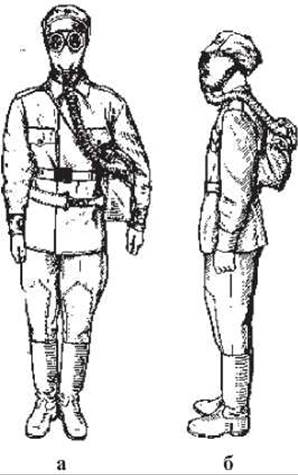
Fig. 5.6. IP-4 (IP-4M) apparatus in combat readiness:
a) positioned on the side; b) positioned on the back.

Fig. 5.7. IP-5 apparatus in combat readiness.
Personnel who have not undergone a medical examination and a training course on their use are strictly prohibited from operating ABAs.
The protective action time of an insulating gas mask with a regenerative cartridge is: at rest – up to 5 hours, under light physical exertion – about 3 hours, under moderate exertion – up to 2 hours, and under heavy exertion – about 1 hour.
Individual Eye Protection Equipment
Protective goggles are required to protect the eyes from burns and to reduce the duration of adaptive blinding caused by nuclear weapon flash effects when personnel are outside weapon systems, military equipment, or shelters (Fig. 5.8).
This protective effect is achieved by absorbing the light pulse energy through photochromic and infrared light filters. The goggles may be worn over the facepieces of gas masks. The disadvantages of eye protection equipment include: restricted field of Vision; some distortion of faint color signals; and a reduction in visual functional capacity due to the light filters altering the optical-geometric properties of the light flux, which correspondingly limits personnel performance at twilight and especially at night. These drawbacks can be mitigated by conducting personnel training to develop stable professional performance indicators when using the goggles as required.

Fig. 5.8. OPF protective goggles:
1 - goggles; 2 - case.
Personal skin protection equipment
They are divided into filtering and insulating types. The filtering type includes the combined-arms integrated protective suit (ZKZK-M), the ZFO-58 filtering clothing set, etc. Skin protection when using these suits is provided by trapping radioactive fallout (RF) and neutralizing chemical warfare (CW) agent vapors and biological agent (BA) aerosols through impregnation of protective underwear with special substances, as well as the multilayer and airtight design of the suits (Fig. 5.9).
The protective suit (KZS) is worn over the ZZK-M, uniform, special fire-retardant clothing, etc., to protect the skin from burns caused by nuclear weapons thermal radiation (NWTR). It is made of a special camo-colored mesh fabric treated with a fire-retardant compound.
The KZS acts as a shield, protecting the ZZK-M or other clothing from the Direct impact of NWTR; in the process, it chars and becomes unfit for further use (Fig. 5.10).
Insulating-type personal skin protection equipment increases the body's protection level by isolating the skin from CW agents, RF, and BAs: the combined-arms protective kit (ZZK) (Fig. 5.11), the plastic protective suit (KZP) (Fig. 5.12), and the L-1 special light protective suit (Fig. 5.13).

Fig. 5.9. Combined-arms integrated protective suit in the "gas mask" position with a gas mask and stockings.
The ZZK and KZP are protective gear intended for periodic wear only. When contaminated with CW agents and BAs, the plastic protective suit is for single use only and is therefore not subject to special Processing. After decontamination from RF, it can be reused. Furthermore, when put on in advance, the ZZK enhances skin protection against NWTR, fire mixtures, and open flames, while also mitigating the thermal impact on the equipment items hidden beneath it.
The L-1 suit protects personnel skin, uniforms, and footwear from contamination (exposure) by RF, CW agents, and BAs. It is also worn only periodically and can be reused after special processing.
The insulating personal protective equipment described above is made of materials that completely isolate the skin from the external environment, as they are impermeable to air, vapor, and moisture, and also possess fire-resistant properties. At the same time, this complete skin isolation drastically alters the microclimate inside the suit, disrupting The Human Body's natural thermoregulation mechanism and reducing combat effectiveness or work capacity. For a person dressed in an insulating suit, sweat practically does not evaporate; instead, it is absorbed by the underwear and uniform, and some of it flows down the body into the footwear. Consequently, heat ceases to be removed from the body through this pathway, and under significant physical exertion combined with high ambient temperatures, body temperature begins to rise rapidly. An increase to 38.3–38.5 °C (measured sublingually or rectally) disrupts biochemical reactions, and body overheating can lead to heat stroke, incapacitating a person for up to 5 days, and in some cases resulting in death.

Fig. 5.10. KZS protective suit:
1 - jacket; 2 - drawstring; 3 - hood; 4 - loop; 5 - trousers.
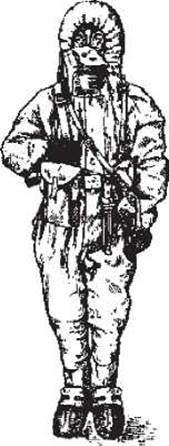
Fig. 5.11. Combined-arms protective kit in the form of a coverall.

Fig. 5.12. Field protective suit worn with sleeves on.
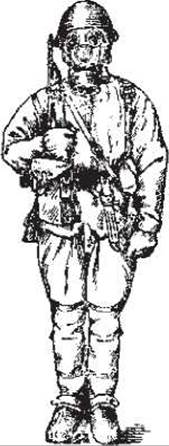
Fig. 5.13. L-1 light protective suit.
Therefore, the timeframes for carrying out emergency rescue operations or combat missions by personnel required to wear insulating personal skin protection equipment may be limited by the thermal state of the body. Based on this, maximum allowable working times for summer and winter conditions are established depending on temperature and the intensity of physical exertion.
The maximum allowable working time at high temperatures is the time threshold beyond which 80% of service members may experience heat stroke, while at low temperatures it is the time threshold beyond which personnel suffer from body hypothermia, which initially causes shivering and may subsequently lead to frostbite.
To prevent heat stroke, it is necessary to closely monitor the well-being of working personnel, their pulse, respiration rate, and especially body temperature (measured sublingually), so that if it rises to the aforementioned values, physical exertion can be reduced to the maximum possible extent or stopped altogether. It is even better to evacuate personnel from the contaminated (exposed) zone, allow them to undress, and give them a rest.
The degree of exhaustion caused by wearing insulating suits can be reduced, and human performance enhanced, by applying scientifically sound work-rest schedules, especially when The Nature of the workload can be determined by the commander or the service member (worker) themselves. During disaster relief operations, implementing optimal work-rest ratios is one of the primary ways to increase labor productivity and minimize the adverse health effects of working conditions on cleanup crews. Operating conditions may dictate either The Need for the longest possible stay in PPE, regardless of the volume of work completed, or conversely, prioritizing task completion above all else. In practice, the work-rest ratio is usually determined within hourly, forty-minute, or half-hour work cycles. There are formulas for calculating such regimens that involve determining labor intensity based on Energy Expenditure required for the task, duration, and heat generation. The application of rational work-rest schedules can increase personnel performance (in terms of work volume completed) by a factor of 2 to 3.
At air temperatures up to 30 °C, a fabric shield worn over the insulating suit and periodically moistened (8–10 liters of water at once every 30–40 minutes of work) allows the duration of alternating moderate and heavy physical tasks to be extended up to 4 hours. The duration of continuous personnel operations in PPE during cloudy, overcast, or sunless weather increases by 20–30%.
Overheating of the body can be reduced by donning PPE at temperatures of 15 °C and above directly over undergarments.
In winter conditions, the primary factor limiting work duration is hypothermia of the hands. Therefore, periodically warming them up (rubbing, clapping, clenching and unclenching, etc.) extends the working time in PPE.
To prevent general body hypothermia at temperatures from 0 °C to -10 °C, for example, it is advisable to wear the L-1 suit over winter clothing, and below -10 °C, over a padded jacket worn on top of standard uniform.
Medical personnel in biological (bacteriological) contamination zones may also use a anti-plague suit kit, which belongs to the filtering type of PPE. Eyes are protected by goggles included in the kit, and a cotton-gauze mask is applied over the mouth and nose, impregnated with a disinfectant solution if necessary.
Individual medical protection equipment: Individual universal first-aid kit, individual first-aid kit (AI-2), individual dressing packet (IPP), and individual chemical protection packet (IPP-1 through IPP-8, IPP-9) are used to provide emergency medical care. The Procedure for their use is covered in the respective section of "Military Medical Training."
1. Who exercises sanitary supervision over working conditions?
2. Characterize the main Factors influencing the working conditions of military personnel, emergency response cleanup crews, and the civilian population during emergencies and wartime.
3. Provide a description of workplaces in accordance with the Hygienic Classification of Labor based on indicators of harmful and hazardous factors of the production environment, as well as the severity and intensity of the labor process.
4. What types of transport can be used to evacuate personnel of military units and the affected population?
5. What Sanitary and hygienic measures should be implemented when relocating personnel of formations (or the affected population) during the winter and summer periods?
6. Name the types of marches on FOOT. How do they differ from one another?
7. What factors in the emergency zone and during wartime will determine the hygienic specifics of medical personnel's work?
8. How will these specifics affect the performance of functional duties and their health status?
9. Name the environmental factors that affect the personnel of armored and tank forces.
10. Describe the hygienic requirements for conducting maintenance and park days.
11. What complex of factors affects the personnel of missile and rocket forces?
12. State the requirements for individuals assigned to serve in artillery. What factors will impact their health status?
13. What requirements does service in the engineering troops impose on personnel?
14. Name the factors that affect aircraft crew members during flights.
15. What are the environmental features, and how do they affect the crews of spaceflight vehicles?
16. Provide a hygienic characterization of the factors determining service in the Naval Forces.
17. Name the Factors affecting the personnel of radar stations and radio Transmitters. Which of these are classified as specific and non-specific? What changes can they induce in the body?
18. What measures should be taken to protect the personnel of radio engineering facilities and the local population from microwave and other harmful types of radiation?
19. Name the personal protective equipment that personnel can use when servicing weapons and military equipment, as well as during firefighting and emergency response operations. How will their use affect the human body?
Last update: 10/08/2026
Editorial and Educational Adaptation: This material has been compiled based on the primary/original source text. The project team performed an editorial review, corrected technical inaccuracies, structured sections, and adapted the content for an educational format.
What was processed:
- elimination of formatting defects (OCR errors, structural breaks, corrupted characters);
- editorial organization of content;
- standardization of terminology in accordance with academic sources;
- verification of factual statements against the original source text.
All mentions of the author, publication year, and origin of the primary text have been preserved in accordance with the source.