NEONATAL SURGERY - 1976
1. GENERAL PROVISIONS
2. Relative Immaturity of Organs and Tissues in the Newborn Infant
The Anatomical and physiological Features of the newborn infant indicate insufficient morphological and functional maturity of their Organs and Tissues, which determines specific reaction patterns under both normal and pathological conditions. The neonatal period frequently features symptom complexes characteristic only of infants in their first days and weeks of life that do not occur in other age groups. The most common among these include respiratory distress syndrome, regurgitation and vomiting, thermoregulation disorders, hemorrhagic syndrome, physiological jaundice of the newborn, and others. Interpreting the morphological and functional nature of these symptom complexes is only possible when considering the inseparability of organ or system Structure and function. The immaturity of the morphological structures in a newborn infant is the primary cause of the imperfection of their Functions in general and homeostatic mechanisms in particular.
In pediatrics, temporary "functional" deviations have traditionally been defined as "dysfunction," "growth disharmony," "dyskinesia," "constitutional disharmony," "discoordination," and the like. Replacing these diverse and familiar clinical terms with a single one—"relative immaturity"—is driven by the desire not only to use morphophysiological terminology, but also to draw attention to this serious and hazardous condition for the patient.
Relative immaturity refers to a condition in a premature (more commonly) or full-term newborn infant characterized by deviations that do not occur in a healthy child. We are dealing with borderland conditions that cannot be fully classified as either normal or pathological, yet require the physician's attention or targeted Treatment due to potential severe complications and consequences. The clinical manifestations of the relative immaturity of newborn organs and tissues are characterized by a pronounced tendency to diminish as the child grows older. Provided no complications develop and the infant survives, There is a strong tendency for pathological manifestations to resolve spontaneously. Over time, the child "matures," and the dysfunction ceases to manifest (Fig. 5).
Class="center">Fig. 5. Dynamics of pathological syndromes caused by morphological and functional immaturity of organs and tissues in premature and newborn infants. These syndromes tend to disappear with age.

Respiratory rhythm disorders, resulting from structural immaturity and insufficient functional reserve of the respiratory center, are observed more frequently in premature infants and newborns during their first days of life. Respiratory depression in these infants can occur in response to minor irritants (aspiration of a small amount of milk or mucus) or even without apparent external causes. The older the child, the less frequently respiratory depression is observed. With age, this tendency disappears entirely.
Impaired food passage through the digestive tract in newborns—associated with sphincter "dysfunction," such as gaping (chalasia) or spasm (achalasia) of the cardia, pylorospasm, and others—is one of the most frequent manifestations of relative immaturity of the newborn's Peripheral Nervous system. Of considerable interest is functional intestinal dyskinesia, which is observed mainly in premature infants and presents with clinical signs of partial, and sometimes complete, intestinal obstruction. Surgical intervention in these patients is ineffective and unjustified. Conservative therapy aimed at facilitating the infant's "maturation" and improving the transit of intestinal contents is indicated.
Postoperative hyperthermic syndrome (Ombredanne's pale Shock) and transitory hyperthermia in newborns frequently arise from causes that, as a rule, do not correspond to the severity of the syndrome and the degree of its progression (Water-electrolyte imbalance, minimal surgical trauma, standard doses of atropine, infectious processes, etc.). In older children, such cases present with only a mild Temperature elevation or no visible systemic reaction at all. There are numerous such Examples in clinical practice. Clinicians frequently face The Challenge of diagnosing and determining treatment strategies for such patients. Special sections provide examples that demonstrate The Importance of understanding phenomena of relative immaturity (Robin sequence, "congenital" Pulmonary Atelectasis, lobar emphysema of the lung, etc.) for selecting the correct therapeutic approach.
The Clinical significance of interpreting manifestations of relative immaturity is multifaceted. In the Cytology/practical/136.html">Differential Diagnosis OF the causes underlying a pathological syndrome, Congenital Malformations must be considered first and foremost. In some patients, this is straightforward (esophageal atresia); in others, it is highly challenging (intestinal stenosis, membranous atresia with a central opening in the membrane, prolonged jaundice). If organic causes (somatic, infectious, etc.) are absent, grounds are established to interpret THE ORIGIN OF pathological symptoms through METABOLISM/2.html">THE CONCEPT OF the "relative immaturity" of organs and systems. This enables the clinician to avoid surgery and instead apply a system of therapeutic measures aimed at eliminating the specific pathological syndrome (vomiting, asphyxia, hyperthermia, jaundice, etc.), prescribing pharmacological agents, hormonal drugs, and Vitamins that stimulate maturation processes, and implementing treatment to prevent complications.
An example of a severe complication following temporary "dysfunction" is the immaturity of the neuromuscular structures of the cardial region of the Esophagus and Stomach, accompanied by gaping of the cardia (chalasia) and persistent vomiting. Prolonged reflux of acidic gastric contents leads to The Development of esophagitis, followed by erosive and ulcerative lesions of the distal esophagus, scarring, circular stenosis, or secondary esophageal shortening.
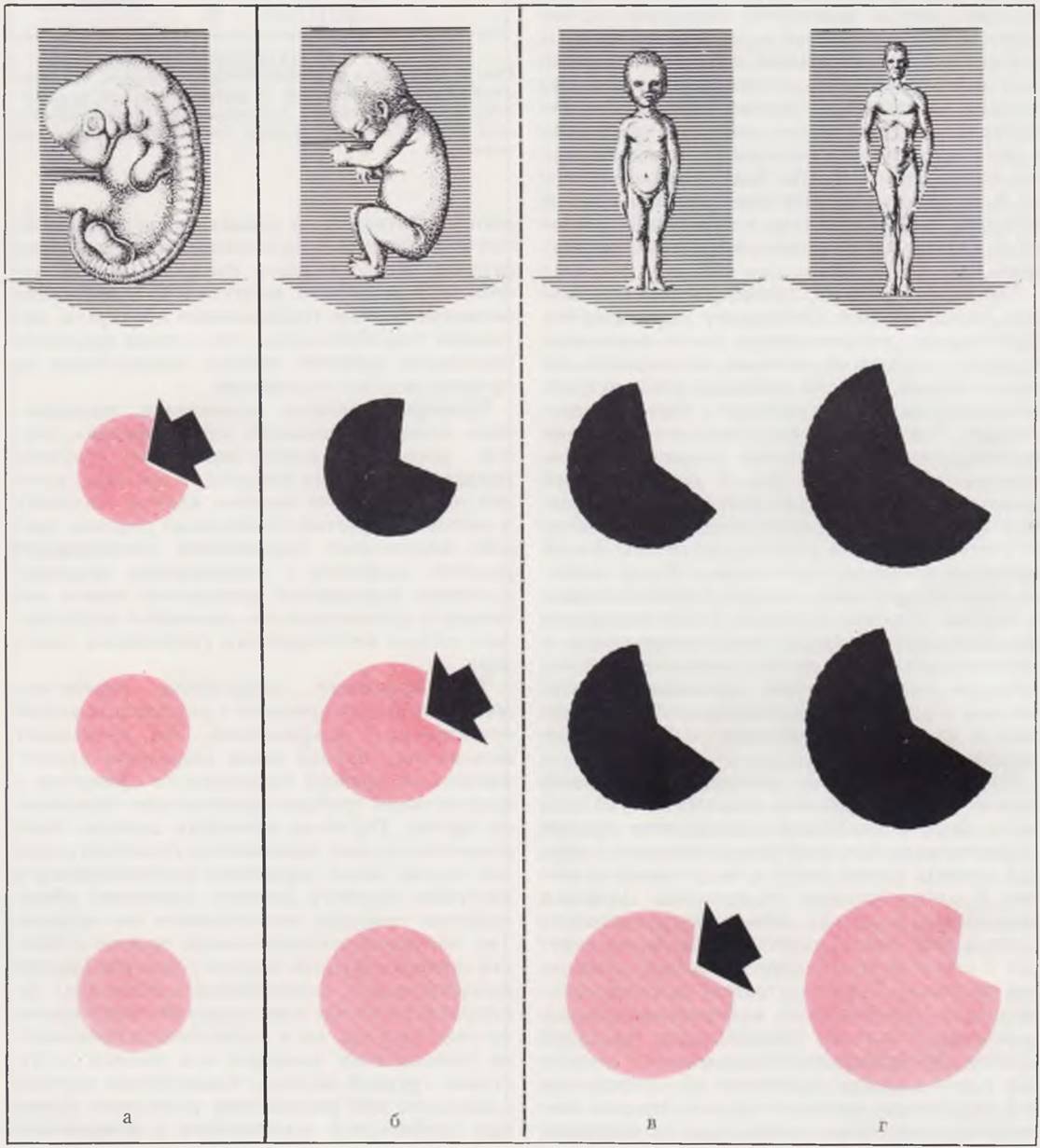
Thus, temporary dysfunction of neuromuscular structures leads to severe organic damage. This demonstrates the potential direct link between the immaturity of the neuromuscular apparatus of the cardiac sphincter and subsequent gross organic damage to the organ. Studying neonatal pathology allows us to trace numerous instances where damage to developing and growing structures of the infant Organism turns into severe organ injury. For instance, an inflammatory process in the mammary gland bud of a female infant (neonatal mastitis complicated by suppuration) results in the destruction or severe damage of this primordium, which subsequently manifests as a reduction in size or complete absence of the breast. A similar picture is observed when the growth Cartilage is destroyed in epiphyseal Osteomyelitis in newborns, resulting in limb shortening, deformation, or, less commonly, lengthening. Externally, children and adolescents who have suffered from mastitis or osteomyelitis may resemble patients with congenital malformations. In certain cases, differential diagnosis between these two conditions is difficult. Therefore, damage to the developing and growing structures of the child's body is essentially a unique, peculiar process characteristic exclusively of the pediatric organism. Not being truly congenital, it cannot be sufficiently classified as an acquired lesion either. Recently, pathologists have tended to refer to them as "postnatal developmental defects" (Fig. 6).
Fig. 6. Origin variants of diseases. a — congenital diseases arising under The Influence of a damaging factor during the embryonic or prenatal period; the degree of damage may increase as the child grows and develops; b — diseases resulting from damage to morphologically immature organs and tissues in the postnatal period (postnatal developmental defects); subsequently, their manifestations resemble congenital malformations; c — acquired diseases arising after the completion of organ growth and formation. In the long term (d), the defect will match its initial size. In cases of pre- and postnatal injuries, the defect in the long term (d) will exceed its initial size.
The foregoing provides grounds for formulating a care delivery system for premature and newborn infants designed to improve therapeutic outcomes. Clearly, appropriate measures include performing differential diagnosis to distinguish between signs of relative immaturity and developmental malformations, avoiding delays or waiting for the potential spontaneous resolution of "dysfunction," and acting promptly. This ensures that if a malformation is identified, surgery can be performed immediately, whereas in cases of relative immaturity, measures can be taken to prevent potential complications and promote the infant's "maturation."
The Emergence of a purulent-inflammatory, infectious disease, or trauma requires prompt and intensive treatment. Every hour of delay in initiating therapy or insufficiently aggressive treatment—as seen in the examples of osteomyelitis or mastitis—can subsequently result in The Need for years of medical care, and sometimes leave the patient disabled. We believe that during the neonatal period, there are no "minor" or "harmless" conditions. Because they arise on a morphologically immature substrate, it is impossible to predict how tissues will react to injury or how the consequences of a brief affliction will manifest in the long term. Therefore, the prognosis for premature and newborn infants is always established with great caution.
Intensive therapy is widely used in clinical practice to normalize homeostatic parameters and vital bodily functions, including Respiration, Circulation, and Digestion. Specialists in neonatal intensive care actively perform tracheobronchial tree hygiene and resort to short-term administration of high doses of Antibiotics in an effort to abort the course of purulent-inflammatory processes. Pharmacological therapies capable of disrupting the harmonious Development of the child (such as Hormones) are applied with extreme caution. Great importance is placed on utilizing "natural" therapeutic Methods, such as increased inhaled air humidity, Oxygen therapy, keeping the infant in an incubator, and others.
The pursuit of early correction of developmental malformations is driven not only by cosmetic considerations, the degree of surgical risk, and moral-ethical factors, but also by the surgeon's desire to establish normal anatomical relationships within the child's body as early as possible, ensuring that subsequent GROWTH AND DEVELOPMENT proceed correctly and harmoniously.
Last update: 10/08/2026
Editorial and Educational Adaptation: This material has been compiled based on the primary/original source text. The project team performed an editorial review, corrected technical inaccuracies, structured sections, and adapted the content for an educational format.
What was processed:
- elimination of formatting defects (OCR errors, structural breaks, corrupted characters);
- editorial organization of content;
- standardization of terminology in accordance with academic sources;
- verification of factual statements against the original source text.
All mentions of the author, publication year, and origin of the primary text have been preserved in accordance with the source.