Human Anatomy, Part 1 - K. A. Diubenko, A. K. Kolomiiets, Yu. B. Chaikovsky 2002
Special Section
Myology, myologia [the study of muscles] — Muscles and Fascia of the Trunk
Muscles and Fascia of the Abdomen — Abdominal Muscles, musculi abdominis — Anterior Group
1. Rectus abdominis Muscle, m. rectus abdominis, is a paired, broad, ribbon-like muscle located in the anterior abdominal wall on either side of the linea alba (Fig. 132). It originates by three slips from the external surface of the cartilages of Ribs V–VII and from the xiphoid process, and inserts via a strong tendon into the superior margin of the pubis between the pubic tubercle and the Pubic Symphysis. Perpendicular to the muscle fibers of the rectus abdominis lie 3–4 tendinous intersections, intersectiones tendineae, which are remnants of the embryonic myotomal septa.
Class="center">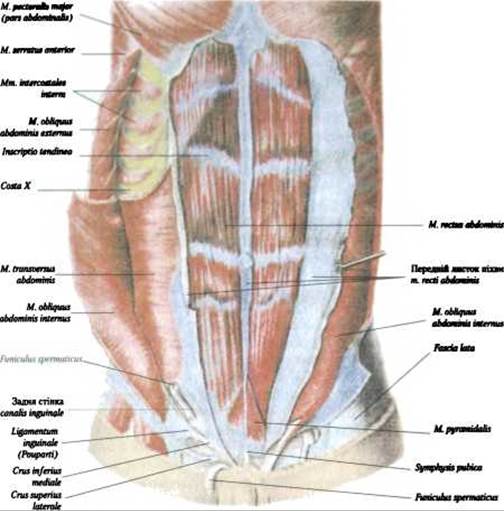
Fig. 132. Abdominal Muscles — anterior and lateral groups (after V. P. Vorobyov)
Function: When contracting, it depresses the ribs; with fixed ribs, it flexes THE Vertebral Column; and unilateral contraction bends the trunk laterally. It maintains intra-abdominal pressure and contributes to the strengthening of the abdominal press.
2. Pyramidal muscle, m. pyramidalis, is triangular in shape (see Fig. 132). It originates from the anterior surface of the superior ramus of the pubis between the pubic tubercle and the symphysis. It inserts into the lower part of the Linea Alba of the abdomen.
Function: This muscle is part of the abdominal wall and tensions the linea alba.
Blood supply: The rectus abdominis muscle is supplied by the superior and inferior intercostal and epigastric Arteries; the pyramidal muscle is supplied by the cremasteric and inferior epigastric arteries.
Innervation: Intercostal nerves (Th V–Th XII), iliohypogastric nerve (Th XII–L I).
Last update: 08/08/2026
Editorial and Educational Adaptation: This material has been compiled based on the primary/original source text. The project team performed an editorial review, corrected technical inaccuracies, structured sections, and adapted the content for an educational format.
What was processed:
- elimination of formatting defects (OCR errors, structural breaks, corrupted characters);
- editorial organization of content;
- standardization of terminology in accordance with academic sources;
- verification of factual statements against the original source text.
All mentions of the author, publication year, and origin of the primary text have been preserved in accordance with the source.