Human Anatomy - Kotsan I. Ya. 2009
Muscles and Fasciae of the Trunk
Linea Alba of the Abdomen
The linea alba is a tendinous raphe formed by the fusion of the aponeuroses of the lateral Abdominal Muscles along the anterior midline. It extends from the xiphoid process of the Sternum to the Pubic Symphysis (Figs. 101, 104).
Class="center">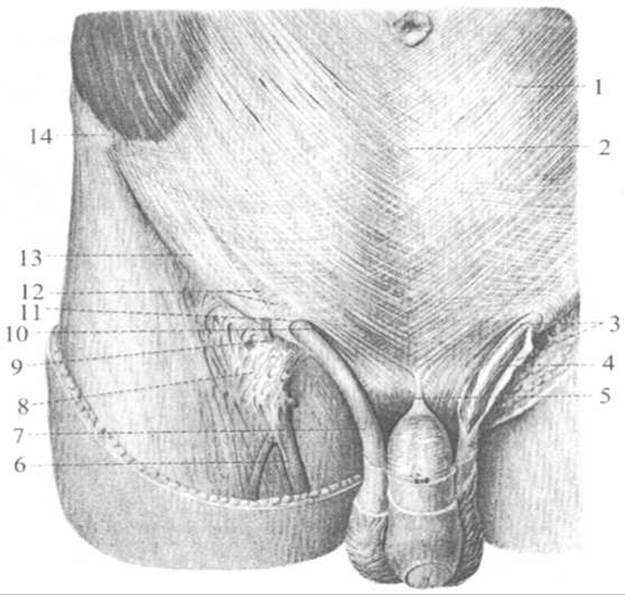
Fig. 104. Male Inguinal Canal (anterior view)
1 — aponeurosis of the external oblique abdominal Muscle, 2 — linea alba, 3 — internal spermatic fascia (incised), 4 — cremaster muscle, 5 — suspensory ligament of the Penis, 6 — great saphenous vein, 7 — Spermatic Cord, 8 — cribriform fascia, 9 — lateral crus, 10 — medial crus, 11 — superficial inguinal ring, 12 — intercrural fibers, 13 — inguinal ligament, 14 — anterior superior iliac spine
The renowned anatomist J. Hyrtl referred to it as the meeting point of all abdominal tendons and fasciae. In its upper portion, the linea alba is wide (up to 2.5 cm) and thin. Lower down, at a certain distance from the umbilicus, it narrows sharply (to 1.0 cm), but becomes significantly thicker in the anteroposterior direction. The lower end of the linea alba, by which it attaches to the pubic bones, takes the form of a small triangular expansion known as the adminiculum lineae albae. Approximately at the midpoint of the linea alba lies the umbilicus or umbilical ring (anulus umbilicalis), through which fetal vessels (two umbilical Arteries and one umbilical vein) pass during the intrauterine period. The umbilical ring is filled with dense connective (scar) tissue. A distinctive feature of the linea alba is the presence of small gaps between the tendinous bundles of the aponeuroses, which are filled with adipose tissue. With frequent and sharp increases in intra-abdominal pressure, these gaps can widen, allowing Internal Organs to protrude and leading to linea alba hernias (most commonly umbilical and paraumbilical hernias).
The pale color of the line is due to the decussation of tendinous fibers in the frontal plane (crossing from one side to the other) and in the sagittal plane (from the surface into the depth), as well as its sparse Blood supply. Surgeons take advantage of this anatomical feature when they need to widely open the Abdominal cavity during surgery (for example, during a Cesarean Section).
Last update: 08/08/2026
Editorial and Educational Adaptation: This material has been compiled based on the primary/original source text. The project team performed an editorial review, corrected technical inaccuracies, structured sections, and adapted the content for an educational format.
What was processed:
- elimination of formatting defects (OCR errors, structural breaks, corrupted characters);
- editorial organization of content;
- standardization of terminology in accordance with academic sources;
- verification of factual statements against the original source text.
All mentions of the author, publication year, and origin of the primary text have been preserved in accordance with the source.