MEDICAL BIOLOGY, ANATOMY, HUMAN PHYSIOLOGY AND PATHOLOGY - Ya.I. Fedonyuk 2010
BIOLOGY
CHAPTER 2. BIOGEOCENOTIC LEVEL OF ORGANIZATION OF LIFE AND HUMAN PLACE IN IT
2.5. MEDICAL ARACHNOENTOMOLOGY
Phylum Arthropoda
Class Arachnida (Arachnoidea)
The Class comprises about 35,000 species adapted to terrestrial life. They breathe through Lungs and tracheae, which open to the exterior via respiratory apertures (spiracles, or stigmata). The body consists of two tagmata: the cephalothorax (prosoma) and the abdomen (opisthosoma). The degree of segmentation of these regions varies. Solifugae exhibit the highest degree of body segmentation. In scorpions, only the abdomen is segmented, in spiders the abdomen is unsegmented, while in most mites and ticks the body is fused into a single whole. A characteristic feature is the presence of six pairs of appendages: the first two pairs (chelicerae and pedipalps) are adapted for capturing and crushing food, and the remaining four pairs are walking legs. The most important orders of arachnids are Solifugae (Solpugae), Scorpiones, Spiders (Araneae), and Mites and Ticks (Acarina).
Order Solifugae, or camel spiders (Solpugae). Solifuges are arachnids with a highly segmented body. Their chelicerae resemble pincers, while the tentacle-like pedipalps are leg-like in appearance and participate in locomotion. Solifuges are predatory. Their primary weapons of attack are well-developed chelicerae. Solifuges lack venom glands, but their bites are painful and may be complicated by inflammatory processes because the bite wounds become contaminated with food debris adhering to their setose chelicerae. The respiratory Organs are tracheae. They have a nocturnal lifestyle.
Distributed in Central Asia, the Caucasus, Crimea, and Moldova. The sun spider (Galeodes araneoides), found in Crimea and the Caucasus, reaches up to 5 cm in length (Fig. 2.42).
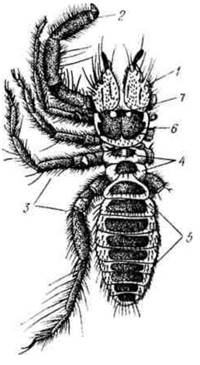
Fig. 2.42. Solifuge / camel spider (Galeodes araneoides): 1 - chelicera; 2 - pedipalp; 3 - walking legs; 4 - posterior segments
Order Scorpiones. Over 1,500 species are known.
They inhabit hot and warm Regions of the globe. In Ukraine, a single endemic species, the Crimean scorpion (Euscorpius tauricus), inhabits the southern coast of Crimea; its size ranges from 5 to 10 cm. The body consists of an unsegmented cephalothorax and a long, segmented abdomen.
The pedipalps are chelate (pincer-like). The abdomen is divided into a broad pre-abdomen (mesosoma) and a narrow post-abdomen (metasoma), which is incorrectly referred to as the "tail".
The terminal segment of the abdomen ends in a swollen telson, which contains two venom glands and bears a sharp, claw-like spine—the sting (Fig. 2.43).
The ducts of the venom glands open at the tip of the sting.
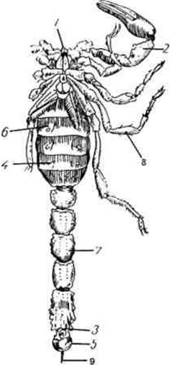
Fig. 2.43. Scorpion (Buthus eupeus); ventral view:
1 - chelicerae; 2 - pedipalp; 3 - anus; 4 - spiracle (stigma); 5 - telson; 6 - one of the pre-abdominal segments;
The venom apparatus serves for subduing prey and for defense against enemies. They are predatory. By day, they hide under stones, in wall crevices, and under tree bark, emerging at night to search for prey, which they kill with a sting by curving the post-abdomen forward over their back toward the victim, held firmly by the pedipalps. They feed primarily on Arthropods. Most species are viviparous, with the female carrying the young on her back for some time.
Medical significance. Scorpions are venomous animals. Scorpion stings from species living in Ukraine are generally not fatal to humans, but they cause severe pain and Swelling that can spread over a considerable distance. In severe poisonings, systemic intoxication develops, characterized by difficulty breathing and swallowing, nausea, and even convulsions. All these symptoms persist for several days. Stings from large tropical species (up to 17 cm) can be fatal. Specific antivenom serum is used therapeutically.
Prophylaxis. When camping in tents, it is essential to thoroughly inspect bedding and footwear, and to shake out clothing.
Order Spiders (Araneae). Over 20,000 species are known. Sizes range from 0.8 to 11 cm. Males are generally smaller than females. The body consists of an unsegmented cephalothorax and an abdomen connected by a narrow pedicel. There are six pairs of appendages: chelicerae, pedipalps, and four pairs of walking legs. The chelicerae terminate in a movable claw-like segment, near the apex of which opens the duct of the venom gland. In males, the pedipalps function as copulatory organs. Three pairs of spinnerets are located at the posterior end of the abdomen, where the silk glands open. The Digestive System is adapted for liquid or semi-liquid feeding. Development is direct. After mating, the female often devours the male if he fails to escape in time. Spiders are predatory, feeding on arthropods. They kill their prey with venom. The karakurt and tarantula are of medical importance.
Karakurt (Latrodectus tredecimguttatus).
The karakurt is a highly venomous spider. In Ukraine, it is found in the Odesa and Mykolaiv regions, as well as the steppes of Crimea. The female is 1.5-2 cm long. Her abdomen is globular, velvety black with red spots. The male is smaller, not exceeding 1 cm.
Its abdomen is elongated, featuring bright white spots and reddish dots in the center (Fig. 2.44).
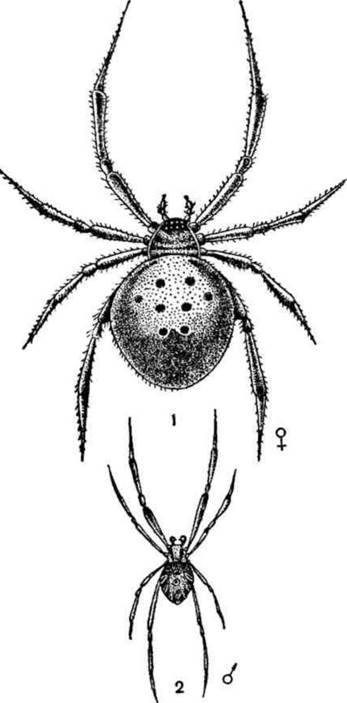
The female lays her eggs in cocoons (5–6) on the soil surface and stays close by. The young hatch inside the cocoon but do not leave it until spring.
They reach sexual maturity in June and disperse across the area. A second dispersal (second migration) occurs after copulation. They are particularly dangerous during migration periods.
Medical significance. The bite of the black widow spider is fatal to humans and animals (camels, horses, cattle). However, sheep and pigs eat black widows without harming themselves, so they can be used to eliminate these spiders in pastures. The venom has a neurotoxic effect. A bitten person experiences acute pain that rapidly spreads throughout the entire body. The Abdominal Muscles are tense, and patients assume a characteristic curled-up posture. Symptoms of general poisoning include asphyxia, palpitations, rapid pulse, headache, vomiting, sweating, as well as urinary and bowel retention in patients. Characteristically, an initial state of agitation is followed by deep depression, impaired consciousness, a sense of fear, and sometimes hallucinations. Black widow venom is 15 times more toxic than rattlesnake venom. Treatment involves the administration of antivenom serum, which rapidly halts intoxication.
Prevention. Avoid sleeping outdoors in black widow habitats, especially during their migration period. In populated areas, it is recommended to clear weeds in yards and along tram lines where black widows find shelter.
Tarantula (Lycosa singoriensis). A venomous spider, measuring 3–4 cm in length. The body is yellow-brown. It lives in the ground, digging deep vertical burrows (up to 30 cm). The bite is painful but poses no danger to humans. Hyperemia and sometimes significant swelling occur at the bite site. The pain persists for a day and, unlike a black widow bite, does not spread to other PARTS OF THE body.
Order Mites and Ticks (Acarina). Mites and ticks are a numerous group within the class Arachnida. Among them, Blood-sucking species that parasitize animals and humans hold a significant place. Ticks and mites are small, sometimes microscopic in size. In most species, the body is unsegmented and undivided into distinct tagmata. They possess six pairs of appendages. The first two pairs (chelicerae and pedipalps) have transformed into a proboscis (oral apparatus), while the other four pairs are walking legs. The mouthparts are of the piercing-sucking or chewing-sucking type. They breathe through tracheae, though respiratory organs are reduced in some species. The digestive system of blood-sucking species is highly branched, especially in females.
Development occurs with metamorphosis (transformation) (Fig. 2.45). The fertilized female lays eggs from which larvae with three pairs of legs hatch. The larva molts and transforms into a nymph, which, like the adult form, has four pairs of legs but lacks a genital opening. There may be several nymphal stages. After the final molt, the nymph transforms into the sexually mature form (imago).
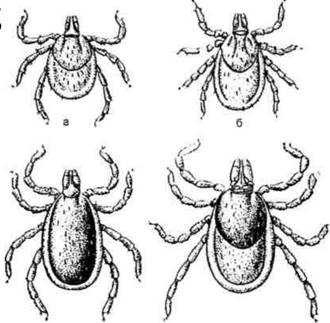
Fig. 2.45. Stages of mite development (taiga tick):
a — larva; b — nymph; c — imago (male, dorsal view); d — imago
The greatest medical significance is attributed to the itch mite and Demodex mite, which belong
to the order Acariformes, as well as ixodid, argasid, and gamasid mites, which belong to the Parasitiformes.
The itch mite, or Scabies mite
(Acarus siro, syn. Sarcoptes scabiei), is the CAUSATIVE AGENT OF scabies and an intradermal parasite.
Localization — the stratum corneum of the Skin epidermis.
Geographical distribution — ubiquitous.
Morphophysiological characteristics and life cycle. A very small mite: the female is about 0.4 mm long, and the male is about 0.3 mm long. The body is oval, with transverse folds, bearing scales and long bristles directed backward. The legs are greatly shortened, which is an adaptation to living within burrows in the skin. Eyes are absent (Fig. 2.46).
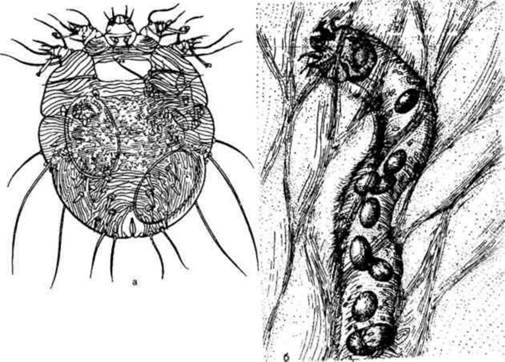
Fig. 2.46. Itch mite: a — female, dorsal view, containing 2 eggs; b — mite burrow in human skin, showing eggs at various Selection/3.html">Stages of development
Respiration occurs through the entire body surface.
To penetrate the skin, itch mites choose the most tender areas (between fingers, in the armpits, on the abdomen). The length of the burrow that a female digs in a day reaches 2–3 mm (males do not make burrows). Along the length of the burrow, the females create ventilation openings. In these burrows, the female lays eggs — 20 or more during her lifetime (40–45 days). The female is located primarily at the blind end of the scabies burrow. Larvae hatch from the eggs in 3–5 days. The larvae molt and transform into nymphs. Nymphs come to the skin surface, molt, and transform into sexually mature forms. After Fertilization, the males die, and the females burrow back into the skin.
The activity of the mites increases at night when the body surface warms up, causing the person to feel itching. Scratching opens up the burrows. The mites, their larvae, and nymphs spread over the patient's body, scattering onto clothing and surrounding objects. The source of scabies infection is an infected person. The transmission mechanism of the pathogen is contact-household.
Infection occurs through direct contact with an infected person or by using their personal items, which may harbor mites. Domestic and wild mammals also suffer from scabies, caused by other species of itch mites.
Humans can serve as accidental hosts for itch mites parasitizing horses, dogs, pigs, sheep, goats, camels, wolves, and other animals.
Pathogenic effect. Scabies is a parasitic anthroponotic disease characterized by damage to the epidermal layer of the skin and intense itching. The skin exhibits burrows in the form of straight or convoluted lines resembling healing scratches.
Laboratory Diagnostics involves detecting the itch mite through microscopic examination of scrapings taken from the mite burrows.
Prevention. Personal measures include maintaining bodily hygiene, clean undergarments, and living quarters, as well as strictly adhering to sanitary regulations after contact with infected individuals or animals. Public measures involve identifying and treating patients, sanitary supervision over dormitories and bathhouses, and health education campaigns.
Demodex (Demodex folliculorum) is the causative agent of demodicosis.
Localization: Sebaceous Glands, Hair follicles.
Morphophysiological characteristics. The hair follicle mite has an elongated, worm-like body with transverse striations, bearing 4 pairs of short segmented legs at its anterior end (Fig. 2.47). The mites measure 0.2-0.5 mm in length. A single sebaceous gland may harbor up to 200 individual mites. The source of infection is an infected person. The transmission mechanism is contact-household: via direct contact with an infected person, or through bedding, towels, and clothing contaminated with the mites.
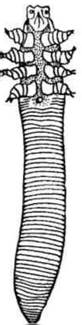
Fig. 2.47. Hair follicle mite (Demodex folliculorum).
Pathogenic effect. The condition manifests as acne, skin rashes, suppurative inflammatory lesions, seborrhea, and dermatitis.
Laboratory diagnostics involves identifying the hair follicle mite through microscopic examination of acne contents.
Prevention. Personal measures: following personal hygiene rules and avoiding The Use of shared towels. Public measures: detection and treatment of patients, along with health education.
Family Ixodidae (Ixodid ticks). Ixodid ticks are temporary ectoparasites of animals and humans. They predominantly inhabit forest, forest-steppe, and steppe zones. Many species serve as vectors of infectious disease pathogens affecting humans and animals. Furthermore, while feeding, ticks inject toxic substances into the host's Organism via their saliva, provoking local and occasionally systemic reactions.
The body length of unfed adult ticks is 4-5 mm. After a blood meal, females can reach 10 mm or more. The male possesses a dorsal shield covering the entire upper surface of the body. In females, nymphs, and larvae, the shield covers only the anterior portion of the body. Posterior to this shield, the integument is covered with a thin, highly stretchable chitinous cuticle. This anatomical feature enables the female to ingest a massive volume of blood, exceeding her unfed body mass by 200-400 times. Males ingest significantly less blood. The mouthparts, comprising the hypostome, chelicerae, cheliceral sheaths, and palps, are located terminally at the anterior end of the body. The hypostome bears sharp, backward-pointing Teeth, while the chelicerae are equipped with powerful hooks. Thanks to these adaptations, the tick's mouthparts anchor firmly into the host's skin (Fig. 2.48).
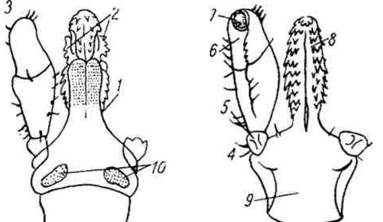
Fig. 2.48. Mouthparts (gnathosoma) of a female castor bean tick (Ixodes ricinus):
left - dorsal view; right - ventral view; 1 - cheliceral sheath; 2 - cheliceral hooks; 3 - palp; 4-7 - palp segments; 8 - hypostome; 9 - basis capituli; 10 - porose areas (Sensory Organs).
Ticks lie in wait for their prey in open natural environments, which has led to the evolution of specialized adaptive traits.
Thus, ticks are capable of surviving long periods of starvation, but once attached to a host, they feed on blood continuously for extended periods, sometimes lasting several days. The bite process is entirely painless (across all developmental stages) because ticks secrete specialized anesthetic substances that render their attachment completely imperceptible.
Development proceeds via metamorphosis and includes 4 phases: egg, larva, nymph, and adult (imago). Blood-sucking ticks are classified as one-, two-, or three-host ticks based on how phase transitions correspond to hosts. In one-host ticks, development between certain stages occurs only after feeding.
Among ixodid ticks, some species complete all developmental stages on a single host, whereas in two-host ticks, the larva and nymph feed on one host, while the imago feeds on another.
In three-host ticks (such as the taiga tick), each active stage seeks out a new host.
Mass mortality is observed across all developmental stages. Nevertheless, females are characterized by high fecundity (capable of laying up to 17,000 eggs). Eggs are deposited on the ground once in a lifetime, after which the female dies. After feeding, they also detach, molt, and transform into imagos. Adult ticks parasitize large mammals to feed on blood, after which they mate. The fertilized female drops to the ground and begins oviposition, subsequently dying.
The genera of greatest medical importance among ixodid ticks are Ixodes and Dermacentor.
The taiga tick (Ixodes persulcatus) is a temporary ectoparasite, vector, and natural reservoir for the causative agent of tick-borne spring-summer encephalitis. The taiga tick is predominantly distributed in the taiga regions east of the Urals, though it has also been detected in Europe. The male measures ~2.5 mm, while the female reaches up to 4 mm. The coloration is brownish. It is a three-host tick.
Each stage of metamorphosis feeds on blood from hosts of different species. The larva feeds on small vertebrates (rodents, hedgehogs, birds), then drops to the soil to molt. Nymphs feed on chipmunks, squirrels, and hares.
The adult forms feed on cattle, moose, and deer (Fig. 2.49). Adult ticks also attack humans. The complete development cycle from egg to sexually mature stage takes at least three years.
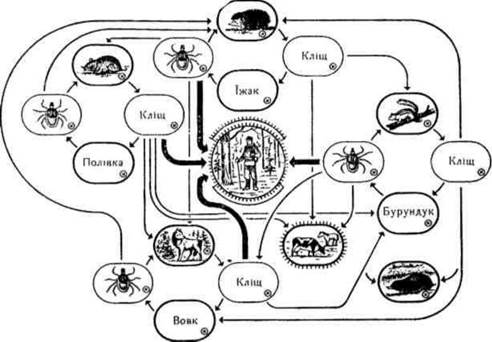
Fig. 2.49. Circulation of the tick-borne encephalitis virus in nature:
the virus, the causative agent of tick-borne encephalitis, is indicated by crosses; the vectors of the virus are the taiga tick, wild mammals, and birds inhabiting the taiga, which serve as Components of the natural focus. Humans and domestic animals become infected through the bites of infected ticks.
Taiga encephalitis is a severe viral, natural-focal, transmissible disease characterized by Brain damage and a high mortality rate. Transmission of the virus between animals, and from them to humans, occurs through the bite of an infected taiga tick. An infected female tick transmits the virus to her offspring via eggs—transovarially. By retaining the virus in their bodies and passing it on to offspring across multiple generations, ticks act not only as vectors but also as a natural reservoir of the causative agent of taiga encephalitis.
In the 1930s, participants of special expeditions led by Academician Ye.N. Pavlovsky clarified The Role of the taiga tick in the Epidemiology of encephalitis and developed preventive measures. Virologists participating in these expeditions, under the leadership of L.O. Zilber, discovered the pathogen (virus) of taiga encephalitis. Based on this work, a preventive vaccine was developed. The discovery of natural foci of taiga encephalitis enabled Ye.N. Pavlovsky to substantiate The Doctrine of the natural focality of transmissible diseases.
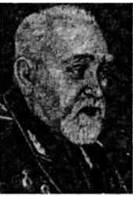
Yevgeny Nikanorovich Pavlovsky (1884–1965)
Prevention. Personal: protection against tick bites (special clothing, repellents), inspection of clothing and body to remove attached ticks. Public: eradication of ticks in areas of their mass population frequently visited by humans using poisons (acaricides), and preventive vaccinations.
Castor bean tick (Ixodes ricinus). The castor bean tick is a temporary ectoparasite and a vector of the pathogens of tularemia and spring-summer encephalitis. It parasitizes agricultural and wild animals. It can also attack humans. It is widespread in the forest and forest-steppe zones of Europe. In size, Structure, and developmental cycle, it is similar to the taiga tick.
Dermacentor pictus is a temporary ectoparasite and a vector of tularemia pathogens. It is widespread in the forest zone.
Dermacentor marginatus is a temporary ectoparasite and a vector of the pathogens of tularemia and brucellosis. It is widespread in the steppe zone.
Family Argasid Ticks (Argasidae). Argasid ticks are predominantly distributed in semi-desert and desert areas. Unlike ixodid ticks, they lack dorsal shields. The body is covered with uneven Chitin featuring a characteristic border along the entire edge of the body. The mouthparts are located ventrally in a special cavity and are not visible from the dorsal side (Fig. 2.50).
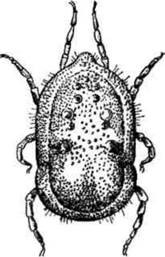
Fig. 2.50. Persian tick: male (dorsal view).
They live in enclosed biotopes (caves, burrows, adobe buildings).
They are better protected against adverse conditions and suffer lower mortality rates than ixodid ticks; consequently, they lack adaptations for intensive reproduction. The female lays only hundreds, and sometimes tens, of eggs. On the other hand, these ticks must make do with whatever prey happens to enter their shelter, resulting in a very broad host range (vertebrates ranging from reptiles to humans). They have developed The ability to feed rapidly while the host is still in the shelter. Blood-sucking takes from 3 to 30 minutes. Since the blood meal is less abundant, fewer eggs mature, but the female lays them multiple times throughout her life. Because a biotope may remain unvisited by hosts for long periods, ticks can fast for years, and thus their development, as demonstrated by Ye.N. Pavlovsky, can be prolonged up to 20–28 years. The developmental cycle includes several nymphal stages (from 2 to 7). Of the greatest medical importance is the Persian tick.
Persian tick (Ornithodoros papillipes) is a temporary ectoparasite and a vector of the pathogens of tick-borne relapsing fever (spirochetes). Tick-borne relapsing fever is a natural-focal transmissible disease, a zoonosis. The natural reservoirs of spirochetes are various species of rodents and bats, as well as the Persian tick, which temporarily parasitizes them and whose female is capable of transmitting the fever pathogen to its offspring transovarially. Humans become infected through the bites of infected ticks.
Geographical distribution: Central Asia, Afghanistan, Iran, India.
Morphophysiological characteristics. The Persian tick is dark gray in color. The length of the female is 8.2 mm, and the male 5.8 mm. There are no eyes. Adult ticks can fast for up to 13 years.
Prevention of tick-borne relapsing fever. Personal: it is necessary to protect oneself against tick bites, avoid spending prolonged periods in caves, adobe buildings, and other tick habitats, and use repellents. Public: eradication of ticks and rodents. The best effect is achieved by demolishing old adobe buildings infested with ticks and replacing them with European-style houses.
Family Gamasid Mites (Gamasoidea). A numerous group of small mites measuring 0.3–4 mm in length. Some gamasid mites are permanent, while others are temporary ectoparasites of birds and mammals. Of medical significance are the gamasid mites that parasitize birds (swallows, swifts, chickens, pigeons) and rodents. Through them, mites transmit pathogens of viral diseases to humans.
Last update: 08/08/2026
Editorial and Educational Adaptation: This material has been compiled based on the primary/original source text. The project team performed an editorial review, corrected technical inaccuracies, structured sections, and adapted the content for an educational format.
What was processed:
- elimination of formatting defects (OCR errors, structural breaks, corrupted characters);
- editorial organization of content;
- standardization of terminology in accordance with academic sources;
- verification of factual statements against the original source text.
All mentions of the author, publication year, and origin of the primary text have been preserved in accordance with the source.