BIOLOGY Volume 2 - A Guide to General Biology - 2004
12. MICROBIOLOGY AND BIOTECHNOLOGY
12.16. Enzyme Technology
12.16.7. Immobilized Enzymes
Advantages of Immobilized Enzymes
As discussed in the Introduction to this section, the commercial Application of Enzymes is constrained by several factors, most notably their instability and high cost. However, expenses can be significantly reduced through enzyme immobilization. This technique involves attaching the enzyme to The surface of or enclosing it within a solid support, which can be easily removed from the reaction mixture once Fermentation is complete. Because the enzyme can be reused, the overall process cost drops substantially.
Another major benefit of immobilization is enhanced enzyme stability, likely due to restrictions on conformational changes that normally lead to Denaturation under fluctuating pH, Temperature, or solvent conditions. For instance, immobilized glucose isomerase remains stable at 65 °C for up to a year, whereas in free solution it denatures at 45 °C within just a few hours.
Furthermore, immobilized enzymes facilitate continuous (open-system) production by allowing reactants to flow steadily through the enzyme matrix while the product is collected at the downstream stage.
Methods of Enzyme Immobilization
There are several techniques for immobilizing enzymes (Fig. 12.28). These generally involve either mechanical entrapment (trapping) of the enzyme or its covalent or non-covalent attachment to a specific Structure or matrix. The primary advantage of entrapment is that the enzyme retains its native conformation; however, steric hindrance can make it difficult for larger substrate molecules to access the Active Site.
Entrapment in alginate beads is easily demonstrated in laboratory settings and represents a widely used industrial method. A solution containing the enzyme and sodium alginate is dropped into a calcium chloride solution. Upon contact with the calcium chloride, the droplets instantly gel, forming uniform spherical beads with the enzyme trapped inside. For long-term industrial use, the gel can be stabilized with polyacrylamide or cast into sheets by embedding it in a fabric backing.
Class="center">
Fig. 12.28. Methods of enzyme immobilization.
Applications of Immobilized Enzymes
A prime example of a successful industrial process utilizing immobilized enzymes is The production of high-fructose corn syrup (HFCS). Widely used as a sweetener in the USA and Japan—particularly in fruit beverages—HFCS is significantly cheaper than sucrose. The syrup is produced from a relatively inexpensive carbohydrate source: starch extracted from corn cobs. The manufacturing process involves three enzymatic steps. First, a starch slurry is prepared by wet-milling corn, after which two different amylases convert the starch into a glucose syrup. Once decolorized and concentrated, this syrup can be used in various foods and beverages. Alternatively, using the enzyme glucose isomerase, the syrup can be converted into a mixture containing roughly equal amounts of glucose and fructose. This is achieved by passing the syrup through a Column packed with an enzyme immobilized via adsorption onto a Cellulose ion-exchanger (Method 3, Fig. 12.28). Because enzyme activity gradually declines over time, multiple columns are typically operated in parallel. Fructose is sweeter than glucose, yet both provide the same caloric content per unit mass. Consequently, using high-fructose corn syrup yields products with the same level of sweetness as glucose but with fewer calories. Approximately 4 million tonnes of this syrup are produced annually in the United States alone.
The first enzyme to be immobilized on an industrial scale was aminoacylase, used in Japan in 1969 to produce Amino Acids for animal feed, a product in high global demand. Amino acid molecules can exist in two mirror-image configurations, much like a left and right hand. These optical isomers are designated as right- and left-handed, or D- and L-forms (based on the direction in which they rotate plane-polarized light). All Naturally Occurring Amino Acids are L-isomers. While chemical synthesis is often cheaper than extracting amino acids from Cells, it invariably yields a racemic mixture containing equal proportions of D- and L-isomers. The Challenge of obtaining pure L-amino acids is overcome by using enzymes that specifically catalyze The conversion of only one of these forms. The MAIN STAGES OF this process are outlined in the flowchart in Fig. 12.29.
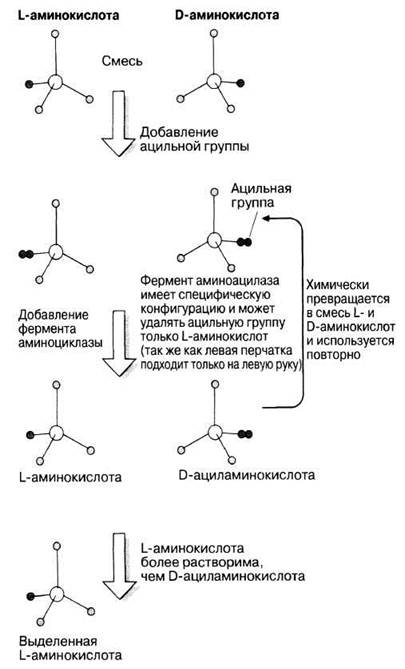
Fig. 12.29. Process flow diagram for the production of L-amino acids used in animal feed.
The enzyme is immobilized via ionic binding on a packed-bed carrier column (Method 3, Fig. 12.28). Following 30 days of continuous automated operation at 50 °C, the enzyme activity drops to 40%, at which point fresh enzyme is added to restore catalytic efficiency. Ultimately, this immobilization strategy achieves a 40% saving in enzyme consumption.
Another notable application of immobilized enzymes is the production of semi-synthetic Penicillins from natural penicillins. In this process, the immobilized enzyme chemically modifies a specific side-chain of the penicillin molecule, thereby enhancing its antibiotic potency.
Last update: 06/08/2026
Editorial and Educational Adaptation: This material has been compiled based on the primary/original source text. The project team performed an editorial review, corrected technical inaccuracies, structured sections, and adapted the content for an educational format.
What was processed:
- elimination of formatting defects (OCR errors, structural breaks, corrupted characters);
- editorial organization of content;
- standardization of terminology in accordance with academic sources;
- verification of factual statements against the original source text.
All mentions of the author, publication year, and origin of the primary text have been preserved in accordance with the source.