BIOLOGY Volume 2 - A Guide to General Biology - 2004
12. MICROBIOLOGY AND BIOTECHNOLOGY
12.8. Culturing Viruses
The cultivation, or propagation, of Viruses is a more complex Procedure than growing Bacteria, because viruses grow and multiply only inside living Cells. While it is possible to infect a whole Organism, such as a plant or animal, modern practice relies wherever possible on Cell or tissue cultures (Fig. 12.11). Previously, certain viruses were cultivated in developing chicken embryos inside the egg. A similar procedure of growing viruses in the Amniotic Fluid surrounding a chick embryo was used in The production of mumps and Influenza Vaccines.
A cell culture is a suspension of cells in a liquid medium, whereas a tissue culture consists of small pieces of plant or animal organ in a liquid or solid medium. Plant cell cultures typically utilize Meristems—regions such as ROOT or SHOOT tips where cells are actively dividing. The material can be taken from an infected plant or the culture can be inoculated with an appropriate virus. Animal Cell Cultures are generally established by growing isolated cells as a single layer On the surface of a Glass container (a monolayer culture). Poliovirus was first propagated in such a culture derived from monkey Kidney. Additionally, human lung, amnion, and Cancer cells have been used to establish tissue cultures.
Class="center">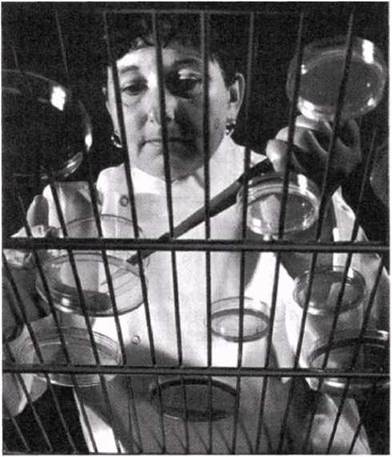
Fig. 12.11. Cell cultures for virus propagation, incubated in a sterile Temperature-controlled room.
Last update: 06/08/2026
Editorial and Educational Adaptation: This material has been compiled based on the primary/original source text. The project team performed an editorial review, corrected technical inaccuracies, structured sections, and adapted the content for an educational format.
What was processed:
- elimination of formatting defects (OCR errors, structural breaks, corrupted characters);
- editorial organization of content;
- standardization of terminology in accordance with academic sources;
- verification of factual statements against the original source text.
All mentions of the author, publication year, and origin of the primary text have been preserved in accordance with the source.