BIOLOGY Volume 1 - A Guide to General Biology - 2004
9. ENERGY UTILIZATION
9.5. Gas Exchange in Mammals
9.5.4. The Mechanism of Ventilation (Breathing)
Air moves into and out of the Lungs thanks to the action of the intercostal Muscles and the Diaphragm; their alternate contraction and relaxation changes the volume of the thoracic cavity. Between each pair of Ribs lie two groups of intercostal muscles oriented at an angle to one another: the external ones running downwards and forwards, and the internal ones running downwards and backwards (Fig. 9.26). The diaphragm consists of circular and radial Muscle fibres arranged around a central tendinous region composed of Collagen.
Class="center">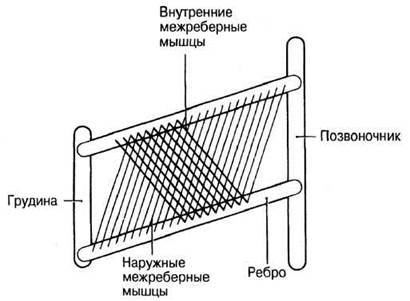
Fig. 9.26. Arrangement of the intercostal muscles (diagrammatic).
Inhalation
Inhalation is an active process that takes place as follows:
1. The external intercostal muscles contract, while the internal ones relax.
2. Consequently, the ribs move forwards and outwards away from THE Vertebral Column. (This can easily be felt by placing a hand on the chest during inhalation.)
3. At the same time, the Muscles of the diaphragm contract.
4. The diaphragm flattens.
5. Both of these actions result in an increase in the volume of the thoracic cavity.
6. As a result, the pressure within the chest cavity—and consequently in the lungs—falls below atmospheric pressure.
7. Air rushes in and fills the alveoli until the pressure in the lungs equalises with the atmospheric pressure (Fig. 9.27).

Fig. 9.27. Schematic representation of the thoracic cavity illustrating respiratory movements (side view; only a single rib is shown).
Exhalation
Exhalation under normal conditions is a largely passive process resulting from the elastic recoil of stretched lung tissue, the relaxation of some Respiratory Muscles, and the lowering of the chest cage under the force of gravity.
1. The external intercostal muscles relax, while the internal ones contract. The ribcage lowers, primarily due to its own weight.
2. Simultaneously, the diaphragm relaxes. The descending ribcage forces it to resume its original dome-like shape.
3. Consequently, the volume of the thoracic cavity decreases, and the pressure within it rises above atmospheric pressure.
4. As a result, air is forced out of the lungs.
During physical exertion, forced breathing takes place. Additional muscles are brought into play, and exhalation becomes a more active process requiring Energy Expenditure. The internal intercostal muscles contract more vigorously and pull the ribs further downwards. The Abdominal muscles also contract vigorously, driving a more forceful upward movement of the diaphragm. The same occurs during sneezing and coughing.
Last update: 06/08/2026
Editorial and Educational Adaptation: This material has been compiled based on the primary/original source text. The project team performed an editorial review, corrected technical inaccuracies, structured sections, and adapted the content for an educational format.
What was processed:
- elimination of formatting defects (OCR errors, structural breaks, corrupted characters);
- editorial organization of content;
- standardization of terminology in accordance with academic sources;
- verification of factual statements against the original source text.
All mentions of the author, publication year, and origin of the primary text have been preserved in accordance with the source.