Principles of Protein Structural Organization - H. Schultz 1982
Protein-ligand interactions
Substrate-binding sites of serine proteases
Formation of the chymotrypsin-substrate complex
The Mechanism of substrate binding is similar in all known Serine proteases [537], including subtilisin [627]. Since the substrates of serine proteases are Proteins, elucidating the mechanism by which these Enzymes form complexes with their substrates also provides insight into Protein-Structure/156.html">Protein Interactions.
Class="center">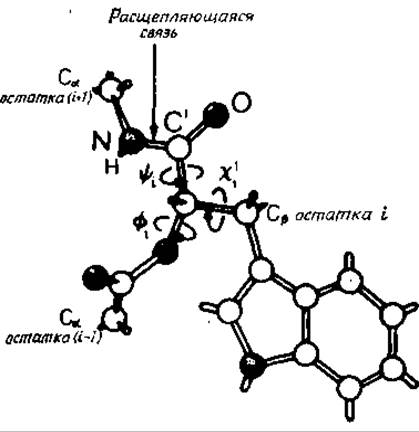
Fig. 10.1. Substrate binding to Chymotrypsin [537].
The dihedral angles of the substrate are shown, which must adopt specific values before the Cleavage of the peptide bond between residues i and i+1 can take place.
Substrate binding can be divided into several stages. Each stage involves interactions with the main-chain atoms of chymotrypsin. Let us consider the steps preceding the cleavage by chymotrypsin of the peptide bond on the carbonyl side of amino acid residue i [537, 538]. This residue can be either aromatic or carry a bulky aliphatic side chain. During complex formation, the scissile bond of the substrate is oriented precisely toward the attacking groups [537]. Starting with the fixation of the side chains, this process can be broken down into several stages, for which The Importance of interactions involving the rigid main-chain atoms should be emphasized.
a) The side chain of i, including the Cβ-atom (Fig. 10.1), enters a deep pocket of the enzyme formed by three peptide bonds and is fixed by hydrophobic interactions. The shape of the pocket entrance leaves little positional freedom for the Cα-atom of this residue.
б) With the side chain fixed, the dihedral angle χ1і (Figs. 2.2 and 10.1) determines THE POSITION OF the substrate main chain. The allowable variation of χ1і is determined by the enzyme surface. The value of χ1і is fixed by The formation of a Hydrogen bond between the NH group of the substrate residue and the carbonyl group of main-chain residue 214, which also fixes the angle —і.
в) Following the establishment of these interactions, the fixation of the angle ψі is required. This choice is likewise controlled by the surface profile of the enzyme, which permits only two intervals of values for the angle. One of these possibilities allows the carbonyl group of residue i to form Hydrogen Bonds with the backbone NH groups of residues 193 and 195. This brings the amide group of the scissile bond (i.e., the NH group of substrate residue i + 1) close to the catalytic center of the enzyme—the linear "charge-Relay system" [628] consisting of the Asp, His, and Ser side chains. The enzyme-substrate complex (Michaelis complex) can now be considered formed, and the peptide bond between residues i and i + 1 is ready for enzymatic attack.
Nonproductive binding prevents the Hydrolysis of Peptides consisting of unwanted D-Amino Acids. Peptides composed of D-Amino acids can also bind tightly to chymotrypsin. However, in this case, a relatively unreactive enzyme-substrate complex is formed because the scissile bond is not properly oriented relative to the catalytic center [629]; in this way, the Free energy of binding is expended on inhibiting the reaction with a substrate analogue that could otherwise lead to undesired products. Nonproductive binding appears to be a general mechanism ensuring Enzyme Specificity [630, 631].
Last update: 06/08/2026
Editorial and Educational Adaptation: This material has been compiled based on the primary/original source text. The project team performed an editorial review, corrected technical inaccuracies, structured sections, and adapted the content for an educational format.
What was processed:
- elimination of formatting defects (OCR errors, structural breaks, corrupted characters);
- editorial organization of content;
- standardization of terminology in accordance with academic sources;
- verification of factual statements against the original source text.
All mentions of the author, publication year, and origin of the primary text have been preserved in accordance with the source.