Human Biochemistry, Volume 1 - Murray R. 1993
Bioenergetics and Metabolism of Carbohydrates and Lipids
The Citric Acid Cycle: Catabolism of Acetyl-CoA
Biomedical Significance
The primary function of The Citric Acid Cycle is to serve as the common final pathway for The oxidation of CARBOHYDRATES, Lipids, and Proteins, as glucose, Fatty acids, and Amino Acids are converted into either acetyl-CoA or Intermediates of the cycle during METABOLISM. The Citric Acid cycle also plays a major role in Gluconeogenesis, Transamination, deamination, and Lipogenesis. Although some of these processes occur in many Tissues, the Liver is the sole organ capable of performing all of them. Consequently, severe consequences arise when A large number of liver Cells are damaged or replaced by Connective Tissue, as occurs in acute hepatitis and cirrhosis, respectively. The vital importance of the citric acid cycle is further underscored by the fact that genetically determined defects in the Enzymes catalyzing its reactions are virtually unknown (or completely non-existent) in humans; presumably, such disorders are incompatible with normal development.
Class="center">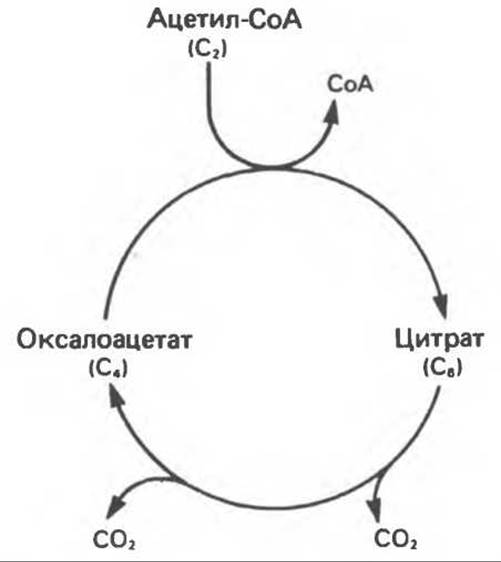
Fig. 17.1. The citric acid cycle; the illustration demonstrates the catalytic role of oxaloacetate.
Last update: 06/08/2026
Editorial and Educational Adaptation: This material has been compiled based on the primary/original source text. The project team performed an editorial review, corrected technical inaccuracies, structured sections, and adapted the content for an educational format.
What was processed:
- elimination of formatting defects (OCR errors, structural breaks, corrupted characters);
- editorial organization of content;
- standardization of terminology in accordance with academic sources;
- verification of factual statements against the original source text.
All mentions of the author, publication year, and origin of the primary text have been preserved in accordance with the source.