Chemistry and Biology of Proteins - F. Haurowitz 1953
Protein Complexes with Other Substances
Intermolecular Forces
Proteins, when combined with non-protein substances, form more or less stable compounds known as Conjugated Proteins or proteids; sometimes they are also referred to as simplexes [1] or synapses [2]. Some of these conjugated proteins undoubtedly exist as permanent constituents of Blood and Tissues. Hemoglobin, for instance, belongs to this group, representing a stable proteid (see Ch. XI). In other cases, we cannot yet answer with absolute certainty whether certain conjugated proteins pre-exist in the animal Organism or whether they are formed during the isolation process itself.
Some proteids represent compounds of a single protein molecule with a single non-protein molecule, whereas others contain more than one non-protein group per protein molecule. The non-protein moiety of a conjugated protein is designated as the prosthetic group. The bonds between the protein and the prosthetic group vary among Different types of conjugated proteins. In Phosphoproteins, for example, the protein and non-protein components are linked by ester bonds, i.e., true covalent bonds; in other conjugated proteins, both components are held together by weak intermolecular forces. These forces act primarily between ionic groups, polar unionized groups, and non-polar groups.
Bonds of the first type are formed between proteins and ions, both organic and inorganic. It has been known for a relatively long time that proteins form stable, insoluble compounds with certain organic acids, such as picric, trichloroacetic, or sulfosalicylic acids. Analysis of the precipitates obtained by precipitating proteins with metaphosphoric acid has shown that The amount of metaphosphate in the precipitate is equivalent to the number of amino groups in the precipitated protein [3]. This indicates that negative metaphosphate ions combine with positively charged ammonium groups of proteins.
The mutual attraction of positively and negatively charged ionic groups is driven by well-known electrostatic forces. If the charges of two groups are designated as e1 and e2, respectively, the attractive force between them will be 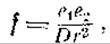 where D is the dielectric constant and r is the distance between the positive and negative charges. Electrostatic forces, The Significance of which in The formation of intra- and intermolecular "salt linkages" was discussed in Ch. VII (see p. 136), are also capable of binding the two components together in conjugated proteins. From the foregoing, it is clear that bonds mediated by electrostatic forces must be disrupted by agents capable of discharging ionized groups. Positive and negative groups lose their charge upon The addition of strong bases or acids, and these same Reagents are capable of cleaving salt-like bonds. However, interpreting the MECHANISM OF ACTION of acids and alkalis in such cases encounters certain difficulties because, as previously noted, acids and alkalis also induce Protein Denaturation. Therefore, it is often difficult to determine whether the Cleavage of a conjugated protein by acids or alkalis results from the denaturation of the protein moiety or from the disruption of the bond between the protein and the prosthetic group. In many cases, both processes probably occur simultaneously.
Salt linkages should be regarded as strictly localized bonds; the mutual attraction of the two components is concentrated within the sphere of action of two atomic groupings bearing positive and negative charges. Salt linkages are quite resistant to heat. Assuming that the bond energy between two electrical charge centers is 5,000 cal, that the distance between them is 3 Å, and that upon heating this distance increases from 3 to 4 Å, the bond energy will correspondingly decrease to 5,000 ∙ (3/4)2, i.e., to 2,800 cal. In other words, the two charged points will continue to attract each other with a force equal to 56% of their original magnitude and will tend to restore their initial position.
Bonds of the second type, connecting two dipoles, can form between OH, SH, and NH2 groups. Hydrogen Bonds must also be classified among this type of bond (see p. 136). Dipole-dipole bonding is likewise governed by electrostatic forces. When dipoles are brought into close proximity with one another, the attractive force between them is expressed by a magnitude of the same order as the attractive force between ions of opposite sign. A substantial difference, however, is that the attractive force acting between two poles decreases, as the distance between them (r) increases, in proportion to a very high power of r, namely r6 [4]. Let us assume again that the bond energy between dipoles is 5,000 cal and that the distance between the two poles increases from 3 to 4 Å. In this case, the bond energy will drop to 5,000 ∙ (3/4)6 = 900 cal, meaning that only 1/6 of the original attractive force is retained. Consequently, dipole-dipole bonds prove to be significantly more labile at elevated temperatures than salt linkages. This is evident from the fact that the melting point of substances whose molecules are linked together by polar bonds lies much lower. The reason for the striking difference in the melting points of two isomers (glycolamide and Glycine) has already been discussed on page 71.
Despite the fact that dipole bonds are highly sensitive to heat, their role in the formation of many compounds is very significant, and in A number of cases they may prove to be stronger than salt linkages. This is due to the circumstance that A large number of polar groups are frequently located within a small region of the molecule, with the result that molecular surfaces of this kind attract one another through multiple dipole bonds. This phenomenon is especially evident in compounds formed by CARBOHYDRATES; each carbohydrate molecule possesses a large number of polar hydroxyl groups and, consequently, is attracted to neighboring polar molecules by numerous polar bonds. The attraction of carbohydrate molecules to The surface of protein molecules is so great that a high carbohydrate concentration in solution prevents the coagulation of denatured proteins (see p. 155).
Bonds of the third type arise between non-polar groups. This kind of bond, characteristic, for example, of Solid and liquid Hydrocarbons, is caused by rapid electron fluctuations, the so-called dispersion effect [5]. The attraction between non-polar groups is weaker than that between ionic or polar groups [7]. This is indicated by the low melting and boiling points of the lower members of the paraffin series. The mutual attraction between non-polar groups—which can only be effective between large, extended groups, such as the long paraffin chains of Higher Fatty acids—is enhanced by the ability of saturated paraffin chains to deform. Owing to the free rotation of their carbon atoms around the carbon–carbon bond, paraffin chains possess high flexibility and can therefore approach one another closely enough for attractive forces to come into effective play.
In addition to the three MAIN TYPES OF intermolecular bonds considered, intermediate types also exist. Electrostatic forces act not only between two ions or between two dipoles, but also between ions and neighboring dipoles. Ion-dipole bonding forces are intermediate between ion-ion and dipole-dipole bonding forces. This same intermediate type of bond can arise between a polar and a non-polar group.
Last update: 06/08/2026
Editorial and Educational Adaptation: This material has been compiled based on the primary/original source text. The project team performed an editorial review, corrected technical inaccuracies, structured sections, and adapted the content for an educational format.
What was processed:
- elimination of formatting defects (OCR errors, structural breaks, corrupted characters);
- editorial organization of content;
- standardization of terminology in accordance with academic sources;
- verification of factual statements against the original source text.
All mentions of the author, publication year, and origin of the primary text have been preserved in accordance with the source.