ECOLOGICAL BIOCHEMISTRY - Study Guide - V. M. Isaienko 2005
Chapter 6. ECOLOGICAL AND BIOCHEMICAL INTERACTIONS AMONG ANIMALS
6.1.Invertebrate Pheromones
Among invertebrate pheromones, several groups are distinguished based on their Functions: 1) sex pheromones (attracting individuals of the opposite sex, stimulating mating, forming and altering sexual characteristics, stimulating sexual maturation and reproduction); 2) alarm pheromones; 3) aggregation pheromones; 4) trail pheromones; 5) marking pheromones. It should be noted that most pheromones are multifunctional—performing several functions, such as attraction, marking, etc. These groups of pheromones have been identified in all invertebrates, but are best studied in insects. The structures of some of them are shown in Fig. 6.1.Class="center">
Fig. 6.1. Structure of some insect pheromones:
1 — sex pheromone of the tsetse fly Glossina pallidipes; 2 — sex pheromones of the cigarette beetle Lasioderma serricome: (2,3-cis)-serricornin (2a) and (2,3-cis)-serricorol (2b); 3 — trail pheromones of the ant Tetramorium caespitum: 2,5-dimethylpyrazine (3a) and 3-ethyl-2,5-dimethylpyrazine (3b); 4 — aggregation pheromone of males of the rusty grain beetle Cryptolestes ferrugineus: verrucarin I (4a) and verrucarin II (4b).
Pheromones of aquatic invertebrates are also diverse in function and structure. Among them are sex pheromones, ovarian development stimulators, growth inhibitors, locomotor activity stimulators, and others. The structure of some of these is illustrated in Fig. 6.2.

Fig. 6.2. Structure of some marine invertebrate pheromones:
1 — sex pheromone crustecdysone of certain crab species; 2 — alarm pheromone anthopleurine of the sea anemone Anthopleura elegantissima
Sex attractants and copulation-stimulating pheromones.
These pheromones are divided into two groups: 1) sex attractants — substances that facilitate the convergence of males and females; 2) aphrodisiacs — substances released by individuals as potential sexual partners approach one another, helping to prepare the individual of the opposite sex for copulation.
There is also another interpretation of sex pheromone groups. Thus, the term "sex pheromones" is sometimes understood to mean pheromones released by females to attract and induce mating in males located at some distance from them. This same term is applied to pheromones released by males to induce mating in females. The latter pheromones are sometimes called aphrodisiacs. In general, the term "aphrodisiacs" is incorrect when referring to sex pheromones; it applies to medicinal drugs that enhance libido in humans. We will use the first acceptable Definition of the concept of "sex pheromones".
The simplest in chemical structure is apparently the sex attractant valeric acid — the female pheromone of the California wireworm. However, most pheromones are unsaturated alcohols, acetates, carboxylates, etc. (Table 6.2). Among these compounds is 9-ketodecenoic acid, which is secreted by the queen bee to attract and induce drones to mate with her.
Table 6.2
STRUCTURE OF CERTAIN INSECT SEX PHEROMONES
(after Harborne, 1985, with modifications)
Compound |
|
Valeric acid СН3(СН2)3СО2Н |
Larvae of the California wireworm Limonius californicus |
Trans-9-keto-2-decenoic acid СН3СО(СН2)5СН = СHCO2H |
Honey bee Apis mellifera |
Cis-7-dodecenyl acetate СН3(СН2)3СН = СН(СН2)6ОAc |
Cabbage looper Trichoplusia |
Cis-8-dodeceplyl acetate СН3(СН2)2СН = СН(СН2)7ОAc |
Oriental fruit moth Grapholitha molesta |
Cis-11-tetradecenyl acetate СН3СН2СН = СН(СН2)10ОAc |
Oak leafroller Archips semiferanus |
Hexadecanyl acetate СНз(СН2)15ОAc |
Butterfly Lycorea ceres |
Note: Ac — acetyl.
Sometimes sex pheromones incorporate cyclic structures, for example, serricornin and serricorol in the beetle Lasioderma serricome (Fig. 6.1), the pheromone of the boll weevil Anthonomus grandis as a cyclohexane derivative, and benzaldehyde in the armyworm moth Leucania impurias.
Sex pheromones have been studied in quite detail in the silkworm Bombyx mori. Females of this species secrete a volatile volatile scent called bombykol (hexadecadien-10,12-ol-1) via their scent glands (Fig. 6.3), which attracts males. The males begin to rapidly flutter their wings and perform characteristic rotational movements. This apparently facilitates the rapid delivery of the male's sex pheromone to the female, stimulating her to copulate.
Currently, A large number of invertebrate sex pheromones have been identified and studied.
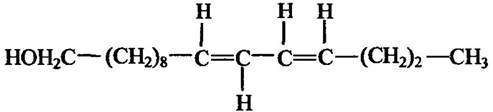
Fig. 6.3. Sex pheromone bombykol of female silk moth Bombyx mori
Certain natural and synthetic compounds can mimic the action of natural pheromones. For instance, D-bornyl acetate has been isolated from plant tissue extracts of gymnosperms; it induces sexual arousal in the American cockroach Periplaneta americana, the synthetic compound trimedlure is active against the Mediterranean fruit fly, and cuelure is active against the melon fly Dacus cucurbitae (Fig. 6.4).
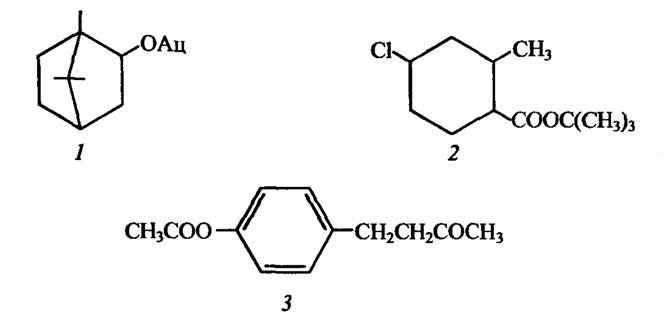
Fig. 6.4. Structure of some compounds mimicking insect Sex Hormones:
1 — D-bornyl acetate; 2 — trimedlure; 3 — cuelure; Ac — acetyl
In some cases, specific interactions between insects and plants have been observed during The Study of insect Sexual Behavior. Specifically, Anthera polyphemus are capable of mating in the presence of leaves of the northern red oak Quercus borealis. This plant releases trans-2-hexanal from its leaves, which triggers the females to release a pheromone that induces males to mate.
Sex pheromones have also been found in plant-parasitic nematodes. They are involved not only in regulating the mating process but also in preventing interspecific mating among different nematode species.
Pheromones as sex modifiers. These pheromones also belong to sex pheromones. However, unlike the sex pheromones discussed above, whose primary function is to attract individuals of the opposite sex and stimulate copulation, these are capable of forming or altering sexual characteristics. A representative of such pheromones is bonellin from females of the marine worm Bonellia viridis. The adult female of this worm has a relatively thick body approximately 7 cm long and a thin proboscis split at the tip, measuring over 90 cm in length. The female reaches sexual maturity in her second year of life and continues to grow for several more years. The male grows to only 1 — 3 mm in length and lives in the genital ducts or excretory Organs (nephridia) of the female. If male larvae develop inside an immature female, 87% of them turn into females and only 13% into males. If male larvae are placed in Water containing a sexually mature female, almost all of them attach to the female's proboscis and are exposed to the pheromone for three days. Afterward, the male larvae detach and develop into males.
The production of sex-modifying pheromones has been detected in gastropods of the genus Crepidula. These hermaphroditic Mollusks are characterized by protandry, where young individuals first pass through a functional male stage and then a female stage. Only a small number of young individuals turn into females without first passing through the male stage. Females release a pheromone into the water that induces a rapid transition of young individuals into the male stage and a prolonged arrest at this developmental stage.
Sexually mature individuals of social insects (termites, ants, bees) produce and secrete substances that suppress The Development of Gonads in other members of the same colony.
In termites (specifically, Kalotermes flavicollis), worker individuals attracted by the pheromones of the female and male provide them with food and lick secretions from the integument of the abdomen and anal openings. These secretions contain pheromones that inhibit the development of reproductive organs and the transformation of larvae and nymphs into sexually mature adults. The male pheromone by itself does not significantly affect larvae and nymphs, whereas the female pheromone somewhat inhibits their transformation into sexually mature females. However, under the simultaneous action of both male and female pheromones, the transformation of larvae and nymphs is completely prevented.
In some termite species, such as Zootermopsis angusticolis, individuals of certain castes secrete pheromones that prevent larvae from developing into insects of that specific caste.
Egg-laying ant queens also produce pheromones that attract worker ants and suppress ovarian development in them. Worker ants lick this substance from The surface of the queen's chitinous cuticle and pass it on to other individuals by regurgitating food.
For the normal functioning of a honeybee colony, a multifunctional chemoregulator produced by the queen bee, known as "queen substance", is of great importance. This substance consists of at least 32 compounds, one of which is 9-oxodecenoic acid. It attracts worker bees to the queen, who feed her. By licking the queen's body, they acquire the "queen substance", The Effect of which is to suppress ovarian development and the urge to build "queen Cells" to rear a future queen. In addition, it contains a sex pheromone that attracts males to the queen.
Pheromones as stimulators of Puberty and reproduction. These pheromones induce the maturation of gonads and the release of Gametes in other individuals of the same species, attract individuals of different sexes for mating, and, in viviparous animals, influence the onset and course of Pregnancy.
Polychaete worms of the family Nereidae live on the ocean floor but ascend to the surface water layers to reproduce. When breeding time arrives, the bodies of these worms divide transversely into two parts. The anterior part remains on the bottom, while the posterior part, which contains the gonads, ascends to the water surface. The Brain of these worms produces a pheromone that inhibits gonad maturation. After fission, the brain remains in the anterior part, whereas in the posterior part, once the HEAD region regenerates and the inhibitory pheromone is no longer produced, the Germ Cells rapidly mature. Sexually mature Nereis females secrete a pheromone that stimulates males to release mature spermatozoa into the water.
Sexually mature males of the polychaete Grubea clavata release a pheromone into the water along with sperm, which stimulates egg-laying in females. Without this substance, mature eggs remain in the body cavity of the female, where they quickly perish.
Sexually mature males of the locust Schistocerca gregaria secrete a pheromone that significantly accelerates the sexual maturation of other males and females. However, the action of the pheromone solely on olfactory receptors is insufficient to accelerate sexual maturation. It has been found that this requires a closer interaction between immature and mature individuals, which occurs when dense locust aggregations form.
Male spiders Schizocosa ocreata secrete a pheromone that suppresses the characteristic courtship behavior of other males near female webs.
In a large number of insect species, males produce substances that females lick before or during mating. These substances induce sexual arousal or a sluggish state in females that facilitates the mating act. For example, on various PARTS OF THE body, most frequently in forehead depressions or on the tips of the elytra, males of beetles of the family Melyridae possess glandular organs called excita-
tors. Before mating, the male presents those parts of his body where the excitors are located to the female. The female grasps the male's integument with her jaws, touching the excitors with the tips of her mandibles and labial palps, where taste receptors are located. The chemical and mechanical stimuli received in this way apparently stimulate the females to mate.
Pheromones of alarm, fright, and active defense.
These pheromones have been detected in bees, ants, termites, aphids, bugs, and other animals. Some alarm pheromones also serve simultaneously as defensive substances (Fig. 6.5).

Fig. 6.5. Structure of some alarm pheromones:
1 — formic acid of Formica ants; 2 — undecane of Formica ants; 3 — 4-methyl-3-heptanon of Pogonomyrmex ants; 4 — isoamyl acetate of Apis bees; 5 — terpinolene of Armitermes termites
The stinger apparatus of bees and wasps contains several glands that produce alarm pheromones. The venom gland itself secretes an alarm pheromone released along with the venom. Wasps of the genus Vespa inject venom together with the alarm pheromone, whereas worker honeybees (Apis mellifera) leave a mark when stinging (releasing isoamyl acetate) that directs other bees to the target site.
Typically, a bee cannot pull its stinger out of vertebrate Skin because it features 12 barbs directed backward. The stinger remains embedded in the enemy's skin and detaches from the bee's body along with the stinger apparatus and its glands. Although the bee dies As a result, venom continues to flow into the enemy's body from the venom gland reservoir. Furthermore, the stung enemy is marked with the alarm pheromone and, even while fleeing, becomes a target for attack by other bees that track its scent.
Insect alarm pheromones have a simple structure (Fig. 6.5). In some ants, these are simple Hydrocarbons such as undecane, tridecane, and pentadecanol, along with aldehyde and ketone derivatives of these hydrocarbons. Alarm pheromones in the families Formicinae, Hymenoptera, Isoptera, and several others consist of essential oil components such as citronellal, citral, α-pinene, limonene, and terpinolene. In aphids, alarm pheromones are typically terpenoids in chemical structure, notably the monocyclic sesquiterpene germacrene A.
Alarm pheromones have also been discovered in aphids. When threatened, an aphid releases a liquid containing trans-β-farnesene, the odor of which triggers a flight response in various aphid species.
Alarm pheromones are the least specific among volatile Insect Hormones. For example, 2-hexanal is an active component of the alarm pheromones of the red cotton bug (Dysdercus intermedius) and the ant Crematogaster africana. However, alarm pheromones in different organisms are generally distinct.
The Amount of Information transmitted by alarm pheromones can be substantial. For instance, when attacked by predators, Oecophylla longinoda ants release four pheromones with varying volatilities. The most volatile is 1-hexanal, which ants perceive near the attack site. As they approach it, they detect 1-hexanol, an alcohol structurally similar to the first pheromone. Subsequently, the attack on the predator is stimulated by 2-butyl-2-octenol. Yet another, final pheromone—3-undecanone—together with the third one, guides the ants at close range to the predator.
Ants themselves are capable of attacking other animals, exhibiting well-defined cooperative interactions mediated by pheromones.
Alarm pheromones have also been identified in aquatic organisms. Thus, when the sea anemone Anthopleura elegantissima is injured, it releases betaine (3-carboxy-2,3-dihydroxy-N,N,N-trimethyl-1-propanaminium), which causes tentacle contraction and transmits a signal perceived by neighboring organisms.
Trail and marking pheromones. Animals deposit these pheromones on the substrate or surrounding objects, using them as territorial landmarks during foraging and Other types of active behavior. These pheromones are of particular importance to social insects such as ants, bees, and termites. They are used to form scent trails from the nest to a food source. The specific odor of every anthill, termitarium, or bee hive depends on them. The scent of a trail pheromone is species-specific. For example, leaf-cutter ants produce 4-methylpyrrole-2-carboxylic acid, which is detected by ants at a concentration of 0.8 pg/cm.
The trail pheromone identified in Monomorium pharaonis ants is a bicyclic alkaloid.
The structures of some trail pheromones are shown in Fig. 6.6.
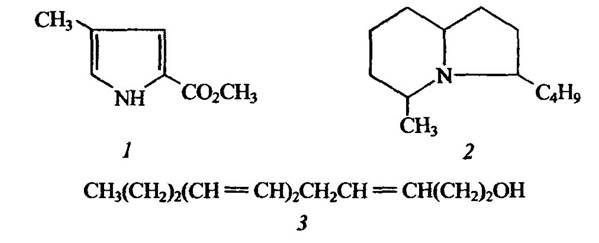
Fig. 6.6. Structure of some trail pheromones
1 — methylene ester of 4-methylpyrrole-2-carboxylic acid in Alta lexana leaf-cutter ants;
2 — bicyclic alkaloid of the Pharaoh ant Monomorium pharaonis;
3 — (3Z,6E,8E)-dodecatrien-1-ol of the termite Reticulitermes virginicus
The trails of many ant species stimulate workers to follow them. However, some ant species lay down their trails in the form of strips or spots, which enable the ants to determine the direction in which the trails were laid.
The intensity of a scent trail left by ants serves as an indicator of the food quantity at the Location to which the trail leads. Ants returning to the nest deposit scent trails only when they have successfully obtained food. The more food there is at a given location, the greater the number of ants depositing scent trails on their return journey, and the more intense the trail odor becomes. As food reserves become depleted, the number of ants visiting the food source decreases. Ants rapidly stop perceiving old, fading scents, and their movement toward the exhausted food source ceases.
A bee that has found food directs other worker bees of its colony to the path leading to it. Inside the hive, through a characteristic "dance," it communicates the flight direction to the food source and the distance to it, and then typically accompanies the worker bees to the food source. However, visual landmarks alone are not sufficient for this. Therefore, the food-finding bee periodically deposits a trail pheromone on grass stems, branches, stones, or other objects serving as landmarks. The closer to the food source, the more trail pheromone the bee deposits on the surfaces of the landmarks.
The honeybee (Apis mellifera) uses geraniol as a trail pheromone, which it obtains directly from plants and concentrates within its body. Bees of the genus Trigona use a different trail pheromone—benzaldehyde—which can be formed from the cyanogenic glycoside prunasin.
Bumblebees behave similarly. For example, males are the first to fly out of a Bombus hortorum bumblebee nest in the morning, depositing the trail pheromone farnesene on various objects near the nest and along their flight path (Fig. 6.7).

Fig. 6.7. STRUCTURE OF THE farnesene pheromone in bumblebees
The termites Reticulitermes virginicus use 3-cis,6,8-dodecatrien-1-ol as a trail pheromone, a compound also found in the wood-rotting Fungi they feed on. Caproic acid serves as a trail pheromone in the termite Zootermopsis nevadensis.
Trail pheromones of social insects can be exploited by predators (such as beetles, mites, centipedes, and snakes) that use the scent to locate their nests and dwelling sites.
Marking pheromones are closely related to trail pheromones but serve a distinct function: they act as scent markers indicating that a specific territory is claimed by a particular individual or colony. Such pheromones are common among many insects, including predatory species. By marking inspected territory with these pheromones, these insects increase foraging efficiency and reduce the time spent searching for prey.
A subtype of these pheromones is the oviposition (egg-laying) pheromone (see Chapter 4). Females use them to mark either the egg itself or the oviposition site. This prevents redundant egg-laying in the same spot, thereby avoiding larval overcrowding and subsequent food scarcity. Consequently, competition is minimized and food resources are utilized more efficiently.
Parasitic insect females mark the host eggs they have parasitized during oviposition. The substance used to mark the host eggs deters other females of the same parasitic species.
Aggregation pheromones. These pheromones attract members of the same species and have been documented in Hymenoptera, Diptera, Lepidoptera, Coleoptera, Blattodea, termites, Hemiptera, and other orders. Frequently, these substances attract individuals of both sexes to
feeding and breeding sites. As a result, large aggregations of individuals belonging to the same species can form in a specific location, greatly facilitating encounters between males and females. A classic example of such pheromones in action is the aggregation of the sunn pest Eurygaster integriceps, a notorious agricultural pest. Similarly, the characteristic odor of the bedbug Cimex lectularius attracts other individuals of this ectoparasite to specific corners and wall cracks, behind baseboards and wallpaper, or beneath wall hangings and paintings.
House flies (Musca domestica) release a volatile substance known as the "house fly factor" upon landing on food, which attracts other flies of the same species. Thus, a single fly landing on food draws a large number of others.
German cockroaches (Blattella germanica) secrete a substance whose scent promotes the aggregation of conspecifics in specific locations.
Aggregation pheromones of bark beetles and leaf beetles of the genera Ips, Scolytus, Xyleborus, and Dendroctonus have been studied in particular detail. Male Ips confusus, upon entering the phloem and cambium of a tree, release a pheromone that attracts both males and females of the species. In contrast, among Dendroctonus bark beetles, the analogous pheromone is produced by females rather than males.
Aggregation pheromones can be utilized by either males or females to attract the opposite sex, making them sometimes indistinguishable from sex pheromones, particularly in beetles. At the same time, aggregation pheromones may act as repellents to individuals of the same sex. For example, in Dendroctonus adjunctus, the pheromone brevicomin produced by males acts as an attractant to females, but as a repellent to other males.
Males of Dendroctonus pseudotsugae release a pheromone blend of frontalin and 3-methyl-2-cyclohexen-1-one, which acts as a repellent to both males and females of the species. However, when these two compounds are combined with a third—3-methylcyclohexen-1-ol—the mixture functions as an aggregation pheromone for both sexes.
It should be noted that aggregation pheromones typically consist of a complex of chemical cues that also includes volatile compounds emitted by the host tree.
One approach to pest management involves the combined use of sex pheromones and insecticides, which allows for the targeted application of the latter. Furthermore, utilizing alarm pheromones alongside insecticides significantly reduces the required dosage, as alarm pheromones induce hyperactivity in insects, thereby increasing the probability of contact with the insecticide.
Overall, pheromones, their analogs, and behavioral mimics represent a cornerstone of biological pest control. Their
application helps drastically reduce The Use of chemical compounds toxic to animals and humans.
The application of aquatic organism pheromones also holds considerable promise for optimizing aquaculture management.
Last update: 06/08/2026
Editorial and Educational Adaptation: This material has been compiled based on the primary/original source text. The project team performed an editorial review, corrected technical inaccuracies, structured sections, and adapted the content for an educational format.
What was processed:
- elimination of formatting defects (OCR errors, structural breaks, corrupted characters);
- editorial organization of content;
- standardization of terminology in accordance with academic sources;
- verification of factual statements against the original source text.
All mentions of the author, publication year, and origin of the primary text have been preserved in accordance with the source.