Amino Acids, Peptides and Proteins - Dévényi T., Gergely J. 1976
Thin-Layer Chromatography (D. A. Medgyesi)
Mixtures can be chromatographed not only on porous gel columns but also in a uniform thin layer of adsorbent. Thin-Layer Chromatography has become widely used in modern laboratory practice since 1956–1958, after Stahl [16] described a simple, standard Procedure for preparing a thin adsorbent layer.
In a thin layer of adsorbent, mainly silica gel or alumina, microanalysis of a mixture of lipophilic substances can be performed as easily as by paper chromatography. The Scope of this method expanded rapidly, and currently, it is used to analyze hydrophilic compounds that can also be fractionated on paper; however, thin-layer chromatography is an order of magnitude more sensitive and much faster.
To prepare the layer, a thick aqueous slurry of the adsorbent is prepared and applied to a Glass, plastic, or aluminum foil plate. Commercial spreaders are available for applying adsorbent layers of strictly reproducible thickness (from Desaga and Camag). Any spreader design includes a trough filled with gel, one edge of which (the spreading edge) is set at an appropriate distance from the glass plate. By adjusting this distance, adsorbent layers of various thicknesses can be applied. When the plate moves relative to the trough (in the Desaga apparatus) or the trough relative to the plate (in the Camag apparatus), the finely ground glass surface is coated with an even layer of wet adsorbent (Fig. 44). There are two types of these devices: manually operated and motorized. In the apparatus from the Hungarian company Labor, the glass plate slides under tap Water pressure.
After applying the adsorbent layer, the plates are air-dried and then treated According to the chosen procedure (e.g., heated at 60–120° C, "activated", etc.). The heated plates can be stored in a desiccator.
The sample is applied to the plate with a micropipette as a single spot or along a line. A line is obtained by applying a series of spots or using a commercially available special syringe. Within fairly wide limits, The amount of applied material does not affect the migration of the substances being separated. However, if too much material is applied to the plate, spot distortion may occur. The resolution limits and the optimal Amount of sample applied in each specific case vary depending on The properties of the adsorbent and the mixture being fractionated.
Class="center">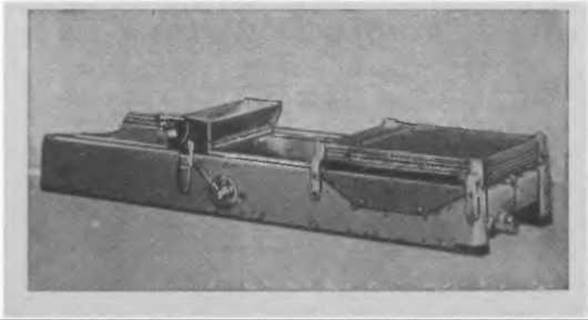
Fig. 44. Apparatus for applying a carrier layer to plates for thin-layer chromatography.
Usually, ascending thin-layer chromatography is performed using glass chromatographic chambers with tight-fitting lids. The solvent is poured into the bottom of such a chamber, and the lower edge of the chromatographic plate is immersed in it (Fig. 45). In thin-layer chromatography, one must consider a feature not encountered in Column chromatography: the evaporation of the solvent from the layer surface, which increases the migration time of the substance. From a multi-component solvent, the most volatile components evaporate first, leading to A change in the initial ratio of the mixture components. The evaporation rate decreases from the edges toward the center of the plate, causing a curvature of the solvent front; As a result, the Rf value at the edges of the chromatogram will be larger than in the center. Solvent evaporation in thin-layer chromatography impairs the reproducibility of the Rf value. To eliminate this source of artifacts, a saturated vapor atmosphere should be constantly maintained in the chamber. This is achieved by lining the chamber walls with filter paper moistened with the solvent, or by minimizing the volume of the chromatographic chamber (sandwich chamber).
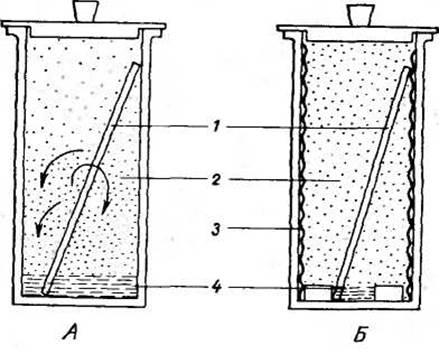
Fig. 45. Chromatographic chamber and its saturation with solvent vapors.
A. Chamber with the liquid phase poured at the bottom. B. Chamber with walls lined with filter paper moistened with the liquid phase to create an atmosphere uniformly saturated with solvent vapors. 1 — plate with an applied adsorbent layer; 2 — solvent vapors; 3 — filter paper moistened with solvent; 4 — multi-component solvent.
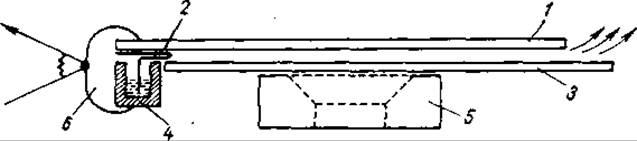
Fig. 46. Schematic diagram of the Brenner and Niederwieser horizontal chromatographic chamber (BN-chamber).
1 — cover plate; 2 — filter paper wick supplying solvent to the adsorbent layer; 3 — plate used as a support for the adsorbent layer; 4 — solvent reservoir; 5 — cork ring supporting the chamber; 6 — spring clip.
There are several ways to further improve Separation in thin-layer chromatography. For example, the same solvent can be repeatedly applied to the plate, or, by interrupting the chromatography at a certain stage after the substances being separated have migrated some distance, the plate can be dried and then chromatography continued with a different solvent. For continuous chromatography, Brenner et al. [4] proposed a special chamber shown in Fig. 46. In this apparatus, the chromatographic plate is positioned horizontally, and the solvent is supplied to one edge of the plate using filter paper wicks. Almost the entire surface of the plate is covered with a lid, except for a 2 cm wide strip at the end opposite to the solvent reservoir. The solvent evaporates from the free surface of this end of the plate, ensuring a constant flow of eluent, which allows chromatography to be run indefinitely.
Similar to paper chromatography, thin-layer chromatography can also be performed as a two-dimensional separation at right angles. Typically, Electrophoresis is carried out in one direction in a low-volume electrophoresis chamber to minimize evaporation; contact between the adsorbent layer and the electrode compartments in these chambers is provided by filter paper wicks. Due to the low thermal conductivity of glass and the resulting poor heat dissipation, cooling the chromatographic plate can be a problem. To reduce heat generation, it is recommended to use glass plates of minimal thickness and Buffer solutions of the lowest possible Ionic strength.
The resulting fractions are visualized by spraying the thin layer with appropriate Reagents. When working with inorganic adsorbents, substances that normally destroy paper, such as strong acids, can be used as visualization reagents.
The visualized chromatograms are usually photographed. After spraying with a special polymer solution (Neatan), the adsorbent layer can be peeled off the glass and preserved as experimental record.
Last update: 06/08/2026
Editorial and Educational Adaptation: This material has been compiled based on the primary/original source text. The project team performed an editorial review, corrected technical inaccuracies, structured sections, and adapted the content for an educational format.
What was processed:
- elimination of formatting defects (OCR errors, structural breaks, corrupted characters);
- editorial organization of content;
- standardization of terminology in accordance with academic sources;
- verification of factual statements against the original source text.
All mentions of the author, publication year, and origin of the primary text have been preserved in accordance with the source.