INVERTEBRATE ZOOLOGY IN THREE VOLUMES - BOOK 3 - H.I. Shcherbak - 1997
PHYLUM MOLLUSCA (MOLLUSKS)
CLASS CEPHALOPODA (CEPHALOPODS)
SUBCLASS COLEOIDEA (COLEOIDS)
This subclass comprises the vast majority of modern cephalopods. Coleoids are distributed across all seas and oceans with full oceanic salinity. They possess an internal, rudimentary shell, which is completely absent in some octopuses. There are eight or ten appendages, arranged in a single circle around the Mouth and bearing suckers. In the males of many species, one or two arms are modified into a hectocotylus. The funnel has the appearance of a closed tube.
Coleoids have a single pair of gills, two atria, two branchial hearts, two Kidneys, an ink sac, a concentrated Nervous system, and a complex Brain surrounded by a cartilaginous cranium. The eyes are complex in Structure, resembling those of vertebrates. Osphradia are absent.
The subclass Coleoidea includes four orders: Cuttlefish (Sepiida), Octopuses (Octopoda), Vampire Squid (Vampyromorpha), and Squid (Teuthida).
Order Sepiida (Cuttlefish). The body of cuttlefish is mostly broad and flattened. Cuttlefish have ten appendages on the HEAD, consisting of eight arms and two tentacles (see Fig. 90, b), which can be retracted into specialized pockets at their base. The suckers on the arms and tentacles are stalked and never bear hooks. Fins take the form of a narrow strip or broad ovals, running along the entire mantle or located along the sides of the body. The shell (sepion) is internal, taking the form of a calcareous plate, a calcareous spiral (in Spirula), a thin horny plate, or it is completely absent. This order is divided into two suborders: Spirulina and Sepiina.
Suborder Spirulina includes a single species, Spirula spirula, which differs from other modern cephalopods in having a spirally coiled internal shell located in the posterior half of the mantle (see Fig. 95). This is a small animal with a mantle up to 4.5 cm long. Spirula is distributed in the tropical waters of all oceans; it lives near the bottom at depths of 500–1000 m, migrating to 100–300 m at night. At the posterior end of the body between the small fins, Spirula possesses a photophore that can be closed like an eyelid by a fold of Skin.
Typical Representatives of the suborder Sepiina belong to the family Sepiidae (True Cuttlefish). Over 100 species of cuttlefish inhabit the shallow waters of the tropical and subtropical seas of the Old World. Cuttlefish are absent off the coast of the Americas.
Cuttlefish inhabit the littoral zone, and more rarely the sublittoral zone: on sands, mud, shell deposits, among seagrasses and corals, and occasionally on stones and rocks. They do not have permanent shelters. By day, they lie motionless on the bottom, camouflaged or covering their dorsal side with sediment; at night, they prey on shrimp, crabs, other cephalopods, and fish. They lack luminescent Organs.
The best-known species is the common cuttlefish (Sepia officinalis) (see Fig. 90, b), which lives in the Mediterranean Sea. Fairly large cuttlefish are encountered; for instance, one of the most numerous cuttlefish of the northern Indian Ocean, the Pharaoh cuttlefish (S. pharaonis), reaches a length of 40 cm and a mass of up to 5 kg. However, the broadclub cuttlefish (S. latimanus), which inhabits the western Pacific Ocean, is considered the largest. Its mantle length reaches 60 cm, total body length 1.5 m, and mass 10 kg.
In addition to true cuttlefish, the order Sepiida includes several other families. Three of them—Sepiolidae, Sepiadariidae, and Idiosepiidae—differ from true cuttlefish in lacking a calcareous shell. In some species, such as Rossia (family Sepiolidae), it is replaced by a chitinous pen, while most lack any remnants of a shell. These are small animals, reaching a few centimeters in length, with a large head and a short, rounded body featuring large, convex, semicircular fins (Fig. 117). In many species, luminescent organs are present on the ink sac.
Class="center">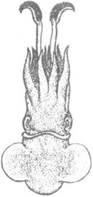
Fig. 118. Order Sepiida: Rossia macrosoma
Order Teuthida (Squids). This order unites the largest, most active, and most predatory cephalopods. Squids are distributed in all seas of our planet with full oceanic salinity—from cold polar waters to tropical coral lagoons, and from the surface to abyssal depths.
They generally have a cylindrical or conical body (see Fig. 90, c) with a pair of arrow-shaped or rhombic fins, and 10 appendages consisting of eight arms and a pair of tentacles armed with chitinous rings, sometimes bearing hooks. The tentacles are not retractable. The shell rudiment is represented by a pen- or arrow-shaped gladius.
The order Teuthida is divided into two suborders: Myopsida (Neritic squids) and Oegopsida (Oceanic squids).
Neritic squids, or closed-eyed squids, differ from oceanic (open-eyed) squids in eye structure. The anterior chamber of the eye is completely covered by a transparent cornea and communicates with the external environment only through a tiny opening, the lacrimal pore. Their mantle is always muscular, the suckers on the appendages are never transformed into hooks, and tentacles are always present. Photophores are either nearly absent or few in number and simple in structure.
Neritic squids are distributed in warm and temperate waters and are absent in Arctic regions (neritic meaning shallow-Water). They inhabit shelf waters (the part of the underwater continental margin adjacent to the coast) and rarely descend deeper than 500 meters. The most widespread representatives belong to the family Loliginidae, which inhabit the coastal waters of temperate and warm ocean zones. Loliginids stay near the bottom but can ascend into the water Column and surface layers. Most of them form schools. These are quite active animals, constantly in motion, swimming using their fins and funnel. They feed on small schooling fish, shrimp, mysids, euphausiids, and squids. They hunt primarily at night and descend to the bottom only to spawn. They frequently migrate over long distances. The best-known species is Loligo vulgaris (see Fig. 90, c).
Oceanic squids are inhabitants of open marine expanses. They rank among the fastest swimmers. When escaping from predators, they can leap out of the water and glide over the waves for dozens of meters. The most typical and widespread are squids of the family Ommastrephidae, such as the genus Todarodes (Fig. 118, a). Oceanic squids spend their entire lives in the open ocean, undertaking vertical Migrations: by day they submerge to great depths (up to 1000 m), and at night they rise to the surface to actively hunt. Most of them possess photophores. Oceanic squids also undertake seasonal migrations, covering vast distances.
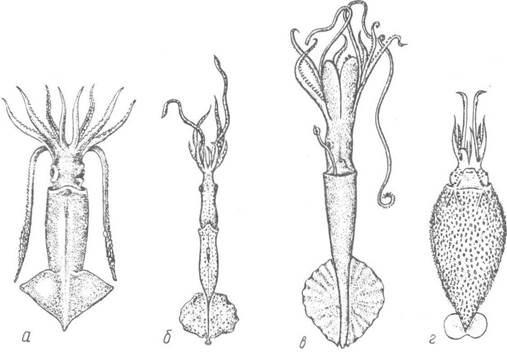
Fig. 118. Order Teuthida:
a — Todarodes (family Ommastrephidae); b — juvenile giant squid Architeuthis dux (family Architeuthidae); c — Chiropsis mega (family Chiroteuthidae); d — Cranchia scabra (family Cranchiidae)
The sizes of oceanic squids vary—from a few centimeters to several meters. Among the latter are giant squids, such as Architeuthis dux, the largest of all Mollusks. However, unlike ommastrephids, these squids are poor swimmers; their mantle is thick but weakly muscular. This is because they possess neutral buoyancy (see p. 137). They live at great depths, almost never ascending into surface layers. This explains the fact that complete, undamaged specimens of this species almost never reach scientists; instead, only injured individuals or those partially digested in the stomachs of sperm whales are recovered. Juveniles of architeuthids (Fig. 118, b), which are significantly smaller in size (10–12 cm), inhabit shallower depths.
Among oceanic squids, There are many planktonic species that have transitioned to passive locomotion. These are sluggish animals that hover in the water column, and their specific gravity is close to that of water. In some species of the family Gonatidae, neutral buoyancy is achieved through the accumulation of fat in a gigantic Liver, while in other gonatids, it results from excessive tissue Hydration. However, in most planktonic squids, neutral buoyancy is associated with the accumulation of ammonium chloride in the body; these are the so-called "ammonia squids". The mantle surface in some species is covered with small cartilaginous tubercles (Fig. 118, d). Despite their low mobility, their grasping apparatus is highly developed: in many species, the tentacles are strong and muscular, and large sharp hooks are present on the arms and tentacles. These animals possess well-developed photophores.
Order Vampyromorpha. This order includes only a single species — the vampire squid (Vampyroteuthis infernalis), which inhabits the open ocean at depths of 700–1500 m, although its juveniles are found at depths of 300–500 m.
Vampyromorphs combine features of both octopuses and squids. The vampire squid is a medium-sized animal, up to 37 cm in length with a mantle length of 11–13 cm, and is velvety black in color. The broadly conical mantle is fused with the head at the nape so that the neck constriction is almost absent (Fig. 119). A pair of paddle-shaped fins is located at the posterior end of the mantle. Eight short arms are connected by a web, or umbrella, which resembles a parasol.
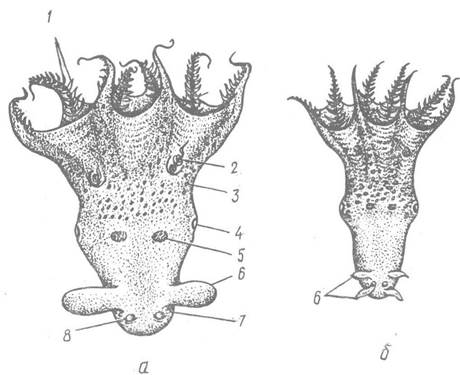
Fig. 119. Order Vampyromorpha: Vampyroteuthis infernalis:
a — female; b — larva; 1 — cirri; 2 — filament; 3 — microscopic photophores; 4 — eye; 5 — cluster of photophores on the head;
6 — fin; 7 — vestige of the posterior pair of fins; 8 — complex photophore
The arms bear a single row of suckers without horny rings or hooks. Two rows of short cirri extend on both sides of the suckers. On the DORSAL SIDE OF the body, between the bases of the dorsal arms, is a pair of long, thread-like sensory appendages — the filamentsU, which can be fully retracted into special pockets. These are long-range tactile organs designed for food searching; they are considered to be homologous to the tentacles of squids. The eyes of vampire squids are "open", like those of squids. As in squids, a gladius is present. An ink sac is absent.
The mantle surface is covered with small photophores; two large complex photophores, externally resembling eyes, are located behind the fins. The Tissues of the vampire squid have a gelatinous consistency, and fat accumulates in numerous vacuoles. Vampire squids swim slowly, beating their fins like oars, but when escaping, they activate a jet propulsion mechanism — the funnel, aided by contractions of the umbrella. They feed on medium-sized planktonic organisms and do not attack large prey.
Eggs are spawned singly into the water. Vampire squids develop through metamorphosis. A larva hatches from the egg, bearing a pair of fins behind the large photophores. During larval growth, these fins shorten, and a second pair of fins forms anterior to the photophores, so for a time, vampire squids possess four fins (Fig. 119, b). Subsequently, the larval fins regress, leaving a single pair located anterior to the photophores.
Order Octopoda. These mollusks are the best known among cephalopods. They inhabit both cold seas and tropical waters among coral reefs, occurring from shallow waters to the depths of the ocean.
This order includes cephalopods with eight arms and a short, sac-like body (Fig. 90, d). The arms are often connected by a membranous web, or umbrella; in some forms, it even reaches the tips of the arms, allowing octopuses to move like jellyfish. The suckers on the tentacles lack stalks and attach directly with a flat bottom to the inner surface of the arms. The suckers lack chitinoid rings, claws, or hooks. Most octopuses lack fins, except for deep-sea octopuses of the suborder Cirrata, which possess a single pair of fins. The anterior margin of the mantle on the nape is fused with the head. The mantle locking apparatus is not developed. An internal shell is absent, or represented by two cartilaginous rods or a cartilaginous saddle-shaped plate that Supports the fins (in finned octopuses). Almost all octopuses possess an ink sac.
The body of octopuses can be firm and muscular in coastal species or soft, gelatinous, and even jelly-like in deep-sea species. In males of most species, one of the arms is modified into a hectocotylus.
Octopus eggs bear stalks. Benthic forms deposit their eggs on the bottom, where females guard and tend to them; the eggs of pelagic octopuses either develop inside the female's body (ovoviviparity), are carried by the female on her body (see below), or are released into the water, bound together by their stalks. Development is direct or passes through a pelagic larval stage. The larvae resemble adults.
The order Octopoda is divided into two suborders: Incirrata (incirrate or true octopuses) and Cirrata (cirrate octopuses).
In true octopuses (suborder Incirrata), fins are absent; the shell vestige appears as two cartilaginous rods beneath the dorsal skin or is entirely absent. Large eyes with a closed cornea are well developed.
They live near the bottom, hiding in caves and among rocks. If suitable shelters are absent, octopuses build their own hideouts from stones, shells, crab carapaces, and other Materials. Octopuses feed on crabs, spiny lobsters, mollusks, and fish. Their saliva is toxic; by spraying it, an octopus paralyzes its prey and then consumes it by biting off pieces. The venom of some species is dangerous to humans as well. Octopuses exhibit partial extraintestinal Digestion: their saliva softens and partially digests crustacean tissues. Using a hard radula, they drill holes into mollusk shells.
Many octopuses exhibit parental care. They guard their eggs, protect them from predators and debris, and fan them with fresh water. Some species form peculiar brood pouches from intertwined arms; throughout the entire incubation period, they do not feed. However, the most unique adaptation for egg brooding is found in the argonaut (Argonauta argo), or paper nautilus, the females of which construct a peculiar external shell for brooding eggs (see p. 117, Fig. 97).
The typical and most famous of all octopuses is the common octopus (Octopus vulgaris), distributed at shallow depths in temperate and tropical waters. Its mantle length reaches 20–30 cm. Among large octopuses, the most thoroughly studied, thanks to observations by SCUBA divers, is the giant Pacific octopus Octopus dofleini (see Fig. 90, d), which inhabits the Pacific Ocean from the shores of Japan to California. It reaches a length of 3–5 m (including the arms) and a mass of 25 kg, although much larger specimens are occasionally encountered.
Pelagic octopuses inhabit the surface waters of warm seas, with the most famous being the argonaut mentioned previously. During reproduction, the male argonaut's long hectocotylus laden with sperm detaches from the body and crawls into the female's mantle cavity.
Among true octopuses, There are also deep-sea forms leading a planktonic lifestyle. A representative of this group is Amphitretus pelagicus (Fig. 120, a). Its colorless, translucent body is surrounded by a gelatinous envelope. Telescopic eyes directed upward are located on the head. These sluggish animals feed on deep-sea plankton.
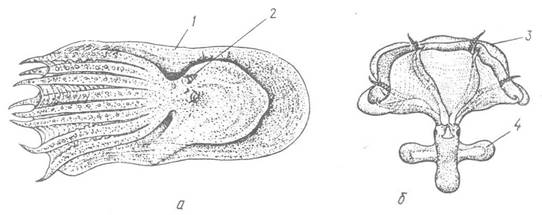
Fig. 120. Deep-sea octopuses:
a — Amphitretus pelagicus in a gelatinous envelope; b — Cirroteuthis muelleri; 1 — envelope; 2 — telescopic eyes; 3 — umbrella; 4 — fins
Cirrate octopuses (suborder Cirrata) have a jelly-like, gelatinous body. The mantle is sac-like, with a pair of paddle- or Tongue-shaped fins located in the middle or closer to its posterior end, supported by a saddle- or V-shaped Cartilage (a modified gladius). The umbrella is generally very deep, reaching the tips of the arms; together with the fins, it serves as the primary locomotory organ. The mantle-funnel propulsion system is used only when escaping from danger. Photophores are absent in cirrate octopuses.
Finned octopuses are mostly medium-sized animals, though large ones also occur; the largest among them, Chirroteuthis (Fig. 120, b), reaches a length of 1.2–1.5 m. Finned octopuses inhabit great depths across all oceans; underwater vehicle footage suggests that these animals can descend to depths of up to 5 km.
Last update: 13/08/2026
Editorial and Educational Adaptation: This material has been compiled based on the primary/original source text. The project team performed an editorial review, corrected technical inaccuracies, structured sections, and adapted the content for an educational format.
What was processed:
- elimination of formatting defects (OCR errors, structural breaks, corrupted characters);
- editorial organization of content;
- standardization of terminology in accordance with academic sources;
- verification of factual statements against the original source text.
All mentions of the author, publication year, and origin of the primary text have been preserved in accordance with the source.