INVERTEBRATE ZOOLOGY IN THREE VOLUMES - BOOK 3 - H.I. Shcherbak - 1997
PHYLUM PENTASTOMIDA
Pentastomes are a small group (about 70 described species) of heat-loving endoparasites inhabiting the Respiratory system of vertebrates, whose taxonomic position remains unresolved. Most taxonomists recently classify pentastomes as a distinct animal phylum sharing certain affinities with Arthropods, particularly branchiurans.
The body of pentastomes is elongated, typically tapering to a varying degree toward the posterior end. Externally, it is covered by a thin cuticle and usually exhibits external annulation. A characteristic feature of pentastomes is the presence of four sclerotized hooks at the anterior end near the Mouth. The musculature is striated. The Digestive System is a straight, complete tube. Excretory, respiratory, and circulatory systems are absent. The male and female reproductive systems have a rather complex Structure. Embryonic development remains unstudied. The life cycle typically involves a change of hosts.
CLASS PENTASTOMIDA, OR LINGUATULIDA
Most sexually mature pentastomes are parasites of the Lungs of reptiles, predominantly snakes, as well as lizards and crocodiles; a few species of the genus Linguatula parasitize the nasal sinuses of canids and felids, and one species (Reigardia stemae) has been found in the Ovaries of gulls and terns.
The body of pentastomes exhibits varying degrees of annulation, which in some species creates the impression of true segmentation (Fig. 1), and is indistinctly divided into anterior and posterior regions, sometimes emphasized by the different structure of their integument. The posterior end of the body bifurcates in some species.
Located on the ventral side of the anterior end, the four hooks may be simple (single) or double (Fig. 2) and are positioned on the cuticle atop tubercle-like body outgrowths or embedded in cuticular pockets. Early in The Study of this animal group, these cuticular pockets with hooks were mistakenly considered additional mouths, hence their common name—pentastomes ("five-mouths"). The hooks are operated by powerful Muscles; the animals use them to attach to host Tissues. Adult animals lack appendages.
The cuticle covering the body bears annular rows of spinules in some species, as well as transverse rows of cuticular glands with prominent pores that regulate the hydromineral balance in the coelomic fluid. In its ultrastructure, the cuticle, much like the striated musculature, resembles that of arthropods.
The body cavity lacks an epithelial lining; the true nature of this cavity has not been established.
The digestive system begins with a mouth located between or behind the hooks. The mouth remains permanently open due to a sclerotized lining of various shapes. The intestine appears as a straight tube that opens via an anus at the posterior end of the body. Pentastomes feed on host tissue particles and Blood Cells.
Pentastomes lack a formalized Circulatory system; respiration occurs across the entire body surface.
The Nervous system is represented by a single subesophageal ganglion, from which 8–11 pairs of nerves extend. Branches innervating most Organs of the anterior body region depart from two of these nerves. In some pentastomes, seven distinct ganglia can be identified within the subesophageal ganglion.
Class="center">
Fig. 1. Pentastomes:
a — Armillifer pomeroyi; b — Raillitiella mabuiae

Fig. 2. Anterior body region of Armillifer armillatus (a) and Leiperia gracilis (b)
Sense Organs are represented by numerous sensory dermal papillae scattered across the entire body, being particularly abundant at the anterior end.
Pentastomes are gonochoric (dioecious) animals; Sexual Dimorphism is manifested solely in the significantly smaller size of the males. Females (Fig. 3, a) possess a long tubular Ovary that may branch into two oviducts. The latter transition into a long, highly convoluted Uterus, which may bear one or several outgrowths (diverticula) serving as seminal receptacles. The uterus terminates in a short Vagina, which opens near the posterior end of the body in Representatives of the order Cephalobaenida, and at the posterior end in representatives of the order Porocephalida.
Males possess a single (except for species of the genus Linguatula, which have two) long tubular Testis as well (Fig. 3, b). It is connected to a Seminal Vesicle, from which a pair of vasa deferentia extend, transitioning into two copulatory organs. The male genital opening is located at the anterior end of the body, not far from the mouth.

Fig. 3. Diagram of the Reproductive System structure in pentastomes:
a — female; b — male; 1 — oviduct; 2 — ovary; 3 — vagina; 4 — uterus; 5 — testis; 6 — seminal receptacle; 7 — seminal vesicle;
8 — genital opening
The female can produce several million eggs containing fully formed larvae. The body of the larva (Fig. 4, a) is typically oval in shape, with two pairs of muscular appendages (legs) bearing movable hooks at their ends on the lateral sides. At the anterior end of the body is the so-called penetration organ, which consists of three stylets: a simple median one and two lateral forked ones. Between the anterior pair of legs on the ventral side of the larva lies the mouth, which leads into the Esophagus and further into a blindly ending sac-like Stomach. However, some species also possess a slender hindgut.
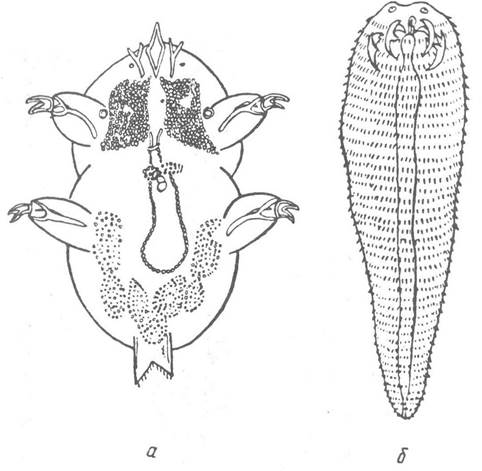
Fig. 4. Larva and nymph of pentastomids:
a — larva of Porocephalus clavatus; b — nymph of Linguatula serrata
Life cycles are known for only a few species, and in addition, there is only partial information regarding several others. Intermediate hosts of pentastomids can include insects, fish, amphibians, reptiles, and mammals. Typically, after an egg containing a formed larva is ingested by an intermediate host, the larva hatches, actively uses its stylets and leg hooks to penetrate the intestinal wall into the body cavity, and then migrates to one or another organ (it is believed that this movement is entirely random). There, the larva becomes immotile, and its transformation into a nymph begins (Fig. 4). During this process, the pentastomid molts once or several times and becomes infective to the definitive host, which becomes infected by preying on the intermediate host.
Cases are known where a definitive host ingests eggs containing larvae and thus acts as an intermediate host, but it is likely that the larvae are subsequently unable to migrate from their localization site to the respiratory system and perish.
One of the most thoroughly studied pentastomid species, Linguatula serrata, is distributed worldwide, though it is most frequently encountered in Europe. It typically parasitizes the nasal cavities of carnivorous mammals, including dogs, cats, wolves, foxes, and others. The small eggs of L. serrata are expelled outward with nasal mucus, disperse into the environment, contaminate vegetation, and are ingested along with it by the intermediate host, which for this species can theoretically include a wide range of mammals.
Several pentastomid species have been found in an encysted state in humans. The most frequently recorded is Armillifer armillatus in the Liver, Spleen, lungs, eyes, and mesentery of humans in Africa, Southeast Asia, and China. In addition, five other species have been found, including the aforementioned L. serrata. Human infection has mostly proceeded asymptomatically and was discovered only incidentally during autopsies following death from other causes. However, cases are known where the localization of larvae in the eyes or various other organs led to Vision loss, tissue damage, and the onset of inflammatory processes.
Last update: 13/08/2026
Editorial and Educational Adaptation: This material has been compiled based on the primary/original source text. The project team performed an editorial review, corrected technical inaccuracies, structured sections, and adapted the content for an educational format.
What was processed:
- elimination of formatting defects (OCR errors, structural breaks, corrupted characters);
- editorial organization of content;
- standardization of terminology in accordance with academic sources;
- verification of factual statements against the original source text.
All mentions of the author, publication year, and origin of the primary text have been preserved in accordance with the source.