ZOOLOGY OF CHORDATES: STUDY GUIDE - Zakharenko M.O. - 2015
CHAPTER 4. SUPERCLASS TETRAPODA. LOWER TERRESTRIAL VERTEBRATES
4.5. Characteristics of Selected Representative Reptiles
Subclass Anapsida — Anapsida
Order Testudines (Turtles). Modern species of turtles possess a shell that envelops the body from above, the sides, and below. It consists of a dorsal shield (carapace) and a ventral shield (plastron) connected by tendons or a bony bridge. The carapace is formed by dermal bony plates fused with the Ribs and the trunk region of the spine. The plastron develops from bony plates homologous to the clavicles and abdominal ribs. The shell is covered on the outside by horny scutes, whereas in softshell turtles it is covered by soft Skin. The shell of terrestrial turtles is high and dome-shaped; in freshwater and especially marine turtles, it is flattened and streamlined. The cervical and caudal Regions of the spine are mobile, while the rest of it is fused to the carapace. The shoulder blades (scapulae) and coracoids are free. The jaws lack Teeth but are covered by a horny sheath forming sharp cutting edges. The musculature of the limbs and neck is well developed, whereas trunk Muscles are degraded. The Lungs are large and have a complex Structure. Their ventilation is ensured, much like in amphibians, by fluctuations of the floor of the Oral Cavity using the hyoid apparatus through its active stretching driven by the pectoral and pelvic muscles. Additional respiratory Organs in aquatic turtles include densely capillary-netted pharyngeal outgrowths and paired anal vesicles (cloacal outgrowths). The Brain is relatively small compared to the Spinal Cord. Vision and SENSE OF SMELL are well developed, while Hearing is poorer. They are distributed in tropical and adjacent temperate zones. They inhabit seas, freshwater bodies, marshes, and terrestrial biotopes, notably deserts. This order numbers about 200 species and comprises 12 families united into 4 suborders.
Suborder Cryptodira (Hidden-necked turtles) encompasses 6 families (about 140 species) of freshwater and terrestrial turtles. When retracting the HEAD into the shell, they bend the neck in an S-shape within the vertical plane. Pond turtles (Emydidae) are small to medium-sized; about 80 species inhabit Water bodies in Africa, Southern Europe, Asia, and the Americas. The Caspian turtle (Mauremys caspica) lives in northwestern Africa, on the Iberian and Balkan Peninsulas, in Turkey, Syria, Iran, and Transcaucasia. The European pond turtle (Emys orbicularis) has an even wider distribution. It inhabits the steppe zone, Crimea, and the Caucasus; it prefers standing water bodies (Fig. 195).
Class="center">
Fig. 195. Caspian and European pond turtles
Land tortoises (Testudinidae) are represented by small (about 12 cm long), large, and even giant species, such as the Galapagos giant tortoise (Geochelone nigra) with a shell up to 150 cm long and weighing up to 400 kg. They are distributed in Africa, Southern Europe, Asia, and South America. The Horsfield's tortoise or Central Asian tortoise (Testudo horsfieldi) inhabits the clay and sandy deserts of Central Asia and Kazakhstan (Fig. 196).

Fig. 196. Terrestrial tortoises: Galapagos giant tortoise and Central Asian tortoise
Suborder Trionychoidea (Softshell turtles) differ by the absence of a horny layer on their weakly developed bony shell, which is covered with soft skin; interdigital webbing is well developed on the feet. It numbers 25 species; distributed in the fresh waters of East Asia, Africa, and North America. The Chinese softshell turtle (Trionyx chinensis) is found in the Far East; it feeds on fish and invertebrates (Fig. 197).
Suborder Pleurodira (Side-necked turtles). The cervical vertebrae possess long transverse processes to which powerful muscles — the lateral neck flexors — attach. When the head is retracted into the shell, the neck bends in a horizontal plane (sideways). They inhabit tropical freshwater bodies and number about 45 species. All of them are strong swimmers and divers (Fig. 197).

Fig. 197. Softshell turtles (Trionyx) and side-necked turtles (African mud turtle)
Suborder Athecae (Leatherback turtles). The shell consists of polygonal bony plates connected to each other but not bound to the internal Skeleton. There is no horny covering; the body is covered with skin, and only young individuals possess small horny scales. The sole representative is the leatherback turtle (Dermochelys coriacea), reaching up to 2 m in length and weighing 600 kg. The limbs are modified into flippers. They inhabit the tropical PARTS OF THE oceans; the Gulf Stream occasionally carries them to the shores of Europe (Fig. 198).
Suborder Chelonioidea (Sea turtles) numbers only 4 species. Highly specialized and adapted to marine life, their limbs are accordingly modified into flippers. They inhabit equatorial waters and occasionally wander into temperate latitudes. The green turtle (Chelonia mydas), with a shell length of 80–120 cm and a weight of up to 200–400 kg, feeds in coastal waters and undertakes long Migrations during the breeding season — up to 2,000 km, potentially navigating via the chemical cues of ocean currents, or perhaps by the sun and stars. The clutch contains 70–200 spherical eggs up to 5 cm in diameter, protected by a parchment-like shell. The population of the green turtle has declined sharply due to overhunting. Its meat is highly palatable and is even imported into Europe and America. A smaller species, the hawksbill sea turtle (Eretmochelys imbricata), is similar to the green turtle. Its length is 60–80 cm, and it inhabits the coastal zone of tropical seas in both hemispheres. It is an important commercial species. The horny plates covering its shell are utilized in the tortoiseshell and luxury goods industry (Fig. 198).

Fig. 198. Leatherback (Athecae) and green sea turtles
Subclass Lepidosauria — Lepidosauria
Order Sphenodontia (Beakheads) — with a single, most ancient representative of reptiles, the tuatara (Sphenodon punctatus) (Fig. 199).

Fig. 199. Tuatara
This species emerged about 165 million years ago. Formerly, this animal inhabited both islands of New Zealand; today it survives only on several small offshore islets. The torso and head are covered with small granular scales — a primitive type of horny scale; a crest of triangular horny plates extends along the spine. There are 4 openings in the cheek region — a pair of upper and a pair of lateral ones (diapsid Skull type). The vertebrae are amphicoelous. Such vertebrae are characteristic of fish and amphibians. Tuataras possess abdominal ribs in the form of small dermal bones located beneath the skin on the ventral side of the body. These are presumably remnants of the belly armor of the ancestors of terrestrial vertebrates, the stegocephalians. The parietal eye is well developed and possesses a cornea, a lens, and a retina. A copulatory organ is absent. The Heart contains a venous sinus. The body length is 50–75 cm. They are active at night; during the day they hide in burrows and are sluggish. Most commonly, they inhabit rock crevices or the burrows of albatrosses and other oceanic birds. They frequently live alongside the burrow's owner without harming either the eggs or the bird. They feed on small invertebrate animals and occasionally consume lizards and small bird eggs. Sexual maturity is reached at the age of 20 years. They have a low Temperature optimum for activity: from 6 to 18°C. The tuatara lays 8–15 eggs in a pit excavated in the soil. Embryonic development lasts 12–15 months. Today, the distribution of the tuatara is restricted, and as an endangered species, it is protected by law.
Order Squamata (Scaled reptiles). This is the most numerous group of reptiles, numbering about 6,100 species and combining four suborders (chameleons, lizards, snakes, amphisbaenians).
The suborder Chameleons – Chamaeleonidae includes about 90 species. This is a highly specialized group adapted to an arboreal lifestyle. Their body is laterally compressed, featuring a well-defined sharp dorsal crest. Body length ranges from 7 to 60 cm. Four toes are fused in pairs, forming prehensile "pincers" that tightly grip tree branches. Their long, coiled tail can wrap around branches. The skin is covered with small horny scales. The brain structure of chameleons is similar to that of crocodiles and birds.
Their large eyes are surrounded by ciliated, scaled eyelids with a small aperture through which the pupil is visible. The right and left eyes move independently and can rotate 180° horizontally and 90° vertically. This provides a wide field of vision and excellent orientation for the stationary animal while hunting for food. The Tongue has a thickened tip, can be projected from the Mouth to almost the length of the body, and is used to catch prey. Chameleons move extremely slowly and smoothly. Changes in coloration and pattern are provided by a chromatophore light-refracting skin apparatus and have significant adaptive value; this phenomenon led to The Use of the word "chameleon" as a symbol of fickleness. Various shades appear due to a combination of pigments. The skin contains chromatophores with dark brown, yellow, and reddish pigments. Green tones are caused by the refraction of light rays in the Superficial layer of the skin, which contains numerous guanine crystals. Color change depends on external stimuli, light, temperature, humidity, and the physiological state of the Organism. Chameleons inhabit forests, and some species live in burrows; they feed on invertebrates, primarily insects. Their eggs are covered with a parchment-like shell. The female digs a hole in the ground, lays 15–80 eggs, and covers them with soil. Embryonic development lasts 3–10 months; a small number of African species are ovoviviparous. Females can give birth to young in trees. A single male fertilizes multiple females.
The suborder includes a single family – chameleons (Chamaeleonidae). The largest is the Parson's chameleon (reaching 50 cm in length); other Malagasy chameleons measure 4.0–4.5 cm. The common chameleon – Chamaeleo chamaelon has a body length of 25–30 cm (Fig. 200).

Fig. 200. Common chameleon
Most chameleons live in Madagascar and Africa, while a few species inhabit India, Sri Lanka, Asia Minor, and the Middle East; one species lives in southern Spain.
The suborder lizards – Sauria – is a numerous group of reptiles comprising about 3,300 species. They exhibit considerable diversity in body shape, size, and ecological characteristics. Lizards inhabit the entire globe, including forests, steppes, and even arid deserts. The size of these reptiles ranges from 3.5 cm to 4 m (with a mass of up to 150 kg). Many lizard species are capable of tail autotomy, with the tail subsequently regenerating. The skin is covered with horny scales. Skin glands are located only on the thighs; their secretions serve as chemical signals used during reproduction and territorial demarcation. Diurnal forms have good vision; some are capable of distinguishing colors. Some species possess a parietal eye. Hearing is well developed, with the Middle ear featuring a tympanic membrane. Certain lizards produce sounds. Most are predators. They feed on various invertebrates; larger lizards feed on small mammals, birds and their eggs, snakes, frogs, etc. Lizards lay oval or elongated eggs, sometimes round or slightly curved. Some species are ovoviviparous.
The gecko family – Gekkonidae comprises about 600 species ranging from 3.5 to 35 cm in length. They inhabit tropical and subtropical regions. They are found in Crimea, the Caucasus, and Central Asia. These are nocturnal lizards. Their toes feature adaptations for clinging to vertical surfaces (rocks, building walls); the lower surface of the toes is equipped with expanded lamellae featuring transverse rows of brushes made of tiny, microscopic, multi-tipped hairs 80–90 µm in length. Representatives include the Mediterranean gecko (Gymnodactylus kotschyi) and the ocellated ground gecko (Teratoscincus scincus) (Fig. 201).
The iguana family – Iguanidae includes both carnivorous and herbivorous species. Arboreal forms have a laterally compressed body, while terrestrial forms are dorsoventrally flattened. Sizes range from 10 cm to 2 m. The family comprises 700 species, which occur from southern Canada to southern Argentina. A typical representative is the green iguana (Iguana iguana) (Fig. 201).

Fig. 201. Mediterranean gecko and green iguana
Lizards of the agama family – Agamidae inhabit the deserts of Central Asia, Africa, and Australia. In total, there are about 300 species. They have acrododont teeth. Sizes range from 20–40 cm. They live in forest trees, on rocks, and in steppes. They feed on animal and plant food. Representatives include the steppe agama (Agama sanguinolenta) and the flying dragon (Draco volans) (Fig. 202).
The skink family – Scincidae brings together lizards distributed worldwide, except for the Arctic and Antarctic. It numbers approximately 700 species. They have rounded scales resembling those of fish. A representative is the short-limbed skink or depression skink (Egernia depressa) (Fig. 202).
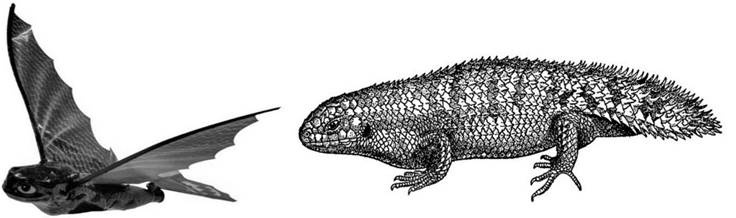
Fig. 202. Flying dragon and short-limbed skink
The true lizard family – Lacertidae numbers 170 species. It includes lizards with an elongated torso, a distinct neck region, a long tail, and well-developed limbs. The head is covered with large shields. Eyelids are separated. The tympanic membrane is located externally or in a depression. The tongue is forked. Teeth are pleurodont. Body sizes range from 12 to 90 cm. Most of them are oviparous. Clutch size is 1–18 eggs, and the incubation period is 50–70 days. They are distributed in Europe, Asia, and Africa. The most widespread species are: the green lizard (Lacerta viridis), which reaches 30 cm in length and inhabits Central and Southern Europe and, partially, Asia Minor (Fig. 203). In Ukraine, it is found in the southern regions, extending northward and northeastward to Kyiv and Poltava. It prefers dry, sunny, elevated areas overgrown with bushes and scattered trees. It feeds on insects and other invertebrates. The sand lizard (Fig. 203), or nimble lizard (Lacerta agilis) inhabits Central and Northern Europe, with the southern boundary of its range running through the Alps. It is found in northern Turkey and northwestern Iran. Body length including the tail reaches 30–32 cm.
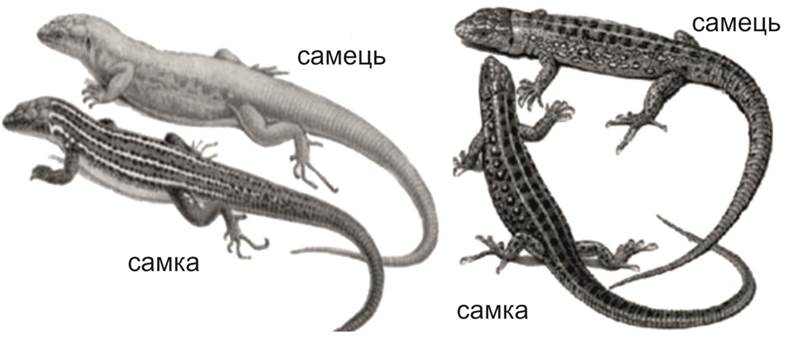
Fig. 203. Green and sand lizards
It exhibits variable coloration and patterning. It inhabits forest edges, open clearings, fields, and dry meadows. It feeds on insects. The breeding season is in late April; the female digs a shallow hole in soft soil, lays 6–16 eggs, and covers them with soil. Young lizards appear in mid-July. The viviparous lizard (Lacerta vivipara), with a body length of 14–16 cm, inhabits Europe and Asia; in Ukraine, it is found in Polissia, the Carpathians, and partially in the Forest-Steppe zone, while being absent in the steppe and Crimea. It prefers humid forest areas, the banks of forest rivers, streams, and lakes (sphagnum bogs in pine forests). In the Carpathians, it even inhabits biotopes at an altitude of 2,000 meters above sea level. Eggs remain in the oviducts for up to 3 months, and the young hatch a few minutes after or immediately upon egg-laying. The female "gives birth" to 5–8, sometimes up to 10 young. Birth occurs in late July to early August. Initially, the young hide in rock crevices and soil, feeding on the remnants of the yolk sac. During cold spells and at night, lizards take refuge in shallow burrows located under tree roots. They overwinter in warm, deep shelters. During thaws or warm winters, the viviparous lizard becomes active. The Crimean lizard (Lacerta taurica) inhabits the Balkan Peninsula, southern Moldova, the Black Sea regions, and southwestern Ukraine. In Crimea, it occurs in virgin steppe biotopes and the mountainous part of the peninsula. During extreme heat, it enters estivation. In May–June, it lays 2–6 eggs, and young individuals emerge in August–September. The rock lizard (Lacerta saxicola) inhabits the mountains of the Caucasus, Central Asia, the Southern Urals, and occurs on the Southern Coast of Crimea. It feeds on insects. In August, the female lays up to 6 eggs. The fast-swiped racerunner or sandy lizard (Eremias arguta) is distributed in northeastern Romania, Ciscaucasia, Kazakhstan, and Central Asia (Fig. 204).
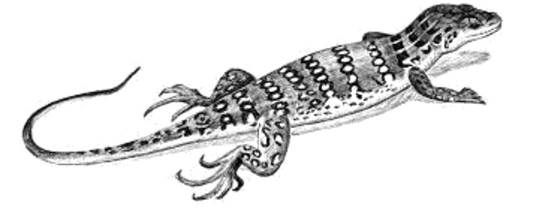
Fig. 204. Sandy racerunner
The Glass lizard family (Anguidae) includes both legless species and those with limbs. These are oviparous or ovoviviparous reptiles. The family numbers 80 species. A representative is the slowworm (Anguis fragilis) (Fig. 205).

Fig. 205. Slowworm
Its body length is 58–60 cm. It lacks legs; the torso is cylindrical, snake-like, and gradually tapers toward the tail. The tail is fragile and ends bluntly. The neck region is inconspicuous. Its range is broad: North Africa (Algeria), Europe, and Western Asia (Turkey, Northern Iran). In Ukraine, it inhabits the steppe part of Crimea, Polissia, the Carpathians, and the Forest-Steppe. It is an uncommon species, inhabiting various forest biotopes, particularly humid areas. The most typical habitats for the slowworm in Ukraine are forest edges, clearings, and thickets of deciduous and mixed forests. It feeds on earthworms, insects, slugs, and butterfly caterpillars. The period from mating to the birth of the young is 81–94 days; the young appear in late August to early September in broods of 8–12 (occasionally up to 25). In early autumn, the lizards hide for the winter, sometimes overwintering in groups. Another representative is the European glass lizard (Pseudopus apodus) (Fig. 206).
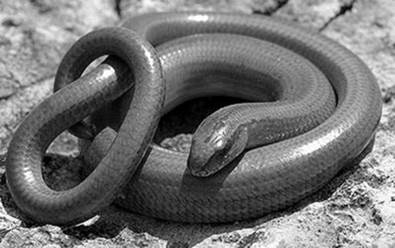
Fig. 206. Sheltopusik (European glass lizard)
This lizard reaches a length of 115 cm. Skin folds run along the sides of its body. Juveniles are striped, while adults are olive-brown. The sheltopusik inhabits the south of Ukraine and feeds on insects, Mollusks, and small vertebrates. In late May, the female lays up to 10 eggs.
The family Varanidae (monitor lizards) comprises the largest and most highly organized lizards, possessing pentadactyl limbs and pleurodont teeth. The family includes 30 species distributed across Africa, South Asia, the Malay Archipelago, and Australia. Monitor lizards are either arboreal or terrestrial. Smaller species have a body length of 20 cm, whereas the Komodo dragon is Varanus komodoensis (Fig. 207).

Fig. 207. Komodo dragon
This monitor lizard reaches lengths of up to 3–4 m with a mass of up to 150 kg. The desert monitor, Varanus griseus, inhabits North Africa, southwestern Asia, and Central Asia; it weighs up to 2.5 kg, reaches a length of up to 1.5 m, and feeds on invertebrates, rodents, birds, snakes, and even venomous species.
The suborder Amphisbaenia (worm lizards) numbers 140 species.
Their worm-like bodies are covered with horny scales arranged in transverse rings, making them resemble earthworms. They are devoid of limbs, though some species retain short forelimbs with reduced digits. The head is uniquely shaped and covered with sturdy horny shields, an adaptation for burrowing. Their locomotion resembles that of earthworms, with The ability to move both forward and backward. The eyes are located beneath the skin. Most species are oviparous, while some are ovoviviparous. Body sizes range from 25 to 70 cm, reaching up to 12 m in the reticulated python, Python reticulatus (Fig. 208).

Fig. 208. Reticulated python
Suborder Serpentes (snakes): legless reptiles adapted for locomotion in dense vegetation, tree crowns, and bushes. They feed on prey that is large relative to their body size, swallowing it whole. Sharp, recurved teeth are designed for seizing and holding prey. Venomous species possess grooved or tubular fangs that inject venom gland secretions into the victim's body. Limb girdles are absent, though some species retain pelvic and hindlimb rudiments. The number of vertebrae ranges from 141 to 435. A closed rib cage is absent, which allows them to swallow large prey. The auditory organ is simplified (lacking an eardrum); airborne sounds are perceived poorly, while seismic hearing is better developed. The suborder comprises approximately 2700 species of snakes. Snakes molt 2 to 4 times a year, shedding the horny epidermal layer. The brain is small in size.
The family Typhlopidae (blind snakes) comprises about 170 species of small, non-venomous snakes. Their bodies are covered with smooth scales, externally resembling earthworms, and they lead a subterranean lifestyle. They inhabit Central and South America, South Africa, South Asia, the islands of the Indian Ocean, and Australia. The European blind snake, Typhlops vermicularis, lives in the Balkans, Asia Minor, Egypt, the Middle East extending to Afghanistan and Pakistan, as well as in Transcaucasia and Central Asia.
The superfamily Henophidia (lower snakes) unites the largest snakes—boas and pythons; it comprises 80 species characterized by rudimentary hindlimbs and mottled coloration. The family includes 60 species of boas that inhabit predominantly dense, humid forests with rivers and lakes, as well as shrub thickets and swamps. They kill their prey by constriction, wrapping their bodies around it. The boa constrictor (Boa constrictor) has a body length of 3–5 m, ranging from Mexico through all of tropical and equatorial America to central Argentina, and feeds on various vertebrates. The sand boa (Eryx miliaris), reaching 1 m in length, lives in the Caucasus and Central Asia. The world's largest snake, the green anaconda (Eunectes murinus), grows up to 11 m long and inhabits the tropics of South America (Fig. 209).
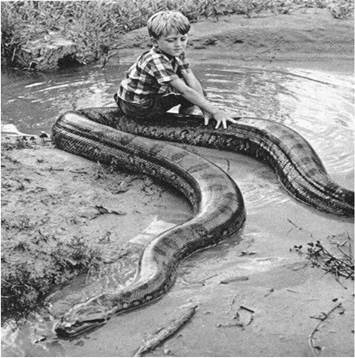
Fig. 209. Anaconda
The family Colubridae (colubrids) unites nearly 1600 living venomous and non-venomous species. These reptiles lack limbs and the Pelvic Girdle; they possess tubular teeth and only the right lung. Among them are large species with a length of 3.5 m and tiny snakes measuring 10–15 cm. The upper body is covered with uniform
smooth scales, while the lower side features elongated scutes. The head shields are large. In some species, the head transitions smoothly into the trunk, while in others, the boundary is distinct. Coloration is uniform: brown, brownish, or mottled. Some species are associated with water, others with land, some are arboreal, and some lead a fossorial (burrowing) lifestyle. They feed on mollusks, worms, insects, crustaceans, fish, amphibians, reptiles, birds, and mammals. They are ovoviviparous or oviparous. Clutches—ranging from a single egg to several dozen—are laid in the soil, leaf litter, tree hollows, or specially excavated nests. The family is divided into 6 subfamilies. The subfamily Natricinae comprises about 1400 species, with only two found in Ukraine. The grass snake (Natrix natrix) is a typical representative of the Ukrainian herpetofauna (Fig. 210).

Fig. 210. Snakes: grass snake (1), dice snake (2), and smooth snake
Body length reaches up to 160 cm, with males being smaller than females. Venomous fangs are absent. Two light spots are located on the sides of the head. It inhabits shrub thickets, swamp edges, flowing streams, rivers, ditches, and floodplain meadows, and is occasionally found in dry pine forests and steppes far from water. The grass snake feeds on various insects, fish, amphibians, and some mammals (mice, voles). The female lays 5–6 (up to 20) eggs in humus, decaying leaves, or rotting tree stumps. Several females may deposit eggs in the same Location. Young individuals hatch after 30–35 days and begin an independent life at a length of 10–12 cm. They hibernate in groups of 15–20 animals, annually in the same sites, waking up in March or April after winter dormancy. The dice snake (Natrix tessellata) is found in the southern regions of our country (Fig. 210). It is distinguished by a light olive-gray coloration with reddish spots and a body length of 150–155 cm. It inhabits water bodies or their surroundings, feeding on frogs, tadpoles, newts, fish, and occasionally mice, and can cause some damage to fish-farming ponds. In June or July, the female lays 6–23 eggs in shallow, sun-warmed depressions. In late September, it takes refuge in the burrows of foxes and badgers, hibernating in groups and waking from dormancy in late April.
The smooth snake (Coronella austriaca) (Fig. 210) also belongs to the colubrid family. This is a small snake (up to 65 cm) found in Central and Southern Europe, primarily inhabiting thickets and deciduous forests. It is non-venomous, although it is often mistakenly considered venomous and killed. Avoiding humid areas, it populates the entire territory of Ukraine and feeds on lizards. In August, the female lays up to 15 eggs or gives birth to the same number of live young.
Racers also belong to this family. They lack fangs and capture prey by pressing it against the ground with their bodies. The length of some species exceeds 2 m. They inhabit Southern Europe, tropical Asia, and most of America. About 30 species of racers are known, 5 of which occur in Ukraine, including the Caspian whipsnake (Dolichophis caspius) (Fig. 211).
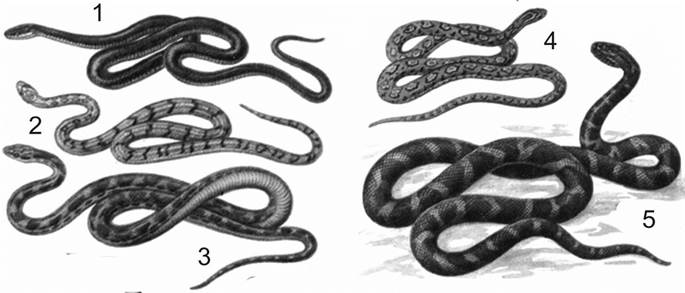
Fig. 211. Racers
1 - Aesculapian snake; 2 - Pallas's coluber; 3 - four-lined snake; 4 - leopard snake; 5 - Amur rat snake
Reaching up to 2 m in length, the rat snakes are Europe's largest reptiles. They occur in the steppe regions of Ukraine and in Crimea, typically avoiding damp habitats. Their diet consists of insects, nestlings, and rodents. In July, the female lays 12 eggs. The leopard snake (Zamenis situla) belongs to the genus of climbing rat snakes, with a body length of up to one meter. It inhabits exclusively the southern areas of Crimea, primarily rocky slopes. Other members of this genus include the four-lined snake (Elaphe quatuorlineata), the forest snake, or Aesculapian snake (Z. longissima), and Pallas's coluber (Elaphe dione) (Fig. 211).
The family of elapids (Elapidae) comprises up to 180 species (Fig. 212).

Fig. 212. Elapids and vipers
1 - horned viper; 2 - yellow-bellied sea snake; 3 - kingsnake; 4 - elapid; 5 - Central Asian pit viper; 6 - common adder;
7 - Indian cobra; 8 - rattlesnake
The best-known cobras belong to the genus *Naja*, while elapids include *Elaps*, *Dendroaspis*, *Micrurus*, and others. These species are venomous and possess large venom fangs. They inhabit tropical and subtropical regions across all continents except Europe, and include some of the world's most dangerous venomous snakes. In Australia, the coastal taipan (*Oxyuranus scutellatus*), a snake growing up to 3–3.5 m long, has a formidable reputation; in Asia, these include the king cobra (*Ophiophagus hannah*) and the Indian cobra (*Naja naja*).
The sea snake family (Hydrophidae) numbers 40 species and inhabits the tropical regions of the Pacific and Indian Oceans. They are characterized by a small head and a laterally compressed body. The venom of sea snakes is several times more toxic than that of terrestrial snakes—an evolutionary adaptation for feeding on fish, which are relatively resistant to venoms. Many species are ovoviviparous and never come ashore.
The viper family (Viperidae) unites 60 species of reptiles distributed across Europe, Africa, and Asia. The common adder (Vipera berus) reaches 60–70 cm in length (with specimens exceeding a meter found in the north). They feature a greyish-brown or rusty-red coloration with a dark zigzag stripe along the spine; entirely black adders also occur. They are widespread in Polissia and the Forest-Steppe zone. Feeding mainly on small rodents, this ovoviviparous species sees females lay 5–14 eggs (sometimes up to 18) in August and September. In some cases, embryonic development occurs entirely within the mother's body, and she gives birth to young 10–12 cm long. Initially, they do not feed, subsisting on fat reserves, yet they are capable of delivering a venomous bite even at this age. Nocturnal by nature, they hide from the sun in shaded, damp places during the day. Adder bites pose a significant danger to humans. In October or early November, they descend into winter refuges located up to 2 m deep, where up to 300 individuals may hibernate together. They emerge from hibernation in late March. The common adder lives for 14–15 years, or potentially longer. Its natural enemies include owls, short-toed snake eagles (family Accipitridae), polecats, badgers, foxes, and hedgehogs. The steppe viper (V. renardi) reaches up to 60 cm in length, with males being slightly smaller than females. It has a localized distribution, occurring in the Caucasus, Kazakhstan, and Central Asia, while within Ukraine it inhabits the steppe and partially the forest-steppe zones. Its back is grey with a dark zigzag stripe, and the belly is black with white flecks or grey with dark patches. Inhabiting open areas, it feeds on insects, mouse-like rodents, and ground-nesting bird nestlings. This species is also venomous, though less so than the common adder. The female gives birth to 5–10 young. They overwinter in rodent burrows and live up to 7–8 years. Predators of the steppe viper include the black kite, owls, steppe eagles, harriers, storks, crows, steppe polecats, badgers, and foxes. The blunt-nosed viper, or Levantine viper (Macrovipera lebetina), resembles the adder and grows up to 2 m long. It has a broad range spanning southern Turkmenistan, Transcaucasia, parts of Uzbekistan, western Tajikistan, and the extreme south of Kazakhstan; its bite is extremely dangerous. The saw-scaled viper (Echis carinatus) grows to 70 cm in length, yet is also highly venomous.
The pit viper family (Crotalidae) comprises 120 species, notably including pit vipers and rattlesnakes. A notable example is the timber rattlesnake (Crotalus
horridus), which reaches 2 m in length and whose bite can be fatal.
Snake venom consists of proteolytic Proteins (which break down other proteins), Blood-clotting factors, and Enzymes. Elapids and sea snakes generally have venom dominated by neurotoxins, whereas vipers possess systemic toxins.
Subclass Archosaurs – Archosauria.
The order of crocodiles (Crocodilia) resembles extinct reptiles such as dinosaurs in its structural Organization and is anatomically close to modern birds. Having appeared approximately 150 million years ago, crocodiles represent the most highly organized group of living reptiles, adapted to a semi-aquatic lifestyle. The body is dorsoventrally flattened, and the laterally compressed tail AIDS in swimming. The forelimbs have five digits, and the hindlimbs have four. The body is covered with large horny scutes underlain by bony plates. Teeth are set in sockets (alveoli) on the premaxillary, maxillary, and dentary bones, and a secondary bony palate is present. The heart is four-chambered, though arterial and venous blood partially mix. Crocodiles inhabit fresh and brackish water bodies, feeding on fish and occasionally aquatic mammals. They reproduce via eggs, laying clutches of 10 to 100 eggs in sand or in pits filled with decaying vegetation, which the females guard. Sexual maturity is reached at 8–10 years of age, and they can live up to 80–100 years. Crocodiles are hunted for their skin, and certain species pose a danger to humans.
The order comprises 3 families and 21 species (Fig. 213).

Fig. 213. Crocodiles
1 - American alligator; 2 - false gharial; 3 - Nile crocodile; 4 - dwarf crocodile; 5 - spectacled caiman
The alligator family (Alligatoridae) contains 7 species. *Alligator mississippiensis* inhabits freshwaters of the Americas; *A. sinensis* is found in China's Yangtze River; caimans (*Caiman*, *Melanosuchus*, *Paleosuchus*) inhabit Central and South America. The true crocodile family (Crocodylidae) includes 13 species distributed across tropical Asia, Africa, America, Australia, and islands of the Indian and Pacific Oceans, represented by the Nile crocodile (*Crocodylus niloticus*). The gharial family (Gavialidae), containing a single species—the gharial (*Gavialis gangeticus*)—inhabits slow-flowing rivers, lakes, and expansive swamps. They come ashore to breed or to migrate when their water bodies dry up. During droughts, crocodiles burrow into the mud and enter estivation. They reach sexual maturity at 8–10 years of age, whereas the Nile crocodile does so around its 20th year. It is distributed across Africa, South Asia, Northern Australia, and tropical America.
Last update: 19/08/2026
Editorial and Educational Adaptation: This material has been compiled based on the primary/original source text. The project team performed an editorial review, corrected technical inaccuracies, structured sections, and adapted the content for an educational format.
What was processed:
- elimination of formatting defects (OCR errors, structural breaks, corrupted characters);
- editorial organization of content;
- standardization of terminology in accordance with academic sources;
- verification of factual statements against the original source text.
All mentions of the author, publication year, and origin of the primary text have been preserved in accordance with the source.