Tuberculosis - I.T. Pyatnochka 2005
Extrapulmonary tuberculosis
Tuberculosis of the bronchi, trachea, larynx, and other upper respiratory tract structures
Tuberculosis of the Upper Respiratory Tract (Nose, Oral Cavity, Pharynx, Larynx), Trachea, and Bronchi occurs as a complication of Primary and secondary Pulmonary Tuberculosis as well as tuberculosis of the intrathoracic Lymph Nodes. Isolated lesions of this type are observed only occasionally.
Among patients with Various Forms of intrathoracic tuberculosis, specific endobronchitis is diagnosed in 6–19% of cases, and laryngeal tuberculosis in 1–2%.
Pathomorphology. Tuberculosis of the upper respiratory tract, trachea, and bronchi develops As a result of hematogenous, lymphogenous, or bronchogenic (sputum-borne) spread of infection from a specific lesion in the Lungs or intrathoracic lymph nodes.
Regarding the Pathogenesis of laryngeal tuberculosis (Fig. 23), two forms are distinguished: the hematogenous form, which develops in patients with Disseminated pulmonary tuberculosis, and the bronchogenic form, which most commonly complicates Fibrocavernous pulmonary tuberculosis. As sputum passes through the larynx, it partially lingers on the vocal cords, leading to their involvement (the inner ring of the larynx). In this case, hoarseness is the initial sign of specific laryngeal damage. In disseminated pulmonary tuberculosis, the outer ring of the larynx (epiglottis, arytenoid cartilages) is primarily affected; therefore, the first symptoms are pain upon swallowing and dysphagia, while hoarseness appears only later.
Depending on the pathomorphological changes, the tuberculous process in the larynx can be infiltrative, productive, or ulcerative, which is verified via laryngoscopy.
Class="center">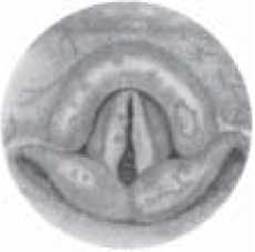
Fig. 23. Tuberculosis of the larynx
Tracheal and bronchial tuberculosis can occur in all forms and phases of pulmonary tuberculosis, particularly in tuberculosis of the intrathoracic LYMPH NODES AND fibrocavernous pulmonary tuberculosis. Infiltrative, ulcerative, and fistulous forms (lymphobronchial and bronchopleural fistulas) of bronchial tuberculosis are distinguished, characterized predominantly by exudative or productive inflammation (Fig. 24). Complications include fistulas, varying degrees of stenosis, Bronchiectasis, granulation tissue, and broncholiths.
The Clinical presentation depends on the form and phase of tracheal and bronchial tuberculosis, and an asymptomatic course is also possible. Overall, this type of lesion is characterized by a sharp, paroxysmal cough, retrosternal and interscapular pain, and dyspnea that often does not correspond to the extent of the pulmonary process. Sometimes the cough is accompanied by the expectoration of caseous contents or Blood streaks.
Diagnostics. Clinical, radiological, laboratory, and, above all, bronchological examination Methods are of primary importance.
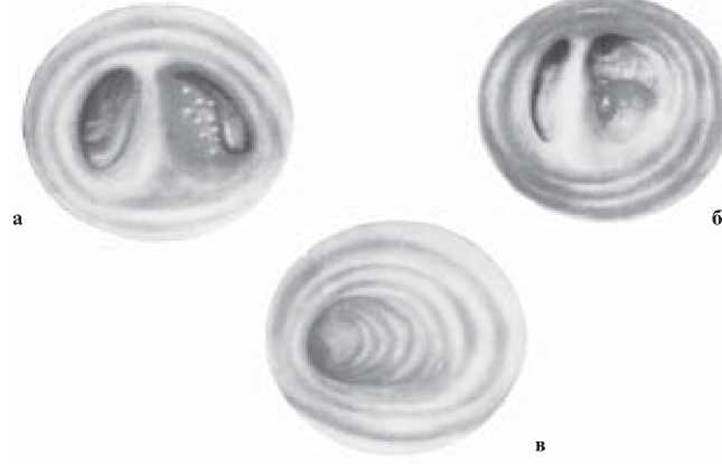
Fig. 24. Forms of bronchial tuberculosis:
a – infiltrative; b – ulcerative; c – fistulous.
Cytology/practical/136.html">Differential Diagnosis OF specific endobronchitis is carried out with non-specific Bronchitis, which occurs twice as frequently in pulmonary tuberculosis patients, as well as with malignant and benign tumors of the tracheobronchial tree.
Treatment. Anti-mycobacterial therapy is administered in accordance with the clinical form of pulmonary tuberculosis, supplemented by the topical application of anti-tuberculosis drugs in the form of aerosols or intratracheal infusions—primarily a 2% solutizone solution combined with hydrocortisone. The course consists of 30–45 Procedures. During bronchoscopy, sanitation of the bronchial tree is performed using various methods depending on The Nature of the lesion.
It should be noted that isolated laryngeal tuberculosis in newly diagnosed patients is treated according to clinical category 3 of dispensary registration. The duration of the main course of Chemotherapy is 6 months.
Bronchial tuberculosis in newly diagnosed pulmonary tuberculosis patients is treated according to category 1. The main course of treatment lasts 8 months.
CONTROL QUESTIONS
1. Incidence of tuberculous endobronchitis in patients with pulmonary tuberculosis.
2. In which Clinical forms of pulmonary tuberculosis is laryngeal tuberculosis most commonly observed?
3. Pathogenesis of laryngeal tuberculosis.
4. Clinical manifestations of laryngeal and bronchial tuberculosis.
5. Pathomorphological forms of laryngeal and bronchial tuberculosis.
6. The main diagnostic method for tuberculous endobronchitis.
7. Complications of bronchial tuberculosis.
8. Treatment of patients with tuberculosis of the larynx and bronchi.
Last update: 10/08/2026
Editorial and Educational Adaptation: This material has been compiled based on the primary/original source text. The project team performed an editorial review, corrected technical inaccuracies, structured sections, and adapted the content for an educational format.
What was processed:
- elimination of formatting defects (OCR errors, structural breaks, corrupted characters);
- editorial organization of content;
- standardization of terminology in accordance with academic sources;
- verification of factual statements against the original source text.
All mentions of the author, publication year, and origin of the primary text have been preserved in accordance with the source.