Military Hygiene and Hygiene in Emergency Situations - K.O. Pashka 2005
Fundamentals of organizing and conducting sanitary surveillance and medical control over the water supply of military personnel and the population in field conditions.
Organization and execution of reconnaissance of water sources
Water reconnaissance is conducted to identify water sources, assess their usability, or establish new ones. It is organized by the headquarters of a formation (unit). The direct organizers of water source reconnaissance are the chief of the engineering service of the formation (unit), and in the deployment areas of rear units, the deputy commander for rear services. Water reconnaissance is carried out by engineering reconnaissance patrols, which include representatives from chemical and medical (Sanitary and epidemiological) services. The engineering unit (subunit) surveys the water source, organizes its extraction and purification, and operates specially equipped and guarded water supply points. The chemical service provides forces and means for conducting radiation and chemical reconnaissance of water sources. Representatives of the military-medical (local medical) and sanitary-epidemiological services determine the quality and quantity of water required to supply personnel and the affected population.
Reconnaissance begins with gathering information from headquarters at all levels (unit, formation, operational command). Data regarding water sources already in use are obtained from the headquarters of units (formations) interacting in the execution of the combat mission, as well as from neighboring units. Following the analysis of these data, a field assessment is conducted to determine the sanitary condition of water sources at the abstraction sites, as well as the presence and operational status of equipment preventing their contamination.
During the sanitary and topographical inspection of a water source, the following are established:
- the Location OF THE water source, its type, and yield;
- the sanitary condition of the surrounding area and the presence of potential water contamination sources;
- the potential connection between water sources and contamination sources, along with the distances between them.
During the sanitary and epidemiological inspection, the epidemic situation in the area is assessed, along with the presence of waterborne infectious diseases among the population. This takes into account data from local public health authorities, and, if necessary, surveys are organized to detect infectious diseases among the population, as well as diseases and mortality among animals. Simultaneously, the sanitary condition of the settlement is inspected to identify potential pathways of water contamination from existing pollution sources using various tests with fluorescein, sodium chloride, etc. When possible, a full laboratory water analysis is performed in accordance with current State Sanitary Rules and Norms (DSSanPiN) No. 383 "Drinking Water".
Based on the preliminary reconnaissance of water sources, the reconnaissance team indicates:
- the most suitable water sources for establishing Field water supply points;
- the necessity and nature of measures to improve water quality;
- The Scope of work required for the sanitary and technical improvement of the source (cleaning and repairing wells, measures to protect them from contamination, etc.).
Water samples are taken from the selected sources to determine water quality in sanitary and epidemiological institutions (SEL, SEZ, SES).
A decision on the potability of the water can be made on-site if the Sanitary and hygienic condition of the source is satisfactory and the water quality indicators are unquestionable.
In addition, the reconnaissance team provides recommendations on establishing sanitary protection zones for water sources and designates water abstraction points for various needs from open sources.
In a combat environment (or emergency zone), a Conclusion regarding water safety often needs to be made extremely quickly, which requires reducing the list of indicators—for example, taste is not determined due to the high risk of poisoning. Sanitary and hygienic laboratory examinations are carried out on-site, measuring only the content of ammonia, nitrates, chlorides, and permanganate oxidation in the water.
Sanitary-toxicological and radiometric surveys are conducted using standard equipment such as the PKhR-MV kit (medical-veterinary chemical reconnaissance apparatus)—which uses detector tubes to identify chemical warfare agents; the NMR-57 (medical scout kit) and the DP-5V (DP-5M) roentgenometer-radiometer. These instruments are available in the brigade's medical company. The SEL is equipped with the PKhL-54 (field chemical laboratory), MPKhL (small field chemical laboratory), LIN (laboratory hygienic kit), and NGV (hydrochemical water kit, which is sometimes used by the medical service, although it is not standard medical property) (Fig. 3.3). Furthermore, the MAFS-3 set includes the PKhL-54 (or MPKhL) and DP-5M. When necessary, an AL (mobile laboratory) may be used. The SEZ features mobile laboratories (AL), hygienic laboratories (LG), RLU-2 (built-in radiometric laboratory units), etc.
Class="center">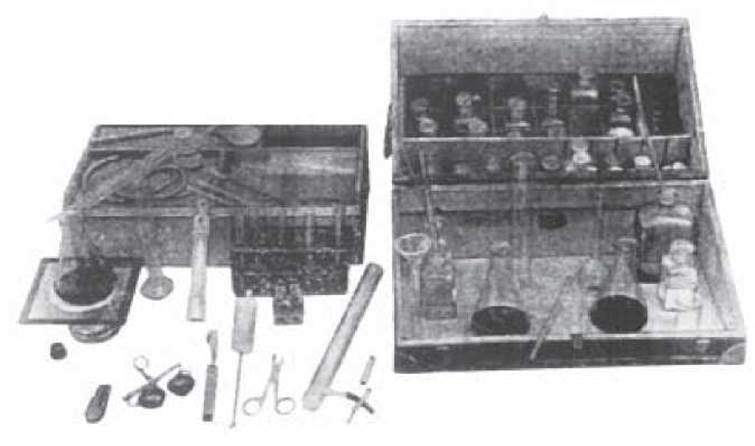
Fig. 3.3. NGV hydrochemical water kit.
The LGH is housed in a special casing that can be deployed in the field in any indoor space without requiring additional furniture. The kit allows for assessing water quality and determining the coagulant dose. Inspections using the LGH and DGH are carried out using Special Methods involving dry Reagents and drop titration. The Contents of the LGH are sufficient to perform 500 Physical and Chemical water analyses, as well as 500 tests to control the quality of water purification and disinfection. Based on the results obtained from several sources, laboratory water studies make it possible to select the most suitable source, monitor water purity, and exercise continuous quality control over drinking water.
During the sanitary and technical inspection, evaluations are made of water supply equipment, the state of the water distribution network, reserve and water-tower reservoirs, and water purification and disinfection facilities. Particular attention must be paid to the serviceability of all water supply systems (inspection wells, technical condition of pipes, underground reservoirs, pump packing glands, etc.) and the absence of contact with potential contamination sources.
Sanitary-topographical, sanitary-technical, epidemiological, and laboratory physical-chemical and microbiological data make it possible to draw scientifically grounded Conclusions regarding water quality and the feasibility of utilizing a water source, as well as to establish water-use regimens and sanitary protection zones for water sources.
When determining the location of water sources, attention must be paid to the general geological Structure and Topography of the area, The Nature of the soil, outcrops of the aquifer, ravines and fissures connected to the water source, population density, the presence of industrial enterprises, etc.
The primary objectives of reconnaissance are to establish:
- the quantity and location of water sources, their sanitary condition and that of the surrounding area, and the suitability of the water for drinking and other needs;
- the presence of toxic and radioactive substances, as well as biological agents, in the water;
- the technical condition of water sources, including the availability of pumping equipment, repair needs, and water reserves;
- the presence of shallow groundwater (based on external indicators);
- the availability of Materials for equipment repair, water source restoration, and the outfitting of water points and access routes to them.
During water reconnaissance, checks are carried out for potential contamination. Indicators of water poisoning may include:
- unusual odors (bitter, metallic, astringent) uncharacteristic of clean water;
- oily sheens or droplets on the water surface or around the water source;
- dead fish present in the water;
- dead or weakened animals in the surrounding area.
Radioactive contamination of water is detected using dosimetric instruments (such as DP-5V, DP-5M). For this purpose, water samples of at least 2 liters are collected from the surface and bottom layers of the water body (Fig. 3.4 a, b, c).
Reconnaissance for shallow groundwater is conducted by drilling using DTK-2 equipment (shallow tubular well) or by observing external indicators of water presence. For instance, in areas with shallow groundwater (up to 5 m), moisture-loving plants such as reeds, sedge, moss, and sorrel may grow, alongside soil slips, rusty patches on the ground surface, and lush green vegetation that stands out clearly during a drought.
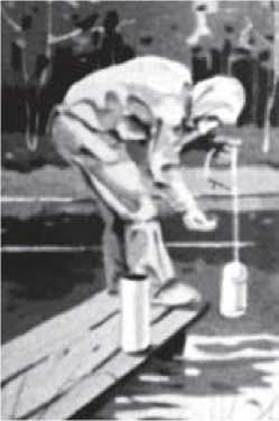
Fig. 3.4 a. Sampling water using a water sampler (bathometer).
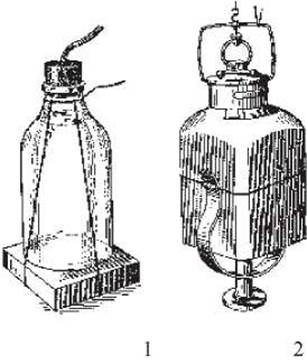
Fig. 3.4 b. Water samplers:
1 - makeshift; 2 - standard-issue.
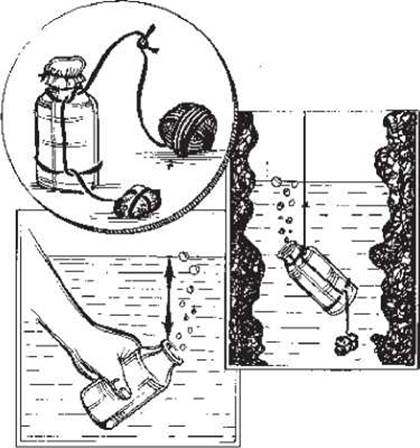
Fig. 3.4 c. Drawing water from a well using makeshift means.
The logistics service (the chief of logistics of a formation or unit) determines water requirements and develops a water supply and delivery plan. Engineering units conduct water source reconnaissance, organize water extraction and purification, and operate specially equipped water supply points.
The engineering and technical service is responsible for:
- compliance with regulatory requirements regarding the outfitting and operation of all elements of the water supply and sewerage systems;
- timely and high-quality maintenance and repair of all structures, equipment, and networks of water supply and sewerage systems;
- ensuring the timely supply of water to consumers in accordance with established standards and quality requirements;
- proper Treatment and discharge of domestic and industrial wastewater;
- the condition of fencing around strict sanitary control zones for water sources, pumping stations, water treatment plants, and sewerage facilities, as well as adherence to sanitary regulations;
- organizing and conducting operational laboratory control over drinking water quality at water intake points, treatment facilities, and within the distribution network, as well as monitoring wastewater treatment quality at sewage treatment plants and at discharge points into open water bodies;
- timely detection and prompt elimination of damages, accidents, and disruptions in the operation of water supply and sewerage systems.
The chemical service conducts radiation and chemical reconnaissance of the water source.
The tasks of the medical and sanitary-epidemiological services involve sanitary supervision over the provision of safe drinking water to military personnel and the population. They participate in the Selection (reconnaissance) of water sources, determining their suitability for water supply, monitoring water quality, the sanitary condition of field water supply equipment, and compliance with water supply standards. The medical service monitors the health status of personnel involved in the extraction, purification, storage, and distribution of water, instructs servicemen (and the population) on the rules for using individual water disinfection devices, checks their availability, and ensures their proper application. When necessary, the sanitary-epidemiological service conducts sanitary and epidemiological assessments of water contaminated with radioactive or toxic agents and biological weapons of mass destruction.
Sources unsuitable for use are marked with special signs.
The medical service representative personally performs:
- sanitary and topographical inspection of water sources;
- sanitary and epidemiological survey of the area where water sources are located;
- laboratory analysis of water.
The duties of the unit physician include:
- sanitary and hygienic control over water quality and the sanitary condition of the water source, as well as issuing conclusions on the suitability of water for domestic and drinking purposes;
- monitoring compliance with domestic and drinking water supply standards;
- participating in the selection of water sources, issuing approvals for the construction projects of water supply systems, and establishing sanitary protection zones;
- supervising the operation and sanitary condition of pumping stations, pipelines, and water distribution facilities;
- exercising medical control over personnel operating water treatment plants.
Water supply to company personnel is carried out under the supervision of a sanitary instructor. They are required to:
- monitor the sanitary condition of individual flasks and ensure they are filled with safe water or tea;
- issue water disinfection tablets to company personnel for use in individual flasks and instruct them on their proper application;
- participate in training company personnel on drinking regimen rules during marches and monitor compliance;
- upon the instructions of a physician (feldsher), monitor the Maintenance of the established regime within the sanitary protection zone, the sanitary condition of the water source, equipment for water extraction, purification, and disinfection, as well as the transportation and storage of water reserves;
- participate in water source reconnaissance, take water samples, and send them for laboratory analysis.
Last update: 10/08/2026
Editorial and Educational Adaptation: This material has been compiled based on the primary/original source text. The project team performed an editorial review, corrected technical inaccuracies, structured sections, and adapted the content for an educational format.
What was processed:
- elimination of formatting defects (OCR errors, structural breaks, corrupted characters);
- editorial organization of content;
- standardization of terminology in accordance with academic sources;
- verification of factual statements against the original source text.
All mentions of the author, publication year, and origin of the primary text have been preserved in accordance with the source.