Military Hygiene and Hygiene in Emergency Situations - K.O. Pashka 2005
Fundamentals of organizing and conducting sanitary supervision and medical control over the water supply of military personnel and the civilian population in field conditions
Water quality requirements in field conditions
In field conditions, drinking Water must be of such quality that its consumption for a period dictated by actual combat circumstances does not lead to a decrease in the combat readiness of military personnel (Table 3.1).
Its quality is assessed in the field during water source reconnaissance and routine Sanitary supervision of water supply. If microbial contamination exceeding permitted standards is detected, the operation of the water source is suspended until the cause of contamination is identified and all necessary measures to restore water quality are implemented. Following the purification and disinfection of the water source, repeat water samples are collected for additional testing to check for indicators of fresh fecal contamination (enteroviruses, microbes, mineral nitrogen compounds, chlorides, oxidizability). Simultaneously, Representatives of the housing and maintenance service (municipal water supply support service) inspect the water intake facilities and the water supply network, eliminating any identified deficiencies. Based on a cAMP order, the entire water supply system is disinfected and flushed, followed by sample collection for repeat analysis.
Class="center">Table 3.1 Water quality requirements in field conditions
|
Safety criteria |
Indicators |
|
1. Organoleptic properties: |
|
|
1.1. Transparency, cm |
not less than 20 |
|
1.2. Coloration, degrees |
not more than 35 |
|
1.3. Taste and aftertaste, points |
not more than 3 |
|
1.4. Residual chlorine, mg/dm3 |
0,8-1,2 |
|
2. Anti-epidemic reliability: |
|
|
2.1. Coliform index, CFU/dm3 of water |
not more than 3 |
|
2.2. TPC, CFU/cm3 of water |
not more than 100 |
Water sources such as boreholes and wells are also disinfected when necessary. To this end, a disinfecting solution is poured into the working casing of the borehole at a rate of 50–80 mg of active chlorine per liter of water. After 5–8 hours, the water is pumped out until the strong smell of chlorine disappears. For continuous water disinfection, a dosing ceramic cartridge (Fig. 3.5) with bleaching powder is lowered into a dug well, or modification B of the "Neochlor" disinfecting solution is poured in According to the application Procedure.
In the event of potential enemy use of weapons of mass destruction (chemical warfare agents, biological agents), indicators such as the coliform index, total microbial count, oxidizability, ammonium, nitrite, nitrate, and chloride content lose their sanitary and indicative significance, because the presence of pathogens and their toxins does not alter these parameters.
In all other cases, water used for drinking and domestic purposes must not contain pathogenic agents, toxins, radioactive substances, or poisons exceeding permissible limits. The chemical composition of the water should provide good organoleptic properties (it must be clear, colorless, and free from foreign tastes and odors, etc.). In other words, it must comply with the requirements of State Sanitary Rules and Norms (DSanPiN) No. 383 "Drinking Water. Hygienic requirements for the quality of centralized drinking water supply." Monitoring of the physicochemical composition and bacterial content must be carried out at least once a month, and more frequently based on epidemiological indications.
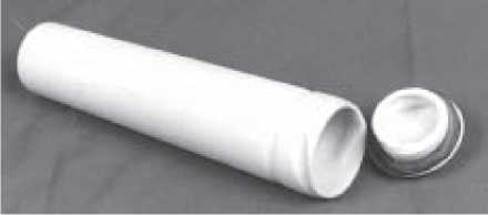
Fig. 3.5. Ceramic cartridge for continuous water disinfection.
The radioactivity of drinking water depends on the presence of radioactive substances of natural or anthropogenic origin. Groundwater located in sedimentary rocks, which is most commonly used for public water supply, exhibits the lowest activity. Its activity increases with higher water mineralization. The specific activity of water is 10–50 µg/dm3 for natural uranium, 226-2Х10-12 Ci/dm3 for radium, and 222-5Х10-10 Ci/dm3 for radon. Waters occurring in bedrock, such as fractured granites, have higher activity. Significant activity is often characteristic of therapeutic mineral waters (radium and radon activity up to 11Х10-9 Ci/dm3). According to DR-97 (permissible levels of radionuclides in foodstuffs and drinking water), the permissible contamination level for drinking water is 2 kBq/m3.
The quality of water from underground sources depends on the conditions of its occurrence and the sanitary condition of the area surrounding the water supply point.
Shallow groundwater (perched water table) in populated areas and troop concentration sites is easily contaminated. Therefore, water drawn from shallow dug or tube wells for drinking and domestic purposes must be purified (Fig. 3.6).
Groundwater underlying impermeable strata, extracted from deep tube or dug wells, is generally consumed for drinking without purification following preliminary analysis (Fig. 3.7 a, b).
Open water sources (rivers, lakes) may be contaminated with radioactive and toxic substances as well as pathogenic Bacteria.
Water from dug or tube wells, as well as water supply systems located in territory abandoned by the enemy, is used for drinking and domestic purposes only after quality verification and appropriate purification.
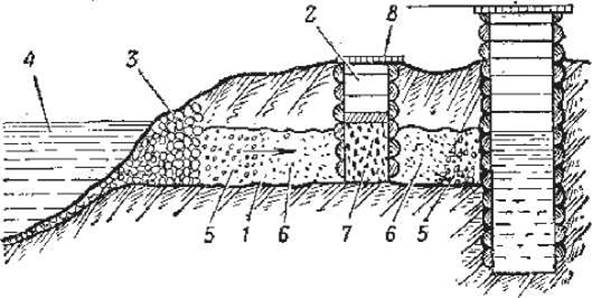
Fig. 3.6. Well with a filtration trench:
1 - filtration trench; 2 - charcoal well; 3 - stone backfill; 4 - water source; 5 - gravel; 6 - sand; 7 - charcoal; 8 - well cover.
Rivers and streams flowing from enemy-held territory are generally not used to supply water to troops.
The water requirements of troops depend on The Nature of combat training, climatic conditions, and the season of the year. Minimum water requirements based on climatic conditions are shown in Table 3.2.
The minimum "Drinking Only" norm is introduced only in emergency situations during combat operations in desert and arid regions, or in the event of widespread contamination of water sources. A scientifically grounded drinking regimen recommends the timely consumption of water in small portions until thirst is completely quenched.
Table 3.2 Minimum water supply norms in field conditions (per serviceman in liters per day)
|
Purpose of water |
At moderate Temperature, liters/day |
In hot weather, liters/day |
|
Preparation of tea, water reserve in individual flasks |
2,5 |
4,0 |
|
Cooking, washing kitchen utensils |
3,5 |
3,8 |
|
Washing individual mess gear |
1,0 |
1,2 |
|
Washing/hygiene |
3,0 |
6,0 |
|
Total |
10,0 |
15,0 |
|
Drinking only |
2,5 |
4,0 |

Fig. 3.7. Wells: a) dug well:
1 - windlass; 2 - crank handle; 3 - marlinespike; 4 - bucket; 5 - log cabin (crib); 6 - gravel-sand filter. b) MSShK-15 mechanized auger well: 1 - auger; 2 - winch; 3 - elevator; 4 - frame; 5 - engine; 6 - hand winch.
The water requirements of population groups and formations are determined by the operational environment, the scale, complexity, and intensity of disaster response operations in the emergency zone, climatic conditions, and the season of the year. Daily drinking water quotas depend on several factors: climatic conditions, water availability, the operational situation, and workload intensity. In areas with saline water, fresh water is allocated primarily for drinking and cooking.
In certain instances—particularly during widespread contamination of water sources or when operating in arid regions—water quotas in temperate climates may be reduced to 2.5 liters per person, restricting water use strictly to drinking for no more than 5 days; in hot climates, quotas may be reduced to 4 liters for no more than 3 days.
Limitations in water extraction and transport must not compromise personal and public hygiene standards, food Processing quality, or the sanitary condition of field catering stations. This requires the direct involvement of the medical service HEAD in drafting the water supply plan for the unit (formation) and the affected population. In accordance with established water supply standards, the medical service verifies that adequate water reaches personnel and the civilian population. Simultaneously, sanitary and educational outreach is conducted regarding proper Hydration regimens, and personnel and civilians are trained in the correct use of individual water disinfection devices, with their application Methods regularly checked.
For medical facilities (per bed per 24 hours, accounting for staff needs), the following water quotas are established: general field hospital (GFH) - 25 l; specialized field hospital (SFH) and infectious diseases field hospital (IDFH) - 50 l; radiation injury field hospital (RIFH) - 90 l; specialized field hospital for mass casualties - 110 l (in exceptional circumstances - 40 l).
The daily water requirement for a battalion medical aid station is 0.5 m3, and for a brigade medical company, it exceeds 10 m3.
Water consumption for the sanitary processing of personnel is calculated at 45 liters per person. The quality requirements for this water are identical to those for drinking water.
The medical service bears special responsibility for organizing sanitary supervision over water supply in compliance with these requirements. Under no circumstances should water consumption quotas fall below established levels, and they must be increased at the first available opportunity.
The issues of water quotas and supply regimens in hot climates have long been debated, leading to various organizational solutions. Initially, hydration regimens relied on restricting water intake while replenishing sodium chloride lost through sweat. However, experimental research and field observations have demonstrated that during periods of heavy thermal stress, individuals experience a negative water balance that is recovered only during rest.
Forced or volitional abstention from drinking water increases the water deficit, which, other things being equal, leads to elevated body temperature, accelerated pulse rate, decreased performance, and the risk of heat exhaustion. It is impossible to reduce the physiological water requirements of Organs and Tissues through acclimatization or training.
A negative consequence of severely restricting drinking water is that certain service members fail to maintain this regimen and resort to drinking water from unverified sources. Therefore, supplying units with an adequate volume of high-quality water is essential for maintaining epidemiological safety among troops.
Substantial amounts of water are consumed for various technical purposes, as well as for the decontamination of weapons, combat vehicles, and motor transport. For instance, washing a single tank, missile launcher, or prime mover requires 1,000 liters of water.
Medical monitoring must be implemented from the moment of water abstraction through all stages of Treatment. This involves inspecting the sanitary condition of water intake and supply points and regularly testing water quality indicators. The efficacy of water disinfection can be assessed by the presence of residual chlorine. The frequency of monitoring is determined by the head of the medical service of the unit (formation), taking into account the Sanitary and epidemiological situation.
The transport of water to subordinate units is carried out by the unit's rear services using dedicated tanker trucks, trailer-mounted tanks, or standard-issue reservoirs of various capacities. Compliance with delivery requirements and regulations is the responsibility of dedicated support personnel who have been cleared by the medical service to perform these duties.
Last update: 10/08/2026
Editorial and Educational Adaptation: This material has been compiled based on the primary/original source text. The project team performed an editorial review, corrected technical inaccuracies, structured sections, and adapted the content for an educational format.
What was processed:
- elimination of formatting defects (OCR errors, structural breaks, corrupted characters);
- editorial organization of content;
- standardization of terminology in accordance with academic sources;
- verification of factual statements against the original source text.
All mentions of the author, publication year, and origin of the primary text have been preserved in accordance with the source.