Human Anatomy - Kotsan I. Ya. 2009
Doctrine of Internal Organs
Digestive System
The Digestive apparatus (Digestive System) (apparatus digestorius (systema alimentarium)) is a system of Organs responsible for the intake of food, its mechanical and chemical Processing, the absorption of nutrients and Water into Blood and Lymphatic vessels, and the elimination of unabsorbed waste products from the body in the form of feces. In addition, the digestive system excretes certain metabolic products and produces A number of substances that regulate the functioning of the digestive tract.
The digestive system consists of the alimentary canal (tract) and digestive glands, the ducts of which open into the lumen of the canal (Fig. 139).
Class="center">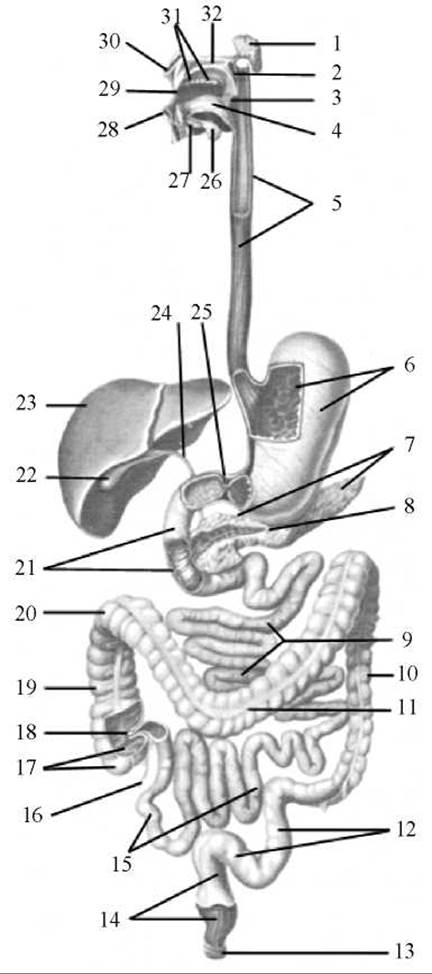
Fig. 139. Diagram of The Structure of the digestive system (after R. D. Sinelnikov)
1 — parotid gland; 2 — soft palate; 3 — Pharynx; 4 — Tongue; 5 — Esophagus; 6 — Stomach; 7 — Pancreas; 8 — pancreatic duct; 9 — jejunum; 10 — descending colon; 11 — transverse colon; 12 — sigmoid colon; 13 — external anal sphincter; 14 — rectum; 15 — ileum; 16 — Appendix; 17 — cecum; 18 — ileocecal valve; 19 — ascending colon; 20 — right colic flexure; 21 — duodenum; 22 — Gallbladder; 23 — Liver; 24 — common Bile duct; 25 — pyloric sphincter; 26 — submandibular gland; 27 — sublingual gland; 28 — lower lip; 29 — Oral Cavity; 30 — upper lip; 31 — Teeth; 32 — hard palate
The alimentary canal (canalis alimentaris) is a tube 8–10 meters long with dilations in certain sections.
The wall of the alimentary canal is pliable (except for the oral cavity, which contains skeletal elements) and is formed primarily by four layers: the inner mucosal membrane, the submucosa, the muscular layer, and the outer Connective Tissue layer, which is either adventitia or serosa.
The human alimentary canal includes the following sections: the oral cavity, pharynx, esophagus, stomach, Small Intestine, and Large Intestine.
Last update: 08/08/2026
Editorial and Educational Adaptation: This material has been compiled based on the primary/original source text. The project team performed an editorial review, corrected technical inaccuracies, structured sections, and adapted the content for an educational format.
What was processed:
- elimination of formatting defects (OCR errors, structural breaks, corrupted characters);
- editorial organization of content;
- standardization of terminology in accordance with academic sources;
- verification of factual statements against the original source text.
All mentions of the author, publication year, and origin of the primary text have been preserved in accordance with the source.