Human Anatomy, Part 1 - K. A. Dyubenko, A. K. Kolomiysev, Yu. B. Chaykovsky 2002
Special Part
Reproductive Systems, systemata genitalia - Female Reproductive System, systema genitale femininum
External Female Genital Organs, organa genitalia feminina externa - Development of External Genital Organs - Developmental Anomalies of Genital Organs
Developmental anomalies of the Uterus and Vagina are typically associated with impaired fusion of the Müllerian ducts. This can result in a split uterine fundus or even a duplicated uterine cervix. For instance, incomplete fusion of the ends of the right and left paramesonephric ducts leads to a bicornuate uterus (uterus bicornus), whereas complete failure of fusion results in a double uterus and vagina (uterus et vagina duplex). When Development of the paramesonephric duct is arrested on one side, a unicornuate uterus occurs. Atresia of the cervix is sometimes observed, in which case the uterus connects to the vagina via a solid tissue cord lacking a lumen. The atretic process may also extend to the uterus, vagina, and fallopian tubes.
Hermaphroditism is among the developmental Anomalies of the internal genitalia. True hermaphroditism, characterized by the presence of both testicular and ovarian tissue in an individual, is extremely rare; one of the Gonads is typically underdeveloped, and the phenotypic features of one particular sex predominate. Pseudohermaproditism is more common, where the gonads correspond to a single sex. Regardless of the type of hermaphroditism, the external genitalia and secondary sexual characteristics (such as facial Hair, Mammary Glands, voice pitch, and pelvic shape) exhibit intermediate features.
Class="center">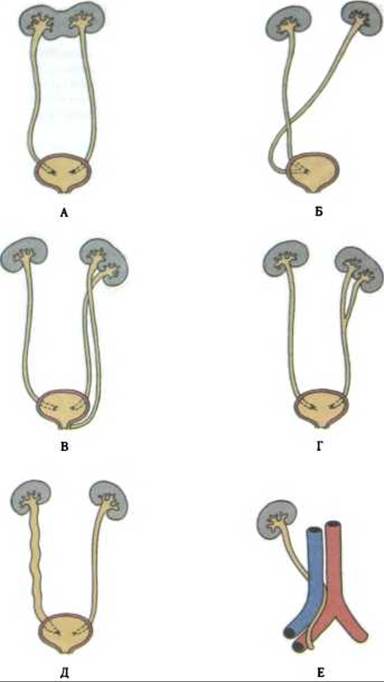
Fig. 342. Ureteral anomalies (after Langreder; S. Richard et al.):
A - Ureters in Horseshoe Kidney (fusion of lower poles); B - crossed ectopic Ureter; C - left ureteral duplication with ectopic orifice; D - partial upper duplication of the left ureter; E - megaureter; F - retrocaval right ureter
Occasionally, the external genitalia exhibit structural features opposite to those of the internal genitalia. Hypospadias is among the less common developmental anomalies of the male external genitalia, resulting from incomplete closure of the urethral groove. More frequently, the cleft near the apex of the glans Penis fails to close and remains open along the entire shaft of the penis, extending down to the Perineum. Epispadias is less common, wherein the Urethra is located on the dorsal surface of the penis in the angle between the corpora cavernosa.
Last update: 08/08/2026
Editorial and Educational Adaptation: This material has been compiled based on the primary/original source text. The project team performed an editorial review, corrected technical inaccuracies, structured sections, and adapted the content for an educational format.
What was processed:
- elimination of formatting defects (OCR errors, structural breaks, corrupted characters);
- editorial organization of content;
- standardization of terminology in accordance with academic sources;
- verification of factual statements against the original source text.
All mentions of the author, publication year, and origin of the primary text have been preserved in accordance with the source.