MEDICAL BIOLOGY, ANATOMY, HUMAN PHYSIOLOGY AND PATHOLOGY - Ya.I. Fedoniuk 2010
BIOLOGY
SECTION 1. BIOLOGICAL BASES OF HUMAN VITAL ACTIVITY
1.4. ONTOGENETIC LEVEL OF LIFE ORGANIZATION
1.4.3. Biology of Individual Development
Prezygotic Period of Ontogenesis
The prezygotic period of ontogenesis is the period of germ Cell Formation (gametogenesis). Oocytes and spermatozoa develop from primordial Germ Cells. In humans, they appear in the wall of the yolk sac 24 days after Fertilization. In a 4-week-old embryo, these cells are detected in the hindgut mesentery, and a week later, in the gonad primordium. The formation of definitive germ cells occurs through The process of Meiosis.
During the prezygotic period, processes associated with provisioning the Cytology/cytology/16.html">Early stages of embryonic development take place in the ovum. These processes include: 1) Amplification (Replication) of rRNA genes; 2) storage of maternal rRNA and mRNA required for post-fertilization METABOLISM/35.html">Protein Biosynthesis; 3) accumulation of nutrient material, namely yolk.
Chromosomes actively synthesizing mRNA during oogenesis acquire a "lampbrush" appearance. They feature a clearly defined chromomeric Structure. DNA loops extend outward from the chromomeres along the chromosomal axes. These loops represent regions of intense Transcription. One can readily distinguish a thin end where transcription begins and a thick end where transcription terminates (Fig. 1.84).
Class="center">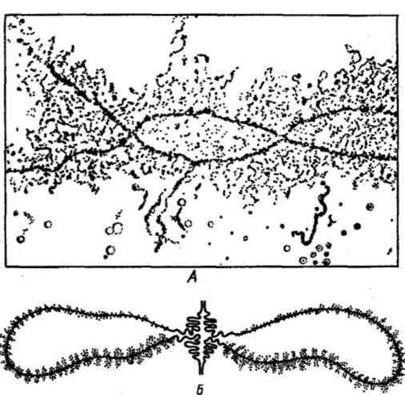
Fig. 1.84. Lampbrush chromosomes in newt oocytes: daughter cells (blastomeres)
A - photomicrograph of chromosomes; B - schematic diagram of their structure ·
The ovum accumulates a supply of nutritive yolk. Depending on the amount and distribution pattern of the yolk, several types of eggs are distinguished. Alecithal eggs contain virtually no yolk. Isolecithal eggs contain a small amount of yolk evenly distributed throughout The Cell (Echinoderms, amphioxus, mammals). Telolecithal eggs contain abundant yolk concentrated at one of the poles, known as the vegetal pole. The opposite pole, containing The Nucleus and yolk-free Cytoplasm, is called the animal pole. Telolecithal eggs are characteristic of Mollusks, amphibians, reptiles, and birds. In centrolecithal eggs, the yolk is located in the center of the cell, while the cytoplasm forms a peripheral layer (insect eggs).
Last update: 08/08/2026
Editorial and Educational Adaptation: This material has been compiled based on the primary/original source text. The project team performed an editorial review, corrected technical inaccuracies, structured sections, and adapted the content for an educational format.
What was processed:
- elimination of formatting defects (OCR errors, structural breaks, corrupted characters);
- editorial organization of content;
- standardization of terminology in accordance with academic sources;
- verification of factual statements against the original source text.
All mentions of the author, publication year, and origin of the primary text have been preserved in accordance with the source.