BOTANY WITH BASICS OF HYDROBOTANY (AQUATIC PLANTS OF UKRAINE) - B.Ye. Yakubenko - 2011
VI. PLANT SYSTEM WORLD
LOWER SPORE PLANTS
GENERAL CHARACTERISTICS AND FEATURES
Order Sphaeropleales
This order unites unicellular and colonial (coenobial), rarely multicellular-filamentous green Algae with coccoid and filamentous morphological body structures, which are uninucleate or multinucleate. The Cell wall is three-layered, featuring a layer of crystalline-ordered Cellulose, either continuous or segmented. METABOLISM/14.html">Chloroplasts range from parietal cup-shaped and reticulate to disc-shaped, containing one, several, or numerous pyrenoids, and occasionally lacking them entirely.
In terms of mitosis and cytokinesis features, they do not differ significantly from representatives of chlorococcal algae: the spindle is formed with the participation of centrioles, daughter nuclei diverge in anaphase, and centrioles are positioned at their proximal poles; no noticeable approximation of nuclei is observed in telophase, and cytokinesis occurs via a Cleavage furrow mechanism with invagination of the Plasmalemma.
Reproduction is asexual (via naked zoospores and autospores) and sexual (isogamy). The basal bodies of the zoospore flagellar apparatus are cruciform-symmetrical, lying in the same plane, nearly parallel, unshifted, and oriented According to the '12/6' configuration. The life cycle is haplontic with zygotic reduction, sometimes accompanied by a heteromorphic Morphology/12.html">ALTERNATION OF GENERATIONS—a coenobial gametosporophyte and a unicellular polyhedral sporophyte (e.g., Hydrodictyon, Pediastrum).
These are predominantly continental freshwater and terrestrial soil algae. They serve as active components of algal communities in fish-rearing ponds and biological ponds of wastewater Treatment facilities, acting as indicators of aquatic environment pollution levels. They are characterized by mass development and The ability to trigger 'Water bloom' phenomena in standing water bodies. Certain species have proven to be highly productive and caloric nutritional supplements for livestock and poultry, as well as serving as the trophic Base of the invertebrate-fish food chain.
The taxonomic scope of the order is actively being revised thanks to modern molecular-biological and electron-microscopic studies of individual representatives. Until recently, the vast majority of these taxa were considered within the orders Chlorococcales and Ulothrichales; however, based on the aforementioned diagnostic features, they are now segregated into an evolutionarily independent group. The order Sphaeropleales is one of the most numerous among Chlorophyta due to The Diversity of coccoid green algae belonging to the families Scenedesmaceae and Selenastraceae. Below are the Characteristics of Some representatives of this order.
Genus Neochloris - Neochloris. Unicellular, spherical green algae with a single parietal cup-shaped chloroplast and a pyrenoid.
Class="center">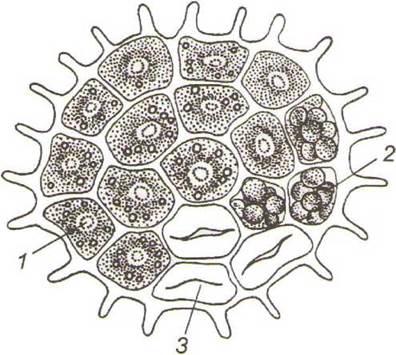
Fig. 32. General appearance of the coenobium of Pediastrum boryanum - Pediastrum: 1 - vegetative Cells,
2 - cells during the zoospore formation period, 3 - empty mother cells after zoospore release
Reproduction occurs via biflagellate zoospores (8–32), in the manner of Dunaliella, which lack a cell wall ('naked' zoospores), or via hemizospores. The sexual process is isogamous.
A typical representative of soil algoflora. It is analogous to the genus Chlorococcum, yet possesses a different type of zoospore that lacks a cell wall.
Genus Pediastrum - Pediastrum (Fig. 32). A representative of the coenobial evolutionary line among sphaeroplealean algae. It is characterized by disc-shaped, single-layered, usually flattened-lamellar continuous or perforated coenobiums consisting of 4–128 cells arranged in concentric circles and joined side by side. The cells possess a single parietal chloroplast, one to several pyrenoids, and several nuclei; in most species, they are differentiated into outer cells (with 1–2 appendages) and inner cells (rectangular, trapezoidal - without appendages, occasionally H-shaped, like the outer ones). The Cell wall is smooth, warted, or spinose, and is well-preserved in the fossil state. Reproduction is asexual (via zoospores) and sexual (isogamy). During asexual reproduction, the development cycle includes a polyhedron stage, into which the zoospore grows after being released from the mother cell within a mucous vesicle. The formation of a new coenobium from zoospores takes place outside the mother cell.
A typical representative of the plankton and benthos of fresh water bodies, occasionally causing 'water blooms' in standing waters (southern regions of Ukraine).
An indicator of the ecological state of water bodies and a biostratigraphic marker of past natural conditions.
Genus Hydrodictyon (water net) - Hydrodictyon (Fig. 33).
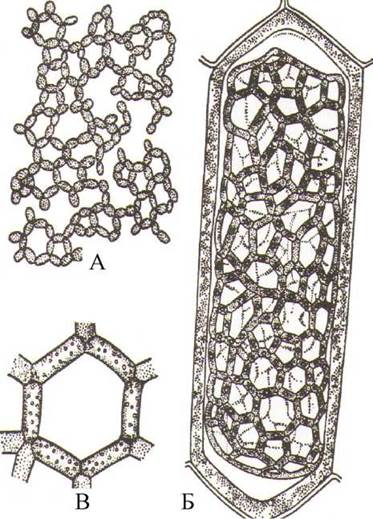
Fig. 33. Schematic representation of Hydrodictyon africanum (A) and H. reticulatum (B-C):
B - formed daughter coenobium within the mother cell; C - nature of cell connection in the meshes of a young net
A coenobial, macroscopic form of sphaeroplealean algae formed by the union of several thousand cells into a reticulate, sac-like community measuring over 30–50 cm in length. The cells are multinucleate, cylindrical, and connected to 3–4 neighboring cells, forming pentagonal and hexagonal meshes that together create a distinct net visible to the naked eye. The cell wall is cellulosic, with a cutinized outer layer.
The chloroplast is irregularly reticulate, with numerous pyrenoids.
Asexual reproduction occurs via biflagellate naked zoospores that form a daughter coenobium within the mother cell, while sexual reproduction takes place via isogamy. After gametic copulation outside the cell, the zygote develops a thickened wall and accumulates fat reserves colored orange-red by carotenoids. It germinates into four haploid zoospores that develop into polyhedral cells (the polyhedron or sporophyte stage), which subsequently produce new zoospores that combine to form a daughter coenobium. The life cycle is haplontic, featuring zygotic reduction and a heteromorphic alternation of generations: a coenocytic gametosporophyte and a unicellular polyhedral sporophyte.
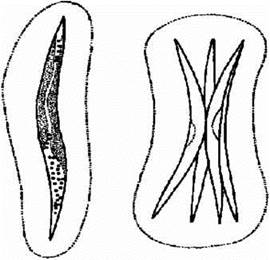
Fig. 34. Individual cell and mucilaginous colony of Ankistrodesmus
Water net (Hydrodictyon reticulatum), the sole representative of the genus in the flora of Ukraine, occurs in ephemeral and floodplain water bodies, and occasionally in ponds and lakes. It is a potential CAUSATIVE AGENT OF water "blooms" in pond-like habitats.
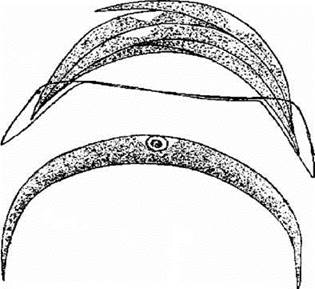
Fig. 35. Individual vegetative cell and the release of autospores from the mother cell wall in Monoraphidium arcuatum
The genus Ankistrodesmus (Fig. 34). These are colonial (fan-shaped or fasciculate) autosporic green algae, typically joined at the central region of their spindle-shaped cells and surrounded by mucus. The chloroplast is parietal, lacking a pyrenoid or possessing a "naked pyrenoid", with a single Nucleus. Asexual reproduction proceeds via 2–8, sometimes 16 autospores arranged parallel to one another within the mother cell. It is a typical planktonic Organism of eutrophic water bodies, occasionally developing in large numbers, particularly in pond habitats.
The genus Monoraphidium (Fig. 35). This genus comprises unicellular needle-like cells with a parietal chloroplast, lacking a pyrenoid or possessing a naked pyrenoid that remains inconspicuous under a Light Microscope.
Reproduction occurs via 2–16 autospores arranged serially within the mother cell, which are released upon the longitudinal rupture of the mother cell wall.
Species are widely distributed across various types of water bodies in Ukraine. They inhabit diverse ecological niches, primarily the pelagic zone of aquatic environments, and serve as bioindicators of the ecological state of water bodies.
The genus Coelastrum (Fig. 36). Characterized by spherical to globular coenobia consisting of 8–32 (up to 128) cells. The cells are spherical, ovoid, or pyramidal-trapezoidal, often featuring lateral outgrowths by which they cohere with one another. The cell wall is smooth or verrucose and consists of two layers: an outer pectic layer and an inner cellulosic layer.
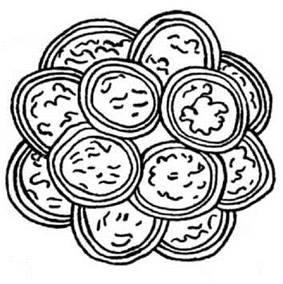
Fig. 36. General view of the Coelastrum microporum coenobium
Asexual reproduction occurs via autospores formed through the sequential or simultaneous division of the protoplast, resulting in the formation of a daughter coenobium inside the mother cell.
Typically widespread in standing water bodies. It is a common inhabitant of fish-rearing and biological treatment ponds, as well as an indicator organism for assessing the ecological status of aquatic environments.
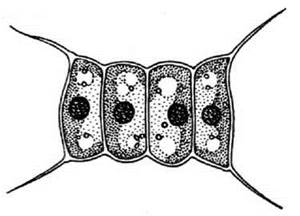
Fig. 37. General view of the Desmodesmus communis coenobium
The genus Desmodesmus (Fig. 37). Encompasses coenobial forms characterized by a single-row linear arrangement of laterally joined cells. The cells are ovoid-cylindrical with various ornamental structures and appendages (spines, Teeth, horns, Ribs, warts, etc.) on their poles or cell wall surfaces.
Asexual reproduction proceeds via autospores formed within the mother cell. Sexual reproduction (isogamy) is known only in a few species. Flagellated forms possess basal bodies oriented in a "12/6" pattern. They are widely distributed in various types of water bodies and are actively utilized in aquaculture and pond fish farming as a component of the hydrobiont food chain, as producers of diverse compounds, and as a recognized dietary Supplement for poultry and livestock. Certain species cause water "blooms" in ponds, particularly in fish-rearing facilities.
Last update: 07/08/2026
Editorial and Educational Adaptation: This material has been compiled based on the primary/original source text. The project team performed an editorial review, corrected technical inaccuracies, structured sections, and adapted the content for an educational format.
What was processed:
- elimination of formatting defects (OCR errors, structural breaks, corrupted characters);
- editorial organization of content;
- standardization of terminology in accordance with academic sources;
- verification of factual statements against the original source text.
All mentions of the author, publication year, and origin of the primary text have been preserved in accordance with the source.