BOTANY WITH BASICS OF HYDROBOTANY (AQUATIC PLANTS OF UKRAINE) - B.Ye. Yakubenko - 2011
VI. SYSTEM OF THE PLANT WORLD
LOWER SPORE PLANTS
GENERAL CHARACTERISTICS AND FEATURES
Order Chaetophorales
This order unites multicellular, unbranched filamentous and heterotrichous, complexly differentiated green Algae with a Cell wall featuring a crystallinely ordered Cellulose layer and primary plasmodesmata (pores between Cells).
Monad reproductive forms are naked (biflagellate zoospores and quadriflagellate Gametes), and the basal bodies of the flagella are arranged clockwise ("1/7" configuration). The sexual process is isogamous. The mitotic spindle is formed with the participation of centrioles; daughter nuclei diverge in anaphase, while centrioles locate at the distal poles of these nuclei, and a phycoplast is formed from the spindle remnants. In telophase, the nuclei approach each other due to the contraction of the interpolar spindle remnants, forming a cell plate with pores and plasmodesmata. The life cycle is haplontic.
They grow in the periphyton of fresh and brackish continental Water bodies, typically in spring.
The order encompasses a group of genera that demonstrate a gradual morphological complication of the algal thallus Structure, ranging from typically filamentous (Uronema) to heterotrichous (Stigeoclonium, Draparnaldia).
Genus Stigeoclonium (Fig. 38). Macroscopic filamentous green algae up to 40 cm long, with a heterotrichous thallus featuring branched upright and prostrate filaments.
Class="center">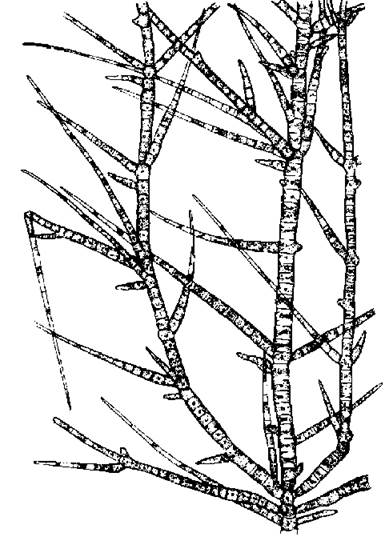
Fig. 38. Fragment of the heterotrichous thallus of Stigeoclonium sp.
The upright filaments are assimilatory and reproductive, tapering toward the apex and typically ending in colorless hairs (setae), forming tuft-like growths. The prostrate, plane-branched filaments form a holdfast and often fuse laterally to form a parenchymatous plate by which they attach to the substrate. The chloroplast is parietal, girdle- or ring-shaped, continuous or reticulate-perforate, with one or several pyrenoids. Vegetative Reproduction occurs via akinetes, asexual reproduction via quadriflagellate zoospores or aplanospores, and sexual reproduction via biflagellate gametes (isogamy). The life cycle is haplontic with zygotic reduction.
They are very common in fresh and brackish watercourses, predominantly of a distinctly lotic type, and are usually found among the periphyton of aquatic flowering plants, various woody substrates, stones, mollusk shells, etc.
Genus Draparnaldia (Fig. 39). Macroscopic shrub-like forms surrounded by mucilage, with a distinctly differentiated heterotrichous thallus: prostrate filaments (basal, rhizoidal, with an attachment function), upright supporting filaments (with a reduced "stem" function), and assimilator filaments with a photosynthetic and reproductive function. Cell apices are equipped with setae. The chloroplast is parietal, girdle- or ring-shaped, continuous or reticulate-perforate, with numerous pyrenoids.
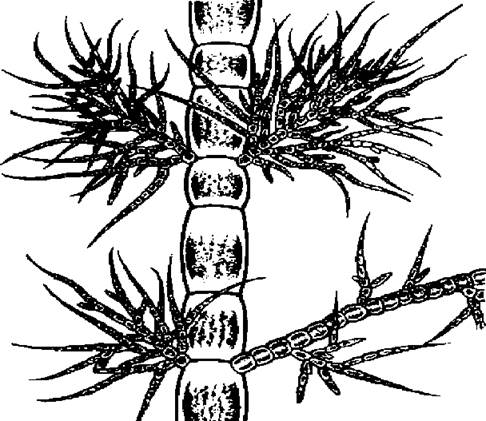
Fig. 39. Fragment of the thallus of Draparnaldia glomerata
Reproduction occurs asexually via micro- and macrospores as well as aplanospores, and sexually via biflagellate gametes (isogamy).
Active development is observed in spring in fresh water bodies, predominantly in cold watercourses, rarely in standing waters, among the fouling communities of stones, woody substrates, aquatic flowering plants, mollusk shells, etc.
Last update: 07/08/2026
Editorial and Educational Adaptation: This material has been compiled based on the primary/original source text. The project team performed an editorial review, corrected technical inaccuracies, structured sections, and adapted the content for an educational format.
What was processed:
- elimination of formatting defects (OCR errors, structural breaks, corrupted characters);
- editorial organization of content;
- standardization of terminology in accordance with academic sources;
- verification of factual statements against the original source text.
All mentions of the author, publication year, and origin of the primary text have been preserved in accordance with the source.