BOTANY WITH BASICS OF HYDROBOTANY (AQUATIC PLANTS OF UKRAINE) - B.Ye. Yakubenko - 2011
X. SEED PLANTS
Family Iridaceae (Iris Family)
Perennial terrestrial or wetland plants. Underground Organs include rhizomes, corms, and rarely bulbs. Leaves are ensiform (sword-shaped) or linear-lanceolate. Flowers are solitary or arranged in terminal inflorescences, actinomorphic or zygomorphic; the perianth is six-parted, with three stamens and an inferior Ovary. Flower formula: * P3+3 A3 G3. The fruit is a capsule.
The family comprises about 1,800 species distributed across subtropical, tropical, and temperate regions, with the highest species diversity concentrated in South Africa, East and West Asia, and Central and South America. In Ukraine, 25 species occur in the native flora, along with numerous cultivated ornamental and spice plants. Two species—yellow iris and Siberian iris—are commonly found in swamps and waterlogged habitats.
Yellow iris, Water flag (Iris pseudoacorus L.). A plant with an erect stem, branching in the upper part, reaching up to 150 cm in height. The rhizome is thick, up to 20 mm in diameter, tuberously thickened, with long roots. Leaves are linear-ensiform, green, 1–2 cm wide, with a prominent midrib. Flowers are bisexual, clustered on branching stems. The perianth is corolla-like; the segments are light yellow with purple Veins, with the inner perianth lobes noticeably shorter than the outer ones. There are three stamens attached to the Base of the perianth segments. The ovary is three-celled; it blooms in May–June, and the fruit is a capsule tipped with a short beak.
Class="center">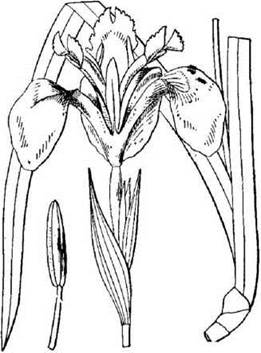
Fig. 186. Yellow iris (Iris pseudoacorus)
It grows in meso- and eutrophic fens, along the shores of water bodies and oxbow lakes, and in river floodplains throughout Ukraine.
An ornamental, medicinal, tannin-yielding, and forage plant. The rhizomes are occasionally eaten by carp, gnawed by beavers and water scavenger beetles, while the leaves are consumed by the caterpillars of certain butterflies. It is promising for Introduction into cultivation. In landscape design, irises are used to decorate damp areas and water features. Yellow irises propagate easily via rhizomes, are disease-resistant, and tolerate flooding. The rhizomes contain Essential Oils (up to 0.09%), Tannins, mucilage, wax, furfural, phenols, organic acids, and the glycoside iridin. Known as "violet ROOT," the rhizomes are used in folk medicine; their decoctions are employed as expectorant, diuretic, and analgesic remedies. Compresses made from rhizome decoctions are used for breast Cancer. Root extracts are utilized in perfumery. In the damp habitats of floodplain forests, along riverbanks, and at the edges of swamps, the Siberian iris (I. sibirica L.) can be found, distributed across Polissia, the Carpathians, and the Forest-Steppe zone. It features blue petals and is a valuable ornamental plant.
Last update: 07/08/2026
Editorial and Educational Adaptation: This material has been compiled based on the primary/original source text. The project team performed an editorial review, corrected technical inaccuracies, structured sections, and adapted the content for an educational format.
What was processed:
- elimination of formatting defects (OCR errors, structural breaks, corrupted characters);
- editorial organization of content;
- standardization of terminology in accordance with academic sources;
- verification of factual statements against the original source text.
All mentions of the author, publication year, and origin of the primary text have been preserved in accordance with the source.