BOTANY WITH BASICS OF HYDROBOTANY (AQUATIC PLANTS OF UKRAINE) - B.Ye. Yakubenko - 2011
IX. VASCULAR CRYPTOGAMS (PTERIDOPHYTES)
Subclass Salviniidae
The subclass is represented by a single order, Salviniales, comprising two families: Salviniaceae and Azollaceae.
Family Salviniaceae. Salvinias are perennial, freshwater, rhizomatous aquatic herbs—with the exception of the floating fern—that drift on the Water surface, frequently forming dense, continuous mats.
The vegetative body of the sporophyte consists of a stem and three-part whorls of leaves; roots are absent. Each node bears two intact, green, aerial leaves that perform Photosynthesis, and one brown, submerged leaf divided into a series of Hair-fringed, thread-like segments. The submerged roots/leaves perform absorptive and mechanical (stabilizing) Functions.
Two Types of sorus develop at the Base of the submerged leaf. Megasori containing megasporangia form first, followed by microsori containing microsporangias. A single megaspore matures within the megasporangium As a result of Meiosis, whereas 32 to 64 microspores develop in each microsporangium. The sori mature and sink to the bottom of the water body. Upon the rupture of the sorus indusia, the sporangia float up to the water surface, where gametophytes develop from spores inside the sporangium. The microspore produces a male gametophyte consisting of two vegetative Cells and a single antheridium. The antheridial wall is formed by two sterile cells enclosing two spermatogenous cells, each of which produces four spirally coiled, multi-flagellated spermatozoa.
A multicellular female gametophyte with three archegonia develops within the megaspore. Egg Fertilization occurs in only one of the archegonia, and the zygote subsequently develops into a new sporophyte.
Only a single species is known in Ukraine—water spangles or floating fern (Salvinia natans) (Fig. 102). It is an annual herbaceous plant with stems up to 20 cm long. It occurs in slow-flowing and standing waters within the basins of the Dnieper, Dniester, Danube, Donets, and other water bodies. Salvinia natans is protected by law. The plant propagates readily through vegetative fragmentation, breaking apart into segments and thus rapidly blanketing the water surface. Consequently, Salvinia stands provide spawning grounds for fish and shelter for fry. The plant is consumed by beavers, muskrats, and certain species of geese.
Class="center">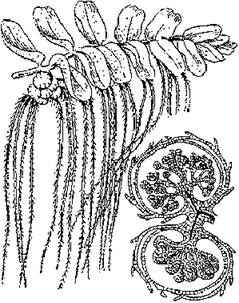
Fig. 102. Floating fern (Salvinia natans)
Eared watermoss (Salvinia auriculata) is a popular aquarium plant.
Family Azollaceae. It is represented by a single genus, Azolla. These are perennial rhizomatous aquatic herbs up to 25 cm long (Fig. 103). Long adventitious roots dangle from the rhizome into the water, while its upper side bears microscopic leaves arranged in two overlapping, tile-like rows. The leaves are bilobed, with the upper lobe aerial and the lower lobe submerged. Sori are produced on the lower lobes. The plants are heterosporous.
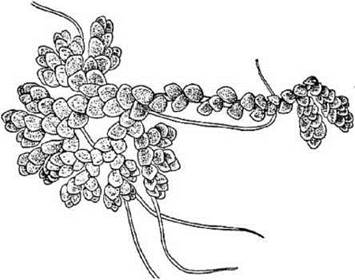
Fig. 103. Water fern (Azolla filiculoides)
The life cycle is similar to that of Salvinia. Azolla propagates efficiently vegetatively via lateral branches. The plant can form a Symbiosis with the blue-green alga Anabaena, which is capable of atmospheric Nitrogen Fixation. Because of this property, Azolla is used in paddy fields as a green manure that enriches the soil with nitrogen. Carolina mosquitofern (Azolla caroliniana) is commonly cultivated in aquariums.
Under natural conditions in Ukraine, two species grow in the Danube Delta: the water fern (Fig. 103) (Azolla filiculoides) and Carolina mosquitofern (A. caroliniana).
Last update: 07/08/2026
Editorial and Educational Adaptation: This material has been compiled based on the primary/original source text. The project team performed an editorial review, corrected technical inaccuracies, structured sections, and adapted the content for an educational format.
What was processed:
- elimination of formatting defects (OCR errors, structural breaks, corrupted characters);
- editorial organization of content;
- standardization of terminology in accordance with academic sources;
- verification of factual statements against the original source text.
All mentions of the author, publication year, and origin of the primary text have been preserved in accordance with the source.