BOTANY WITH BASICS OF HYDROBOTANY (AQUATIC PLANTS OF UKRAINE) - B.Ye. Yakubenko - 2011
IX. VASCULAR CRYPTOGAMS (PTERIDOPHYTES)
Class Polypodiopsida (Ferns)
Subclass Marsileidae. Marsileaceous ferns are herbaceous, rhizomatous, perennial aquatic or wetland plants. The Vascular System is a siphonostele. Distichous leaves and adventitious roots grow from the rhizome. Young leaves are circinately vernal. At the Base of the leaves, sporocarps are located containing Two Types of sori: sori with megasporangia and sori with microsporangia. Each microsporangium contains 64 microspores, while each megasporangium contains a single megaspore. Upon maturation, the walls of the sporangia rupture, and the spores are released into the Water, where a male gametophyte develops from the microspore, and a female gametophyte develops from the megaspore. The male gametophyte is reduced, featuring a simplified antheridium with a wall consisting of three Cells and a single spermatogenous Cell. The female gametophyte is essentially represented by a single archegonium with an egg cell, surrounded by a thick layer of mucilage that captures spirally coiled, multiflagellate spermatozoids. The sporophyte embryo develops directly from the zygote without a resting period.
Class="center">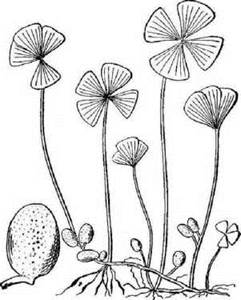
Fig. 100. Water clover (Marsilea quadrifolia)
The subclass Marsileidae is represented by a single order, Marsileales, a single family, Marsileaceae, and three genera: Marsilea, Pilularia, and Regnellidium. Representatives of the first two genera occur in the flora of Ukraine.
Water clover (Marsilea quadrifolia) is a perennial herbaceous plant with a creeping surface rhizome up to 20 cm long, bearing adventitious roots at the nodes (Fig. 100). Distichous, long-petiolate (up to 15 cm) leaves arise from the nodes, with blades composed of four cuneate-obovate leaflets resembling clover leaves. The leaves fold at night.
The sporocarps are oval, leathery, sessile or stalked, and occur singly or in groups of 2-3 at the base of the leaves. They grow in standing water or shallow areas in Transcarpathia (Latorica River), Polissia (Shatsk Lakes), the Southern Bug River (near Ladyzhyn, Vinnytsia Region), the Dniester River near Zalishchyky, and the Danube Delta.
The plant is under conservation. Its practical significance is minor. Marsilea stands can serve as spawning grounds and shelters for fish fry. The plants are consumed by the larvae of Nymphula icciusalis.
Marsilea crenata is an aquarium plant.
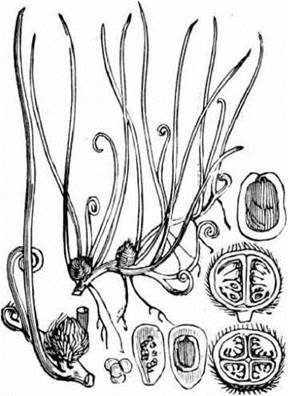
Fig. 101. Pillwort (Pilularia globulifera)
Pillwort (Pilularia globulifera) is a perennial herbaceous rhizomatous plant (Fig. 101). The length of the rhizome ranges from 10 cm in terrestrial forms up to 1 m in semi-submerged ones. Adventitious roots and narrow linear-subulate leaves, 1-10 cm long and 0.2-0.5 mm wide with spirally coiled tips, are located at the rhizome nodes. The sporocarps are globose, pill-like, about 3 mm in diameter, and situated at the base of the leaves.
It is very rare in waterlogged riparian areas, along waterbody banks, and in shallow waters within the Reni District of Odesa Region. The plant is under conservation.
Last update: 07/08/2026
Editorial and Educational Adaptation: This material has been compiled based on the primary/original source text. The project team performed an editorial review, corrected technical inaccuracies, structured sections, and adapted the content for an educational format.
What was processed:
- elimination of formatting defects (OCR errors, structural breaks, corrupted characters);
- editorial organization of content;
- standardization of terminology in accordance with academic sources;
- verification of factual statements against the original source text.
All mentions of the author, publication year, and origin of the primary text have been preserved in accordance with the source.