Plant Physiology - Musienko M. M. 2001
Root Nutrition of Plants
Physiological Foundations of Mineral Fertilizer Application
Nowadays, The Use of mineral fertilizers remains the primary means of increasing crop yields across all developed countries. By supplying nitrogen, phosphorus, potassium, and other deficient agricultural nutrients contained in specific types of mineral fertilizers, cultivated plants make more efficient use of solar energy and soil-climatic factors to produce an additional harvest. The shortage of these elements cannot be offset by any other agronomic practices. The widespread use of mineral fertilizers in economically developed countries over the past 10–20 years has dramatically increased crop yields.
The effectiveness of fertilizers depends on the plants' nutritional requirements and the soil's capacity to meet them. D. M. Pryanishnikov vividly illustrated this interdependence as a triangle, with the plant, soil, and fertilizers occupying the vertices, placing the plant at the top corner. This emphasizes that the plant and its yield form the foundation of all problems in agronomic and biological sciences, as well as agricultural practice:
Class="center">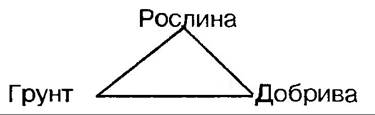
There are generally accepted Methods for determining plants' fertilizer requirements. Diagnostic analyses monitor the degree to which future crops are supplied with essential nutrients throughout the growing season.
The basis of chemical Nutrition Diagnostics is The chemical composition of plants during the growing season. Concurrently with plant chemical analysis, one must account for the pattern of GROWTH AND DEVELOPMENT (the first rule of plant
nutrition diagnostics); several elements are determined, with at least 3 main ones: N, P, K (the second rule of nutrition diagnostics). The latter is due to their interaction when absorbed by plant roots and subsequently utilized in the synthesis of organic matter.
The third diagnostic rule involves comparing chemical diagnostic data and plant growth indicators with weather and agronomic conditions. It should be noted that plant diagnostics does not replace soil testing; rather, it provides a deeper understanding of plant nutrient availability under specific growing conditions. This allows for a more precise and effective Determination of the required fertilizer types and composition.
The removal of major nutrients (nitrogen, phosphorus, potassium) by crops is one of the most critical indicators needed to establish rational fertilizer application rates. Nutrient removal metrics by field crops exhibit a zonal character driven by cultivar traits, changing growing conditions, and the Geographical Distribution of specific crops. The amount of plant-available nutrients in the soil also depends on The rate of fertilizer application. Therefore, under intensive farming systems, fertilizers play the primary role in establishing proper, harmonious ratios among nutrient elements in the soil.
When determining application rates, one must account for imbalances between soil nutrients and adjust fertilizer doses accordingly to align the quantitative ratio of N, P, and K in the soil with the specific needs of each crop. In agricultural practice, one most frequently deals with nitrogen, phosphorus, and potassium fertilizers.
Nitrogen fertilizers exhibit high effectiveness across all soil and climatic zones. According to calculations by the renowned agrochemist A. V. Petersburgsky, 1 kg of mineral nitrogen fertilizer under high-level agronomic practices yields an additional 20 kg/ha of grain. Depending on the chemical form of nitrogen, mineral nitrogen fertilizers are divided into four groups: ammoniacal (nitrogen in the form of ammonia — ammonium sulfate, ammonium chloride, aqua ammonia), nitrate (nitric acid anions — sodium and calcium nitrates), ammonium-nitrate (ammonium and calcium-ammonium nitrates, ammonium sulfate-nitrate), and amide (nitrogen in organic amide form — urea, calcium cyanide).
Nitrate nitrogen is not adsorbed by the soil, dissolves readily in Water, quickly penetrates deeper layers, and is rapidly utilized by plants. Therefore, nitrate and ammonium-nitrate salts should be used for top-dressing plants during the growing season, as well as applied in small doses in bands or pockets during sowing. Nitrate nitrogen is easily leached from the soil under sufficient moisture conditions—particularly under irrigation or in light sod-podzolic soils—which can lead to significant nutrient losses.
Ammonium nitrogen is adsorbed by the soil, localized near the application site, and can only be leached after being converted into the nitrate form via nitrification. These fertilizers should be applied in the autumn.
Under production conditions, alongside mineral fertilizer application, successfully establishing a legume-rhizobial Symbiosis requires inoculating the plant ROOT system with root-nodule Bacteria. This is achieved by pre-sowing Treatment of legume seeds with nodule bacteria or by applying them to the soil via a specialized preparation called nitragin. Pre-sowing seed inoculation with nitragin is a highly effective agronomic practice that increases legume yields by 5–30%. The success of nitraginization largely depends on the bacterial strain, the application of phosphorus-potassium fertilizers to the soil, as well as sulfur, calcium, and molybdenum. Azotobacterin is also used to enrich the soil with free-living nitrogen fixers.
The effectiveness of phosphorus fertilizers depends on soil properties and crop characteristics. When applied correctly, the yield increase per 1 kg of P2O5 averages 5–10 kg for cereal crops. These fertilizers not only increase yields but also accelerate crop ripening. Their effect is particularly noticeable during the early Phases of plant development. The most widely used are superphosphate (ordinary powdered or granulated, manganized, and double), open-hearth phosphate slag, phosphorite meal, and defluorinated phosphate.
Superphosphate is the most common phosphorus fertilizer and performs best on solonetzic soils; on acidic soils, its effectiveness is inferior to neutral phosphorus fertilizers.
Phosphate slag (phosphorite meal) should be applied on acidic sod-podzolic and podzolized soils, while defluorinated phosphate is best suited for sod-podzolic, podzolized, and cultivated chernozem soils.
According to numerous experiments, the marketable yield increase per 1 kg of K2O (the active ingredient in potassium fertilizers) for cereal crops is 3.8 kg. Concentrated fertilizers include potassium chloride, potassium nitrate, potassium sulfate, kalimag, and kalimagnesia. The latter is a particularly valuable fertilizer for light sod-podzolic soils and for crops that are sensitive to chlorine.
Complex mineral fertilizers include nitrogen-phosphorus fertilizers: ammophos, diammophos, nitrophos, ammoniated superphosphate; nitrogen-potassium fertilizers: potassium nitrate; nitrogen-phosphorus-potassium fertilizers: nitrophoska, diammonitrophoska, nitrophoska (the latter being the most widely used among all complex mineral fertilizers). It should be noted that different salts—and even the anions and cations of the same salt—are absorbed by plants with varying intensity. For instance, in ammonium sulfate (NH4)2SO4, NH4+ ions are absorbed more intensively and SO42- ions less intensively, resulting in the accumulation of SO42- ions in the soil solution, which causes medium acidification. Such a salt is termed physiologically acidic. Conversely, if a salt contains Na+ and NO3-, Na+ cations are absorbed more slowly, leading to medium alkalinization due to the accumulation of Na+ ions. Such a salt is called physiologically alkaline. A well-known salt is ammonium nitrate, NH4NO3, in which both NH4+ cations and NO3- anions are absorbed with equal intensity. This salt is physiologically neutral.
Application rates (doses) of fertilizers refer to the calculated or actual quantity of fertilizers applied per hectare. As a rule, the dose is expressed in kg of active ingredient (N, P2O5, and K2O), indicated alongside the respective nutrient element (e.g., N60P80K90).
To express the fertilizer rate in physical mass, the specified rate in kilograms of nutrient should be divided by the percentage content of that nutrient in the corresponding fertilizer:

To convert individual forms of mineral fertilizers into standard reference units (nitrogen fertilizers converted to ammonium sulfate with a 20.5% content, phosphorus fertilizers to ordinary superphosphate with an 18.7% P2O5 content, and potassium fertilizers to potassium salt with a 41.6% K2O content) and physical mass, the following coefficients are used:
nitrogen fertilizers — 4.88;
phosphorus fertilizers — 5.35;
potassium fertilizers — 2.40.
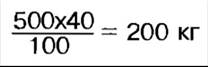
To convert mineral fertilizers to a 100% nutrient content basis, the physical mass of the fertilizer is multiplied by its percentage nutrient content and divided by 100. For example, to determine the nutrient content in 500 kg of 40% potassium salt containing 40% K2O, the calculation is as follows:
In compound fertilizers, the amount of nutrients is similarly determined separately for nitrogen, phosphorus, and potassium. Recently, all nutrients in fertilizers, soil, and plants have been expressed in elemental form—that is, as elemental forms rather than oxides. For example, the conversion factors from oxides to elemental nutrients and vice versa for phosphorus and potassium are as follows:

When determining fertilizer rates, It is important to consider the nutrient requirements of different crops. A distinction is made between economic removal, which refers to the nutrient content in the plant parts harvested and removed with the crop, and biological removal, which represents the maximum amount of nutrients taken up from the soil during the growing season. Different crops vary significantly in their nutrient uptake. For instance, while winter wheat requires an average of 132–150 kg of nitrogen, 43–60 kg of phosphorus, and 85–112 kg of potassium to produce a yield of 4 t/ha, growing 40 t/ha of sugar beets requires 180–220, 60–80, and 220–300 kg, respectively.
Scientifically grounded yield programming and the determination of optimal fertilizer rates require accounting for the following key conditions:
·the overall nutrient requirements of a given crop, depending on the targeted yield (main and by-products) and growing conditions;
·the potential utilization of soil nutrients by plants;
·fertilizer application techniques;
·nutrient recovery efficiency (utilization coefficients) from applied fertilizers by plants;
·economic and organizational-managerial factors that determine the economic efficiency of various fertilizer rates.
Across all natural zones in Ukraine, the effectiveness of mineral fertilizers applied to various soils typically follows this general pattern:
1) on sod-podzolic and podzolic soils, nitrogen, phosphorus, and potassium fertilizers show high effectiveness provided liming is carried out, whereas on unlimed soils, rock phosphate meal is highly effective;
2) on gray forest soils, as well as leached and podzolized deep low-humus chernozem soils, nitrogen fertilizers are the most effective, while phosphorus and potassium fertilizers are most effective when applied alongside them;
3) on ordinary, carbonate, and southern chernozems, phosphorus fertilizers yield a high response and nitrogen fertilizers a moderate one, whereas potassium fertilizers have a relatively weak effect;
4) on dark chestnut and chestnut soils, application can be limited to band placement of phosphorus fertilizers in rows, though under irrigation, all fertilizers exhibit high effectiveness on these soils.
Last update: 07/08/2026
Editorial and Educational Adaptation: This material has been compiled based on the primary/original source text. The project team performed an editorial review, corrected technical inaccuracies, structured sections, and adapted the content for an educational format.
What was processed:
- elimination of formatting defects (OCR errors, structural breaks, corrupted characters);
- editorial organization of content;
- standardization of terminology in accordance with academic sources;
- verification of factual statements against the original source text.
All mentions of the author, publication year, and origin of the primary text have been preserved in accordance with the source.