Biochemistry in Tables, Schemes, and Graphs - S.D. Zhamsaranova 2009
Lipid Metabolism and Functions
Cholesterol and Bile Acid Metabolism
Functions of Cholesterol:
1) cholesterol serves as a precursor in the Synthesis of Other Steroids, such as Bile acids, Steroid Hormones, and vitamin D3;
2) cholesterol is an essential structural component of all Cell membranes.
There are two primary sources of cholesterol:
1) dietary intake from animal-derived foods (exogenous cholesterol);
2) synthesis within the Liver (endogenous cholesterol).
Besides the liver, cholesterol can also be synthesized in small amounts within intestinal and Skin Cells.
Class="center">METABOLIC FATE OF CHOLESTEROL

The process takes place in The Cell Cytosol.
The cholesterol molecule is entirely assembled from acetyl-CoA. The rate of cholesterol synthesis depends on The amount of exogenous cholesterol obtained from the diet. When dietary cholesterol intake reaches 2-3 g per day, endogenous cholesterol synthesis is suppressed.
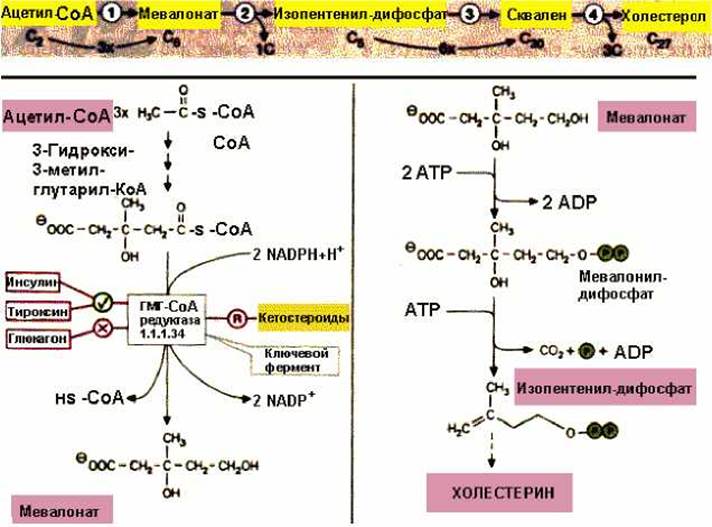
The enzyme hydroxymethylglutaryl-CoA reductase (HMG-CoA reductase) plays a major role in regulating cholesterol synthesis. Cholesterol suppresses the synthesis of HMG-CoA reductase and thereby reduces its own synthesis rate through negative feedback.
CHOLESTEROL TRANSPORT
In the liver, the cholesterol pool consists of cholesterol synthesized by the hepatocytes themselves and that delivered by remnant chylomicrons. This cholesterol pool serves not only the liver's own needs but also supplies other Tissues. Hepatic cholesterol, along with fats synthesized from glucose, is incorporated into VLDL and thus transported through the bloodstream. Following fat Hydrolysis by lipoprotein lipase, VLDL remnants are formed. These Lipoproteins are either taken up by the liver or converted into LDL.
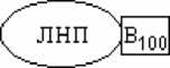
Almost all cells possess receptors for apoB100. Consequently, LDL particles bind to the cell surface, facilitating The transfer of cholesterol into cell membranes. Thus, LDL supply cholesterol to peripheral tissue cells.
High-density lipoproteins (HDL) transport cholesterol from peripheral tissues back to the liver. Within the bloodstream, the enzyme protein lecithin-cholesterol acyltransferase (LCAT) associates with HDL. ApoA acts as an activator of LCAT.
LCAT catalyzes the following reaction:
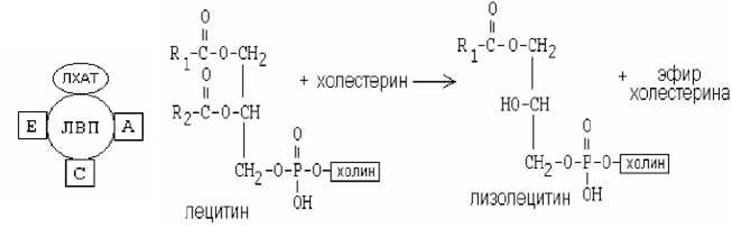
This reaction is crucial because the resulting cholesterol ester is highly hydrophobic and immediately relocates to the core of the HDL particle; thus, upon contacting cell membranes, HDL extracts excess cholesterol from them. Subsequently, HDL particles travel to the liver where they are degraded, and the excess cholesterol is eliminated from the body.
An imbalance in the ratios of LDL, VLDL, and HDL can cause cholesterol retention within tissues, ultimately leading to atherosclerosis. Therefore, LDL are referred to as atherogenic lipoproteins, whereas HDL are known as antiatherogenic lipoproteins.
Last update: 06/08/2026
Editorial and Educational Adaptation: This material has been compiled based on the primary/original source text. The project team performed an editorial review, corrected technical inaccuracies, structured sections, and adapted the content for an educational format.
What was processed:
- elimination of formatting defects (OCR errors, structural breaks, corrupted characters);
- editorial organization of content;
- standardization of terminology in accordance with academic sources;
- verification of factual statements against the original source text.
All mentions of the author, publication year, and origin of the primary text have been preserved in accordance with the source.