BIOCHEMISTRY - L. Stryer - 1984
VOLUME 2
PART II GENERATION AND STORAGE OF METABOLIC ENERGY
CHAPTER 17. FATTY ACID METABOLISM
We now turn from Carbohydrate METABOLISM to that of Fatty acids, a Class of compounds characterized by a long hydrocarbon chain and a terminal carboxyl group. Fatty acids fulfill two crucial physiological roles. First, they serve as the Building Blocks of Phospholipids and Glycolipids. These amphipathic molecules are essential components of Introduction/36.html">Biological Membranes (Chapter 10). Second, fatty acids function as fuel molecules. They are stored as triacylglycerols, which are uncharged esters of glycerol. Triacylglycerols are also referred to as neutral fats or triglycerides.
17.1. Nomenclature of Fatty Acids
Before examining fatty acid metabolism, let us briefly review their nomenclature. The systematic name of a fatty acid is derived from the parent hydrocarbon by replacing the ending with -oic. For example, the saturated C18 fatty acid is called octadecanoic acid because the parent hydrocarbon is octadecan. A C18 fatty acid with one double bond is termed octadecenoic acid, one with two double bonds is octadecadienoic acid, and one with three double bonds is octadecatrienoic acid. The symbol 18:0 designates a C18 fatty acid lacking double bonds, whereas the symbol 18:2 indicates the presence of two double bonds in the C18 acid. The carbon atoms of a fatty acid are numbered starting from the carboxyl carbon.

Carbon atoms 2 and 3 are frequently designated as α and β, respectively. The carbon atom of the methyl group at the distal end of the chain is termed the ω-carbon. THE POSITION OF a double bond is denoted by the symbol Δ with a superscript number. For instance, the designation cis-Δ9 indicates a cis double bond between the 9th and 10th carbon atoms; trans-Δ2 denotes a trans double bond between carbon atoms 2 and 3. Fatty acids are ionized at physiological pH, and thus it is more accurate to use the names of their carboxylate forms, such as palmitate or hexadecanoate.
17.2. Fatty Acids Vary in Chain Length and Degree of Unsaturation
Fatty acids in biological systems (Table 17.1) typically contain an even number of carbon atoms, generally ranging from 14 to 24. Fatty acids containing 16 to 18 carbon atoms are the most widespread. In animal Tissues, the hydrocarbon chain of fatty acids is almost invariably unbranched. The alkyl chain may be saturated or contain one or more double bonds. In most Unsaturated fatty acids, the double bond has the cis configuration. In polyenic (polyunsaturated) fatty acids, the double bonds are separated by at least one methylene group.
Table 17.1. Some naturally occurring fatty acids in animals
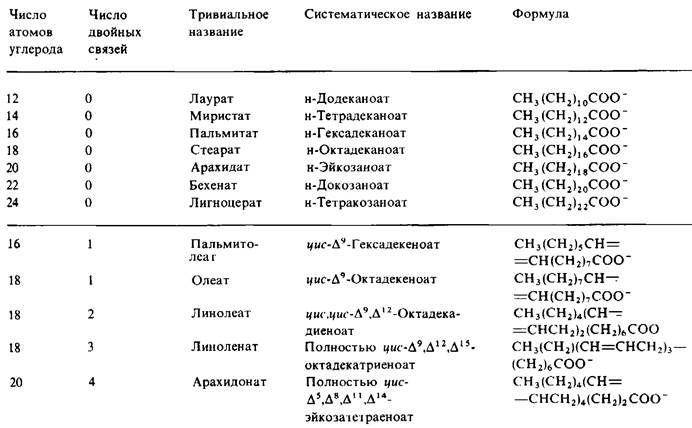
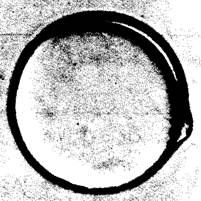
Fig. 17.1. Micrograph of an adipocyte. A large lipid droplet is surrounded by a thin rim of Cytoplasm and a displaced Nucleus
The Physical Properties of Fatty Acids and the Lipids containing them depend largely on chain length and the degree of unsaturation. Unsaturated fatty acids have lower melting points than saturated acids of the same chain length. For example, the melting point of stearic acid is 69.6°C, whereas that of oleic acid (containing a single cis double bond) is 13.4°C. The melting points of C18 polyenic fatty acids are even lower. Chain length also affects the melting point; specifically, the melting point of palmitic acid (C16) is 6.5°C lower than that of stearic acid (C18). Thus, shorter chain length and the presence of double bonds enhance the fluidity of fatty acids and their derivatives. Structure/19.html">The Importance of membrane fluidity has been discussed previously (Chapter 10).
Last update: 06/08/2026
Editorial and Educational Adaptation: This material has been compiled based on the primary/original source text. The project team performed an editorial review, corrected technical inaccuracies, structured sections, and adapted the content for an educational format.
What was processed:
- elimination of formatting defects (OCR errors, structural breaks, corrupted characters);
- editorial organization of content;
- standardization of terminology in accordance with academic sources;
- verification of factual statements against the original source text.
All mentions of the author, publication year, and origin of the primary text have been preserved in accordance with the source.