BIOCHEMISTRY - L. Stryer - 1984
VOLUME 2
PART II GENERATION AND STORAGE OF METABOLIC ENERGY
CHAPTER 15. THE PENTOSE PHOSPHATE PATHWAY AND GLUCONEOGENESIS
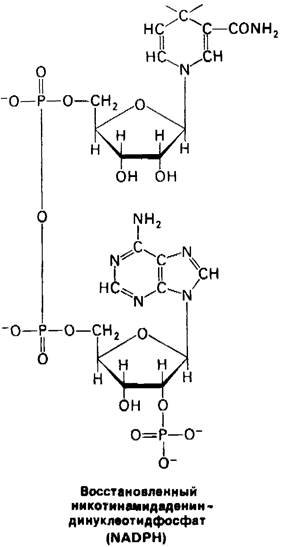
In the preceding chapters on Glycolysis, The Tricarboxylic Acid Cycle, and Oxidative Phosphorylation, we primarily focused on the generation of ATP using glucose as the primary fuel source. We now turn our attention to the generation of another type of metabolic energy: reducing power. A fraction of the electrons and hydrogen atoms derived from fuel molecules is utilized for biosynthetic purposes rather than being transferred to O2 to generate ATP. The readily available source of reducing equivalents within Cells is NADPH, which differs from NADH by the presence of a phosphoryl group at the C-2 position of one of its ribose moieties. As mentioned earlier (Section 11.9), There is a fundamental functional distinction between the roles of NADPH and NADH in the majority of biochemical reactions. NADH is oxidized by the Respiratory Chain coupled with the generation of ATP, whereas NADPH serves as a hydrogen and electron donor in reductive Biosynthesis. This chapter also examines Gluconeogenesis, the process by which glucose is synthesized from non-carbohydrate precursors.
15.1. The Pentose Phosphate Pathway Generates NADPH and Synthesizes Five-Carbon Sugars
In the Pentose Phosphate Pathway, NADPH is generated during The oxidation of glucose 6-phosphate to ribose 5-phosphate. This five-carbon sugar and its derivatives are essential components of crucial biological molecules such as ATP, CoA, NAD+, FAD, RNA, and DNA.
Glucose-6-phosphate + 2NADP+ + H2O → Ribose-5-phosphate + 2NADPH + 2H+ + CO2
Class="center">The pentose phosphate pathway also catalyzes a series of non-oxidative reactions that facilitate the interconversion of three-, four-, five-, six-, and seven-carbon sugars. All of these processes take place in the Cytosol. In plants, several Reactions of the pentose phosphate pathway are also involved in The formation of hexoses from CO2 during Photosynthesis.
The pentose phosphate pathway is sometimes referred to as the pentose shunt, the Hexose monophosphate pathway, or the phosphogluconate oxidative pathway. The discovery of glucose 6-phosphate dehydrogenase, the first enzyme in this pathway, by Otto Warburg in 1931 paved the way for its complete elucidation, which was accomplished by Fritz Lipmann, Frank Dickens, Bernard Horecker, and Efraim Racker.
Last update: 06/08/2026
Editorial and Educational Adaptation: This material has been compiled based on the primary/original source text. The project team performed an editorial review, corrected technical inaccuracies, structured sections, and adapted the content for an educational format.
What was processed:
- elimination of formatting defects (OCR errors, structural breaks, corrupted characters);
- editorial organization of content;
- standardization of terminology in accordance with academic sources;
- verification of factual statements against the original source text.
All mentions of the author, publication year, and origin of the primary text have been preserved in accordance with the source.