Pharmacognosy with Basics of Plant Biochemistry - Kovalyov V. M. 2004
Special Part
Phenolic Compounds
Lignans
Lignans are dimers of phenylpropane derivatives (C6—C3)2, the fragments of which are linked by a C—C bond between the central carbons of the side chains:
Class="center">
The term "lignan" was introduced in 1936. These compounds were first isolated from wood (from the Latin lignum meaning wood, tree), which is how they got their name.
True lignans form several types. The classification is based on the presence of substituents in the aromatic ring, the degree of saturation of the branched carbon chain, and the oxidation state at Cα and Cγ:
1) diarylbutane type;
2) dihydronaphthalene type;
3) dioxabicyclooctane, or sesamin, type;
4) diaryloctane type;
5) tetrahydronaphthalene type;
6) diaryltetrahydrofuran type:


Nordihydroguaiaretic acid


Schisandrin
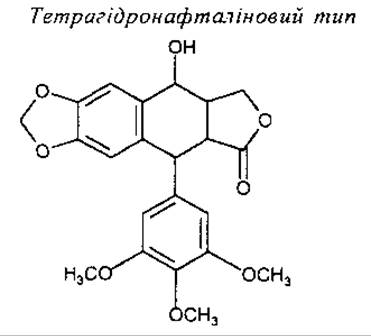
Podophyllotoxin

Lariciresinol
Neolignans consist of two C6—C3 fragments linked in a "HEAD-to-tail" manner; a double bond is frequently present at the Cβ—Cγ position:

Lignoids refer to diverse groups of Phenolic Compounds containing additional C6—C3 lignan fragments, such as flavonolignans, xantholignans, and coumarinolignans.
Types of flavonolignans


Biosynthesis and Distribution
Little is known about The biosynthesis of lignans. Although related to lignins, lignans are not formed via free-radical coupling like lignins, owing to the presence of chiral centers in their molecules. Their biosynthesis is believed to involve the reductive Condensation of phenylpropane units (C6—C3) bearing unsaturated side chains.
Scheme of Lignan Biosynthesis

(* chiral center)
Lignans are widely distributed in such plant families as Pinaceae, Berberidaceae, Araliaceae, Schizandraceae, Crassulaceae, and Piperaceae, where they occur as constituents of resinous exudates in trees and shrubs.
Physicochemical Properties
Lignans are crystalline substances readily soluble in fatty oils, Essential Oils, and resins, as well as in chloroform, benzene, and diethyl ether. They exhibit typical phenol color reactions, such as reactions with iron salts, diazo Reagents, and alkalis.
Under UV light, lignans fluoresce with a blue or yellow color.
Lignans are isolated using ethyl ether, petroleum ether, benzene, and chloroform, followed by extract fractionation via Column Chromatography on silica gel and aluminum oxide.
Biological Activity and Application
In recent years, these biologically active compounds have been extensively investigated. They exhibit valuable pharmacological properties, including antitumor (podophyllotoxin), stimulating and adaptogenic (schisandrin and syringaresinol derivatives), antihemorrhagic (sesamin), and antimicrobial (arctiin) activities. Furthermore, the flavonolignans from milk thistle demonstrate hepatoprotective effects.
Information regarding medicinal products derived from lignan-containing raw Materials is provided in Table 8 of the Appendices.
Last update: 06/08/2026
Editorial and Educational Adaptation: This material has been compiled based on the primary/original source text. The project team performed an editorial review, corrected technical inaccuracies, structured sections, and adapted the content for an educational format.
What was processed:
- elimination of formatting defects (OCR errors, structural breaks, corrupted characters);
- editorial organization of content;
- standardization of terminology in accordance with academic sources;
- verification of factual statements against the original source text.
All mentions of the author, publication year, and origin of the primary text have been preserved in accordance with the source.