BIOTECHNOLOGY - V. H. Gerasymenko - 2006
Part II. Special Biotechnologies
CHAPTER 9. APPLICATION OF IMMOBILIZED ENZYMES IN ANALYTICAL WORK
9.4. BIOLUMINESCENT MICROANALYSIS
One of the promising analytical techniques is the bioluminescent method based on firefly and bacterial luciferase.
This analysis records the light emitted by excited reaction products, the intensity of which, under optimal process conditions, is proportional to the concentration of such essential metabolites or Coenzymes as ATP, NADH, H2O2, hemin, FMN, etc. The high substrate Specificity of these reactions and their high quantum yield (ranging from 0.01 to 1.0) make it possible to analyze numerous substances with a detection limit down to 1 fmol when using multienzyme coupled systems.
In 1976, preparations of immobilized bacterial luciferase were obtained for the first time. In 1977, firefly luciferase was immobilized on Glass beads and BrCN-Sepharose. Rods made from these glass beads were used to determine concentrations of NADH and ATP at 10-6 mol/L and higher. Subsequently, dialysis films, Cellulose acetate membranes, cellulose, and other Materials served as Supports. Immobilized luciferases exhibit a 10- to 100-fold higher stability and can be reused for the determination of ATP and NADH.
Fig. 9.3 illustrates an analyzer featuring a packed-bed flow Reactor containing covalently immobilized luciferase on BrCN-Sepharose for ATP concentration determination. A similar reactor with an immobilized bacterial bienzyme system allows for the quantification of trace amounts of NADH.
Class="center">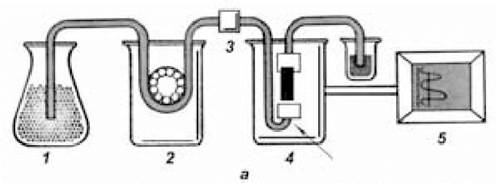
Fig. 9.3. Bioluminescent microanalysis using a Column reactor
(according to I. V. Berezin et al., 1987):
a — diagram of the setup; 1 — substrate solution; 2 — peristaltic pump;
3 — sample injection device; 4 — column with immobilized luciferase in the luminometer cuvette compartment;
5 — recording device (chart recorder or display).
Today, the bioluminescent method is employed to perform numerous diagnostically important biochemical assays where the target analyte is ATP or NADH. For instance, elevated serum creatine kinase activity is observed in severe conditions such as myocardial infarction, stroke, or muscular dystrophy. The bioluminescent method allows for the determination of this enzyme's activity ranging from 0.1 to 1000 IU (normal serum contains less than 10 IU of creatine kinase). The enzymatic assay for creatine kinase is based on the following reactions:

In the late 20th century, numerous studies emerged on the application of co-immobilized multienzyme bioluminescent systems in microanalysis. For example, a tri-enzyme co-immobilized system comprising adenylate kinase + Pyruvate kinase + firefly luciferase is used to determine various adenine NUCLEOTIDES (AMP, ADP, and ATP) as follows:

Subsequently, ATP is quantified using firefly luciferase. When analyzing ADP, phosphoenolpyruvate (the substrate for pyruvate kinase) is added alongside luciferin, whereas cytidine triphosphate (CTP) is introduced into the reaction mixture for AMP determination. Thus, a single biocatalyst containing three co-immobilized Enzymes can be used to measure three different nucleotides.
A tri-enzyme system comprising bacterial luciferase + oxidoreductase + formate dehydrogenase co-immobilized on BrCN-Sepharose is used to determine NAD in the concentration range of 10-12 to 10-6 mol/L and formate with a detection limit of 10-12 mol/L. In this case, NAD is converted via the reaction:

which is measured bioluminescents.
A major advantage of co-immobilized multienzyme systems is that The activity of co-immobilized enzymes increases tens or sometimes hundreds of times compared to their soluble counterparts. Presumably, co-immobilization achieves a significantly higher local concentration of enzymes and intermediate reaction products on the support surface, thereby facilitating the diffusion of products from one enzymatic reaction to the Active Site of the next enzyme.
Today, 4-, 7-, and even 13-enzyme co-immobilized systems are utilized for the bioluminescent microanalysis of various metabolites, including Steroids, triglycerides, and Bile acids.
Last update: 11/08/2026
Editorial and Educational Adaptation: This material has been compiled based on the primary/original source text. The project team performed an editorial review, corrected technical inaccuracies, structured sections, and adapted the content for an educational format.
What was processed:
- elimination of formatting defects (OCR errors, structural breaks, corrupted characters);
- editorial organization of content;
- standardization of terminology in accordance with academic sources;
- verification of factual statements against the original source text.
All mentions of the author, publication year, and origin of the primary text have been preserved in accordance with the source.