BIOTECHNOLOGY - V. G. Gerasymenko - 2006
Part II. Special Biotechnologies
Chapter 23. BIOTECHNOLOGY FOR ORGANIC WASTE MANAGEMENT VIA VERMICULTURE
23.10. VERMICULTURE, ITS COMPOSITION AND APPLICATIONS
When earthworms process 1 ton of manure (calculated on a dry biomass basis), up to 600 g of vermicompost is produced, containing 25 - 40 % humic substances, about 1 % nitrogen, phosphorus, and potassium, as well as all Trace Elements essential for plants. The remaining 400 kg of organic nutrients are transformed into 100 kg of high-grade protein in the form of live earthworm biomass.
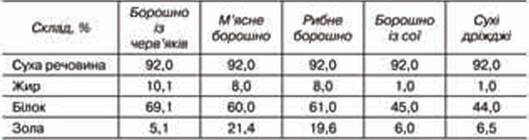
Earthworm biomass contains 17-23 % dry matter, which in turn consists of 60 - 80 % protein, 17 % CARBOHYDRATES, 6 - 9 % Lipids, 15 % mineral salts, and 7- 16 % nitrogenous extractives, along with numerous Enzymes, Vitamins, trace elements, and Almost all amino acids, including essential ones such as Lysine and Methionine (Table 23.1).
Class="center">Table 23.1.
Comparative CHARACTERISTICS OF THE Nutritional Value of various meals
(according to A. M. Ihonin, 1995)
Earthworm biomass is used in animal husbandry, Human Nutrition, and pharmacology.
Application of earthworm biomass in animal husbandry.
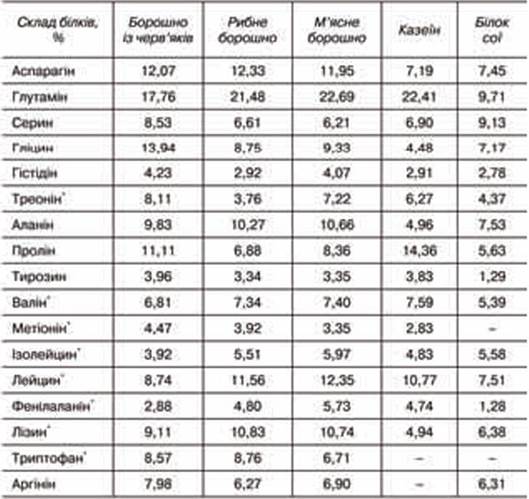
The amino acid profile of earthworm protein is comparable to that of meat-and-bone and fish meal, making it a valuable source of complete protein for balancing farm animal diets and for human nutrition (Table 23.2).
Table 23.2.
Comparative amino acid profile of Proteins from various sources
(according to Yu. A. Khomin, 1989)
In many countries, programs are being developed to Supplement protein resources for animal husbandry primarily through crop farming. However, in terms of productivity per 1 hectare of land, no crop can compete with earthworm cultivation. For instance, 1 hectare of top-grade land yields the following amounts of protein: corn — 390 kg, wheat — 350 kg, clover — 1,000 kg, whereas 1 hectare of land utilized for vermiculture yields up to 40,000 kg of protein meal per year.
The Digestive System of animals is evolutionarily adapted to consuming earthworms. The standard Dietary intake of high-grade protein should account for 10 % of the total protein amount and is fully met by adding 1 g of earthworms per 1 kg of live body weight per day.
Earthworm biomass is used as a protein supplement in the diets of cattle, pigs, poultry, pond fish, and aquarium fish—both raw and boiled, as well as in the form of meal—in quantities sufficient to meet protein requirements. To achieve this, the worms are washed, dried, and ground.
Use of earthworms in human nutrition. The global protein deficit is one of the most pressing issues on Earth. Incorporating earthworms into human diets can help alleviate this problem to some extent. For millennia, certain Negroid tribes in Africa have consumed earthworms measuring 7-8 meters [sic] in length. The Chinese also incorporate earthworms into their traditional cuisine.
Research has established that the nutritional qualities of earthworm meat are comparable to veal. However, their adoption in human diets faces socio-psychological barriers. To influence consumer preferences and shape public opinion today, gastronomic competitions featuring dishes made from earthworms are held annually in Pomona, USA. Earthworms intended for human consumption must be cultivated on a specialized substrate free from pathological waste, animal carcasses, etc.
Dishes prepared with The addition of earthworms include "Wormberger" pâté, pea curry, omelets, crab dishes, stuffed peppers, cookies, and others.
In the state of California, There is a specialty store that sells food-grade earthworms raised for human consumption at a price of 25 dollars per pound.
Application of vermiculture in pharmacology. Earthworms have been used in Chinese medicine for about two millennia. Currently, a new technology has been employed in China to produce the antiviral and antitumor serum F 76. Extracts derived from earthworm biomass are used in ointments for treating ringworm, eczema, and varicose ulcers of the lower extremities.
Earthworm biomass is widely used in the cosmetic industry for manufacturing creams, shampoos, and lotions.
Soil enrichment with earthworms. Earthworms play a critically important role in soil formation and in creating favorable conditions for plant growth. They burrow numerous channels and galleries (tunnels) into the soil, which form an extensive drainage and ventilation system. Aeration and drainage are essential factors for soil fertility. Through these tunnels, rainwater rapidly infiltrates the soil, carrying dissolved earthworm coprolites along with it. The presence of these channels facilitates ROOT branching with minimal Energy Expenditure and allows roots to penetrate deeper soil layers. In arable soils, the total length of earthworm tunnels can exceed 1 km per 1 m2. If these tunnels were to collapse across the entire depth, the soil surface would subside by 2 cm (Povkhan et al., 1994).
Earthworm tunnels run through the soil in various directions. Their walls are impregnated with mucous secretions from the earthworms, which gives them high structural stability. The chemical composition of the soil changes, and beneficial microflora thrives actively around the coprolites.
Soil inoculation with earthworms is carried out as follows. The soil is first plowed or spaded to a depth of 0–35 cm, and an organic substrate is spread evenly across the area to provide food for the worms for 6 months. The area is then watered thoroughly so that it becomes well-moistened without turning into a bog, and populated with earthworms at a rate of 50 individuals per 1 m2. This is preferably done early in the morning so that the worms burrow into the ground immediately upon sunrise. Note that before conducting routine cultivation, the soil must be allowed to rest for 13 months.
Last update: 11/08/2026
Editorial and Educational Adaptation: This material has been compiled based on the primary/original source text. The project team performed an editorial review, corrected technical inaccuracies, structured sections, and adapted the content for an educational format.
What was processed:
- elimination of formatting defects (OCR errors, structural breaks, corrupted characters);
- editorial organization of content;
- standardization of terminology in accordance with academic sources;
- verification of factual statements against the original source text.
All mentions of the author, publication year, and origin of the primary text have been preserved in accordance with the source.