Genetics - A. V. Sivolob 2008
Genetic Engineering and Methods of Molecular Genetics
Methods of Genetic Engineering
DNA Cloning
Using cloning Methods, any DNA fragments generated by Restriction Endonucleases can be inserted into a plasmid or bacteriophage DNA—which serves as a molecular cloning vector—and subsequently amplified in bacterial or Yeast Cells, multiplying their number millions of times.
The Need for a vector stems from the fact that introducing naked DNA directly into cells exposes it to Nucleases that degrade it into NUCLEOTIDES. For DNA to become an integral part of a Cell's genetic apparatus, it must either integrate into its genome or be capable of autonomous Replication.
Bacterial Plasmids are frequently employed as cloning vectors (Chapter 5). The primary requirements for a plasmid to function as a vector include the presence of an origin of replication, a unique restriction site (recognized by a specific restriction enzyme), and an Antibiotic Resistance Gene acting as a selectable marker (Fig. 9.2). To generate recombinant DNA, a purified plasmid containing a single recognition site for a specific restriction enzyme is digested with that enzyme to yield a linear vector with sticky ends. Next, the DNA fragment of interest—isolated using the same restriction enzyme—is added. Due to complementary base pairing between the sticky ends of the fragment and the vector, a non-covalent circular complex of the two DNA molecules is formed. DNA ligase is then introduced to seal the polynucleotide backbones, yielding a recombinant DNA molecule. Plasmid Vectors containing a polylinker—a region engineered with a set of unique restriction sites—are particularly convenient, as they allow researchers to select the most suitable restriction enzyme for any given application.
Class="center">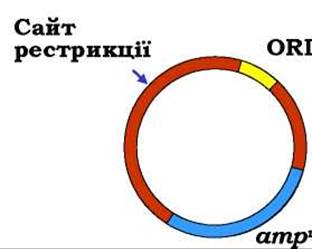
Fig. 9.2. Schematic Organization of a plasmid vector (Ori - origin of replication, amp - ampicillin resistance gene)
Blunt-ended DNA fragments can also be inserted into a vector using ligase, although this ligation reaction is an order of magnitude less efficient. Alternatively, terminal transferase can be used to append, for instance, a single-stranded poly(A) tail to the 3'-ends of the DNA fragment, and a poly(T) tail to the 3'-ends of the linear vector. Upon mixing, the complementary single-stranded ends will anneal, and DNA ligase will complete the final covalent sealing. This strategy enables the joining of virtually any blunt-ended fragments, regardless of the method used to generate them.
Blunt ends can also be enzymatically generated from fragments with sticky ends. This is achieved either by digesting the single-stranded overhangs with S1 nuclease or by filling in the sticky ends using the Klenow fragment. The resulting blunt-ended fragment is then inserted into the vector using the standard method described above.
Transformation of bacterial cells with recombinant plasmids is typically performed in a CaCl2 solution or via electroporation (applying a brief electrical pulse across a cell suspension). Both approaches increase Cell wall permeability, allowing the recombinant plasmid to enter The Cell. Because only a fraction of the Bacteria successfully take up the plasmid during transformation, the antibiotic resistance gene becomes essential: treating the bacterial culture with the corresponding antibiotic selects exclusively for transformed cells. Subsequent autonomous plasmid replication and Cell Division lead to a significant Amplification of the total plasmid yield (Fig. 9.3). The cloned plasmids are then isolated from the bacterial culture, and digesting them with the same restriction enzyme used to construct the recombinant molecule releases the cloned DNA insert from the vector.
Today, the most widely used plasmid vectors are artificial plasmids derived from the pUC plasmid series (such as pBluescript and pGEM). These are small (~2.7 kb) multicopy plasmids containing an antibiotic resistance gene, an origin of replication, and a polylinker inserted within the lacZ gene. The polylinker itself does not disrupt the expression of this gene, whose product is an enzyme that converts a specific synthetic substrate into a blue-colored compound. If a DNA fragment is successfully inserted into the polylinker, it disrupts lacZ expression, allowing for the straightforward blue-white screening of bacterial colonies containing recombinant DNA.
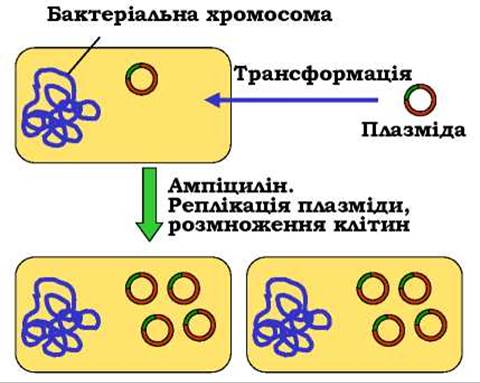
Fig. 9.3. Propagation of recombinant plasmids in bacterial cells
The smaller a plasmid is, the higher its stability and the more efficient the Bacterial Transformation process. Consequently, There is a size limit for fragments that can be cloned using this approach—typically up to 10 kb. An alternative yet highly analogous technique, which accommodates fragments roughly 20 kb in length, involves DNA Cloning using bacteriophage λ-derived vectors (see Chapter 5). A DNA fragment is inserted into the phage DNA using a restriction enzyme, empty phage capsids are added, and phage particles are assembled in vitro. Recombinant Bacteriophages are then used to infect a bacterial culture, where they propagate.
Cosmid vectors enable the cloning of DNA fragments up to 40 kb in size. A cosmid is a plasmid that, In addition to an origin of replication, restriction sites, and antibiotic resistance genes, contains two cos sites derived from the linear DNA molecule of bacteriophage λ. It is precisely these cos sites that allow the linear phage DNA molecule to circularize upon entering a bacterial cell. The DNA fragment targeted for cloning is inserted into such a linear cosmid equipped with sticky ends. The recombinant cosmid is then packaged in vitro into phage particles, which are used to infect a bacterial culture. In this system, the bacteriophage acts as an efficient delivery vehicle: the linear cosmid enters the cell and circularizes via the action of the cos sites and bacterial ligase. Subsequently, the circular cosmid replicates like a standard plasmid following the pathway shown in Fig. 9.3.
For cloning DNA fragments exceeding 100 kb, specially engineered BAC and YAC vectors have been developed. BAC vectors are based on bacterial F-plasmids (Chapter 5), whereas YAC vectors represent artificial yeast minichromosomes equipped with a centromere, telomeres, and an origin of replication. Foreign DNA fragments larger than 100 kb can be incorporated into such a vector; once introduced into a yeast cell, this minichromosome replicates and segregates just like native yeast Chromosomes during mitotic division.
Most modern vector systems are polyfunctional, meaning they are suitable not only for DNA cloning but also for the Expression of Recombinant Proteins.
Last update: 11/08/2026
Editorial and Educational Adaptation: This material has been compiled based on the primary/original source text. The project team performed an editorial review, corrected technical inaccuracies, structured sections, and adapted the content for an educational format.
What was processed:
- elimination of formatting defects (OCR errors, structural breaks, corrupted characters);
- editorial organization of content;
- standardization of terminology in accordance with academic sources;
- verification of factual statements against the original source text.
All mentions of the author, publication year, and origin of the primary text have been preserved in accordance with the source.