MEDICAL BIOLOGY, HUMAN ANATOMY, PHYSIOLOGY AND PATHOLOGY - Y.I. Fedoniuk 2010
ANATOMY, PHYSIOLOGY, PATHOLOGY
CHAPTER 5. BLOOD AND LYMPH CIRCULATION PROCESSES AND THEIR PATHOLOGY
VESSELS OF THE SYSTEMIC CIRCULATION
2. VEINS OF THE SYSTEMIC CIRCULATION
2.2. Inferior Vena Cava SYSTEM
The inferior vena cava (v. cava inferior) lies on the posterior abdominal wall, to the right of the aorta. It is formed at the level of the IV lumbar vertebra by the junction of the right and left common iliac Veins, passes through the Diaphragm into the thoracic cavity, and empties into the right atrium. The tributaries of the inferior vena cava include the lumbar, inferior phrenic, renal, suprarenal, right testicular (ovarian), and hepatic veins.
Like the VEINS OF THE upper extremity, the veins of the lower extremity are divided into superficial and deep.
The superficial veins include the small and great saphenous veins.
The small saphenous vein (Fig. 5.34) originates from the veins of the medial margin of the FOOT, ascends along the posterior aspect of the leg, and empties into the popliteal vein within the popliteal fossa.
Class="center">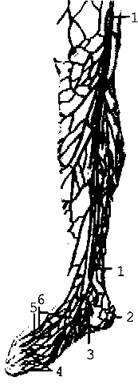
Fig. 5.34. Small saphenous vein of the right lower extremity and its tributaries:
The great saphenous vein (Fig. 5.35) originates from the venous plexus on the dorsal surface of the foot, ascends along the medial aspect of the leg and thigh, and reaches the saphenous opening on the anterior aspect of the thigh, where it empties into the femoral vein.
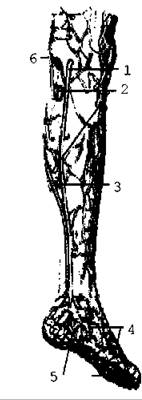
Fig. 5.35. Great saphenous vein of the right lower extremity and its tributaries in the leg and foot regions
The deep veins of the lower extremity in the foot and leg are paired and accompany the Arteries of the same name. In the popliteal fossa, they merge to form the popliteal vein.
The latter continues as the femoral vein.
The femoral vein passes under the inguinal ligament into the Abdominal cavity AND continues as the external iliac vein.
At the level of the sacroiliac joint, the external iliac vein joins the internal iliac vein, which collects Blood from the Organs and walls of the lesser pelvis, to form the common iliac vein. The left and right common iliac veins form the inferior vena cava.
Last update: 08/08/2026
Editorial and Educational Adaptation: This material has been compiled based on the primary/original source text. The project team performed an editorial review, corrected technical inaccuracies, structured sections, and adapted the content for an educational format.
What was processed:
- elimination of formatting defects (OCR errors, structural breaks, corrupted characters);
- editorial organization of content;
- standardization of terminology in accordance with academic sources;
- verification of factual statements against the original source text.
All mentions of the author, publication year, and origin of the primary text have been preserved in accordance with the source.